Eren Yeager and the Question of Freedom: A Character Study
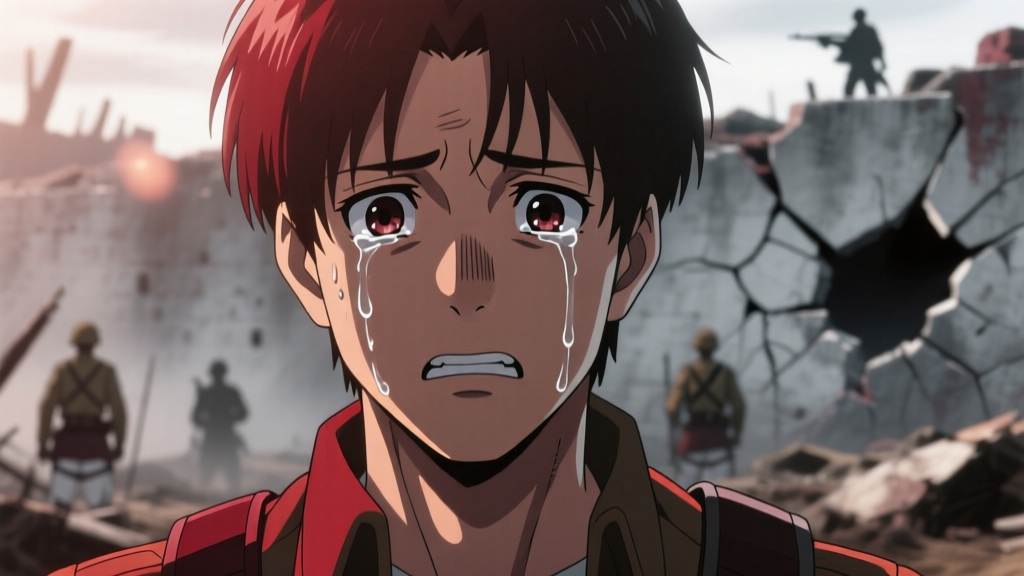
I watched Episode 85 — “Children” — for the third time before I could breathe again. Not because it was shocking (though it was), but because Eren, standing barefoot in that snow-dusted ruin of Liberio, finally said it out loud: “I’m not free yet.” That line hit like a gut punch — not because it was unexpected, but because it crystallized everything that had been festering since Season 1, Episode 1, when he stared at the wall with his fists clenched and whispered, “I want to see the outside world.” That boy and this monster share the same voice, the same eyes, the same hunger — and that’s what makes Eren Yeager the most devastating, infuriating, and heartbreakingly human character in modern anime.
Let’s be clear: Eren isn’t a villain who fell from grace. He’s a protagonist whose ideals curdled under pressure so immense it would’ve shattered anyone else. His arc isn’t about corruption — it’s about escalation. Every choice he makes is philosophically defensible *in context*, which is why arguing about him on SenpaiSite’s forums has sparked more heated debates than any other character in recent memory. Is he a freedom fighter? A genocidal tyrant? A traumatized child who weaponized his pain until it became indistinguishable from his identity? Yes. All of it.
His early idealism wasn’t naive — it was precise. In Episode 5 (“First Battle”), after witnessing Mikasa nearly die defending him, Eren doesn’t just rage; he calculates. He realizes strength isn’t optional — it’s the only language the world understands. His vow to “eradicate all Titans” isn’t just vengeance; it’s the first iteration of his operating principle: freedom requires power, and power demands sacrifice — starting with your own morality. That’s why he endures the torture in the basement of the Reiss chapel in Episode 49 without breaking — not for honor, but because he’s already accepted that suffering is transactional. He trades empathy for efficacy.
The real turning point isn’t the Rumbling — it’s the conversation with Historia in Episode 53 (“Pain”). She asks him, quietly, “What do you want?” And he answers, “To be free.” Not “to save humanity,” not “to protect my friends” — just freedom. At that moment, his cause detaches from collective survival and becomes metaphysical. Freedom stops being a condition and becomes an absolute — one that justifies any means. It’s chilling how closely this mirrors real-world ideologies: the French Revolution’s “liberty or death,” the American founding fathers’ “give me liberty or give me death,” even Nietzsche’s will to power — all refracted through the lens of a boy raised inside a cage that taught him walls weren’t metaphorical.
And let’s talk about that cage. The Walls weren’t just physical barriers — they were psychological architecture. As revealed in Episode 50 (“The Other Side of the Wall”), Eldians weren’t just imprisoned; they were *designed* to internalize oppression. The Founding Titan’s power didn’t just control memories — it instilled obedience as instinct. Eren’s entire childhood was spent breathing air thick with unspoken guilt, inherited shame, and the quiet violence of “knowing your place.” When he gains the Founding Titan’s power in Marley and sees the truth — that Paradis wasn’t the victim but the last remnant of a colonizing empire — his response isn’t remorse. It’s rage at the hypocrisy of moral hierarchy. Why should *his* people beg for mercy when the world has never extended it?
This is where Hajime Isayama forces us to sit uncomfortably. In Episode 75 (“Assault”), when Eren activates the Rumbling, we don’t get a triumphant score. We get silence — then the low, grinding groan of earth splitting open, followed by the muffled screams of civilians. The camera lingers on Armin’s face — not as a hero, but as a witness to something irreversible. That shot is deliberate. Isayama refuses to let us look away, refuse to let us reduce Eren to “good” or “evil.” He makes us watch the cost — not of war, but of *certainty.* Eren believes he’s chosen the only path left. That belief is terrifying precisely because it feels true.
Some fans argue he could’ve negotiated — that diplomacy was possible. But remember Episode 62 (“Savagery”), where Willy Tybur delivers his speech at the festival? He names Paradis “the last bastion of evil” — not as rhetoric, but as official Marleyan doctrine, backed by centuries of propaganda and military investment. Diplomacy required trust, and trust required vulnerability — something Eren, shaped by betrayal after betrayal (Grisha’s lie, Rod’s silence, Erwin’s manipulation, even Mikasa’s conditional love), had long since burned out of his soul. His final confrontation with Mikasa in Episode 87 (“The War Ends”) isn’t about romance — it’s about autonomy. Her kiss isn’t affection; it’s an attempt to reclaim him, to erase his agency. And he resists — not out of hatred, but because surrendering his will would mean admitting he was never free at all.
That’s the tragedy no one talks about enough: Eren dies believing he succeeded. In his final moments, watching the world burn from within the Paths, he smiles — not with malice, but with exhausted relief. He sees Armin and Mikasa alive. He sees the walls gone — literally and symbolically. He sees freedom, however monstrous its birth. And maybe, just maybe, that’s the cruelest part of all: he got exactly what he wanted.
I still cry every time I rewatch his childhood flashback in Episode 22 (“Blessings of This Life”) — young Eren racing through Shiganshina’s sunlit streets, laughing, utterly unaware that the wall behind him isn’t protection but a tombstone waiting to be carved. That version of him didn’t want to destroy the world. He just wanted to run — really run — without looking over his shoulder. Isayama gives us that boy, then methodically dismantles him piece by piece, showing us exactly how many betrayals, how much grief, how many lies it takes before “freedom” stops meaning open skies and starts meaning scorched earth.
Eren Yeager isn’t a cautionary tale about power. He’s a mirror. He asks: How far would you go — not to win, but to stop feeling afraid? Not to be loved, but to be *uncontrollable?* Not to survive, but to be *free — even if freedom looks like annihilation? There are no clean answers. Just snow falling on ruins. Just the sound of footsteps walking away from the carnage — and the terrible, beautiful silence that follows.