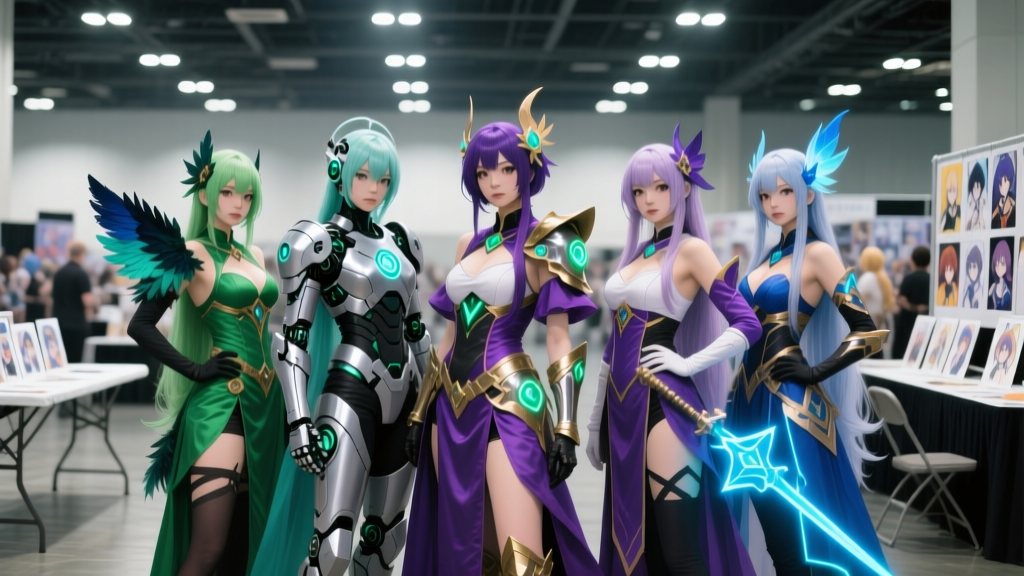
What Is Cosplay?
Cosplay — short for costume play — is the practice of dressing up as a character from anime, manga, video games, films, TV shows, or any other pop culture source. But cosplay is far more than just wearing a costume. It is a vibrant form of creative self-expression, fan devotion, and community belonging that has grown into a global phenomenon with millions of passionate participants worldwide.
When someone asks what does cosplay mean, the simplest answer is: it means bringing your favorite fictional characters to life through costume, performance, and artistry. A cosplayer might spend weeks or months crafting an intricate suit of armor, sewing a flowing magical-girl dress, or styling an outrageous wig — all to embody a character they love.
The word itself blends "costume" and "play," reflecting the dual nature of the hobby: the craftsmanship of building a look and the performative joy of inhabiting a character.

The History of Cosplay
The roots of cosplay stretch back further than most people realize. Science fiction fans in the United States were attending conventions in elaborate costumes as early as the 1930s — the 1939 World Science Fiction Convention famously featured Forrest J Ackerman and Myrtle R. Douglas dressed in futuristic "costumes of the future."
The term cosplay itself, however, was coined in Japan. In 1984, Japanese journalist Nobuyuki Takahashi attended the Los Angeles World Science Fiction Convention and was so impressed by the costumed fans that he wrote about it for a Japanese magazine, coining the word kosupure (コスプレ) — which English speakers later rendered as "cosplay."
Through the 1980s and 1990s, Japan's booming anime and manga industry gave cosplay an enormous cultural engine. Characters from series like Sailor Moon, Dragon Ball Z, and Neon Genesis Evangelion inspired a generation of fans to recreate their looks at conventions like Comiket (Comic Market) in Tokyo, which debuted in 1975 and grew into one of the world's largest fan conventions.
By the 2000s and 2010s, the internet turbocharged cosplay globally. Platforms like DeviantArt, YouTube, and later Instagram and TikTok turned skilled cosplayers into celebrities, sharing their craft with fans in every country. Today, major conventions like Anime Expo, Comic-Con, and Tokyo Game Show draw hundreds of thousands of attendees, many in spectacular costumes.
Types of Cosplay
Cosplay is not one-size-fits-all. The community embraces a wide range of styles and approaches:
- Anime and Manga Cosplay: The most popular category globally. Characters from series like Naruto, My Hero Academia, Demon Slayer, and One Piece dominate convention floors.
- Video Game Cosplay: From Link in The Legend of Zelda to characters from Final Fantasy and Genshin Impact, game cosplay showcases intricate armor, weapons, and props.
- Western Comics and Film Cosplay: Marvel and DC superheroes, characters from the MCU, and icons from beloved film franchises like Star Wars and Harry Potter.
- Closet Cosplay: A budget-friendly approach using existing wardrobe items to approximate a character's look — perfect for beginners.
- Gender-Bent Cosplay: Reimagining a character with a different gender expression, a popular creative twist that highlights the inclusive spirit of cosplay.
- Group Cosplay: Friends or organized teams cosplay characters from the same series together, creating unforgettable photo opportunities.
- Mecha and Armor Cosplay: Advanced crafters build full-body suits inspired by mecha anime or characters in heavy armor, often using EVA foam, thermoplastics, or 3D printing.

How to Get Started with Cosplay
Getting into cosplay is easier than it looks. Here is a simple path to your first costume:
- Pick a character you love. Passion is the best fuel. Choose someone whose design excites you, whether from your favorite anime, a game you just finished, or a film you have rewatched a dozen times.
- Research reference images. Gather multiple high-quality images of your character from different angles. Official art, game models, and fan renders all help you understand the details.
- Assess your budget and skill level. Beginners often start with simpler costumes or closet cosplays. As your skills and budget grow, you can tackle more complex builds.
- Decide: buy, commission, or build? Many cosplayers buy base costumes online and then customize. Others commission skilled crafters. The most dedicated build everything from scratch.
- Add the details. Accessories, wigs, props, and makeup transform a decent costume into a stunning one. A character-accurate wig and a few key props make an enormous difference.
- Debut at a convention or event. Nothing compares to experiencing cosplay in a community setting. Local anime conventions, comic cons, and fan meetups are welcoming spaces for newcomers.
If you want inspiration and tips from experienced cosplayers, check out our fan art and cosplay culture guide for more community insights.
Common Cosplay Terms You Should Know
The cosplay community has its own vocabulary. Here are the terms you will encounter most often:
- Cosplayer: A person who cosplays. Sometimes called a "cosplay artist" or simply a "cosser" in some communities — one informal another word for cosplay practitioner.
- WIP (Work In Progress): An unfinished costume that a cosplayer shares during the build process.
- Craftsmanship: The quality and skill evident in a handmade costume. Convention competitions often judge separately on craftsmanship and performance.
- Prop: Any accessory or weapon a cosplayer carries to complete their look — swords, staffs, shields, or signature items.
- Wig Styling: The art of cutting, dyeing, and shaping synthetic or natural wigs to match a character's hair.
- EVA Foam: A lightweight, easy-to-cut foam widely used to build armor, wings, and structural props.
- Thermoplastic: Heat-moldable plastics like Worbla used for rigid, detailed armor pieces.
- Masquerade: A convention competition where cosplayers walk a stage and are judged on costume quality and performance.
- Cosplay is not consent: A foundational community principle asserting that wearing a costume does not give others permission to touch a cosplayer without asking.
Beyond these, you may also hear cosplay described as costume roleplay, character costuming, or fan costuming — all variations on what is cosplay meaning in different contexts.

Why People Love Cosplay
Ask a hundred cosplayers why they do it and you will get a hundred different answers — but certain themes emerge consistently.
Creative fulfillment. Building a costume from scratch is deeply satisfying. Cosplayers develop real skills in sewing, prop-making, wig styling, makeup artistry, and photography. Many cosplayers describe the hobby as the creative outlet that defines their identity.
Connection to beloved characters. Anime and manga fans form powerful emotional bonds with fictional characters. Cosplay is one of the most immersive ways to honor and celebrate those connections — to step inside the story for a day.
Community and belonging. Conventions and online cosplay communities are famously welcoming spaces. The shared language of fandom breaks down social barriers. Many cosplayers describe finding their closest friendships through the hobby.
Performance and recognition. Whether walking a masquerade stage, posing for photographers, or simply drawing admiring reactions on a convention floor, cosplay offers a unique form of public performance and appreciation.
Inclusivity and self-expression. Cosplay has no entry requirements. Any body type, age, ethnicity, or skill level is welcome. The community's guiding principle — that anyone can cosplay any character — makes it one of the most radically inclusive creative communities in pop culture.
Whether you are a longtime anime fan wondering how to take your passion to the next level, or a complete newcomer curious about what all the fuss is about, cosplay offers something remarkable: a chance to inhabit the stories you love and share that joy with a community of millions.