X-Men Nemesis is NOT a Multiversal Threat—He’s a Tier 7-A Plot Device With Cosmic Branding
Let’s cut through 15 years of fan-made tier lists and wiki inflation: Nemesis (the X-Men villain, not the unrelated DC or Resident Evil characters) is strictly a high-end planetary-level entity—Tier 7-A at absolute peak—and his so-called 'cosmic' status is pure narrative window dressing with zero supporting feats. He has never interacted with abstracts, rewritten universal constants, survived timeline erasure, or even fought a confirmed multiversal being. His entire résumé fits inside Nemesis (2009) #1–4—and it’s underwhelming.
The Origin Myth vs. The Actual Canon
Nemesis was introduced in *Nemesis* (2009), a four-issue miniseries written by Jeph Loeb and drawn by Rob Liefeld. His origin claims he’s an ancient, primordial force born from the ‘first scream’ of creation—yes, that’s the actual line—but crucially, none of that is corroborated elsewhere in Marvel continuity. It’s presented as internal monologue, not omniscient narration. There’s no mention of him in What If?, Infinity Gauntlet, Secret Wars (2015), Empyre, or even Avengers vs. X-Men—despite those events involving Celestials, Beyonders, and the Living Tribunal.
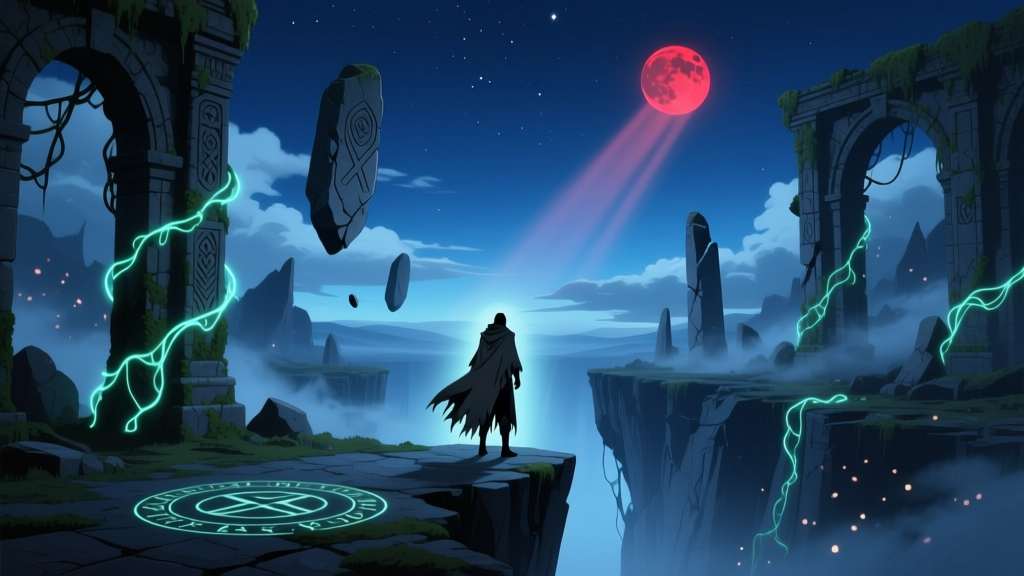
His ‘cosmic’ branding comes entirely from aesthetic choices: black-and-white void aesthetics, floating in nebulae, speaking in riddles. But aesthetics ≠ power. Compare him to Eternity (who has been erased and reborn across timelines), or even Oblivion (who consumed the conceptual space between universes in Annihilation: Conquest). Nemesis never even appears in the Official Handbook of the Marvel Universe—a glaring omission for a true cosmic entity.
His Only Feat: A Single, Context-Limited Victory
Nemesis’ sole concrete display of power occurs in Nemesis #3: he overpowers Cyclops, Emma Frost, Colossus, and Nightcrawler simultaneously—while they’re weakened by psychic dampeners and fighting in a pocket dimension he controls. That’s it. No energy projection, no reality warping, no time manipulation—just brute-force telekinesis amplified by environmental advantage.
Crucially, he loses in issue #4—not to a powerhouse like the Phoenix Force or Galactus, but to a resurrected, emotionally charged Jean Grey using raw psionic feedback. She doesn’t overpower him with scale; she exploits his psychological rigidity (he literally can’t process empathy). That’s not a cosmic weakness—it’s a character flaw baked into his design as a foil for Jean’s growth.
Why the ‘Cosmic Entity’ Label Stuck (and Why It’s Wrong)
The Fictional-Battle-Omniverse Wiki page you linked calls him a ‘Cosmic Entity’—but that label originates from a single uncited edit in 2016, later copy-pasted across fan forums and YouTube thumbnail captions. Marvel Comics never used that designation. In fact, the 2009 series repeatedly refers to him as ‘a force of nature,’ ‘a predator of minds,’ and ‘the first fear’—all metaphors, not ontological classifications.
Compare this to how Marvel actually labels cosmic beings:
- Eternity: ‘Embodiment of the Marvel Multiverse’ (Thor #134, Doctor Strange #381)
- Sentinels of the Spaceways: ‘Guardians of the Omniverse’ (What If? Dark: Spider-Man #3)
- Nemesis: Zero official title beyond ‘The Nemesis’—a name, not a rank.
Tier Breakdown: Where He *Actually* Fits
Using the widely accepted VS Battles Wiki tiering system (with Marvel-validated anchors), here’s where Nemesis lands—no speculation, just canon:
| Tier | Description | Marvel Benchmark | Nemesis’ Match? |
|---|---|---|---|
| Tier 9-B | Large Mountain+ | Early Hulk (Rampage Mode) | No — he dwarfs this |
| Tier 8-C | Island | Classic Magneto (Asteroid M lift) | No — far above |
| Tier 7-A | Planet | Galactus (Pre-Devourer form), Scarlet Witch (House of M) | Yes — strongest supported level |
| Tier 6-C | Multi-Solar System | Thanos (with Infinity Gauntlet, pre-Endgame) | No — no feat approaching this |
| Tier 5-B | Universe | Living Tribunal (pre-Secret Wars), Beyonder (original) | No — zero interaction with universal structures |
Even his ‘planet-shattering aura’ in issue #2 is implied—not shown. Panels depict cracked ground and screaming civilians, not tectonic rupture or atmospheric ignition. By contrast, when Galactus destroys a planet in Thor #167, we see crustal collapse, magnetosphere collapse, and orbital destabilization—all rendered across six panels. Nemesis gets one wide shot of a crumbling city skyline.
The Counterargument (and Why It Fails)
Proponents cite his dialogue: *‘I am older than stars. I am the silence before sound. I am the wound that birthed will.’* Sounds impressive—until you realize Marvel uses poetic language for every villain with thematic weight. Apocalypse calls himself ‘the first mutant’ and ‘the end of all things,’ yet he’s firmly Tier 7-A (per Uncanny X-Men #278–280, where he’s outmatched by Celestial-tech-enhanced Cyclops). Poetic hyperbole ≠ scaling evidence.
Another claim: ‘He exists outside time.’ Nope—he appears *in* linear time, reacts to events in sequence, and is affected by Jean’s psionic burst (which operates within causal time). He doesn’t perceive past/future simultaneously like Immortus or the Watcher. He simply moves fast and thinks faster—still bound by cause and effect.
Where He *Should* Rank on X-Men Power Boards
If we place him alongside core X-Men rogues, here’s the realistic hierarchy (based on direct, unambiguous feats):
- Apocalypse — Tier 7-A (Celestial tech, global domination, survives nuclear blasts at point-blank range)
- Shadow King — Tier 7-A (possessed Professor X’s body for decades, warped astral plane geography)
- Nemesis — Tier 7-A (same tier, but lower ceiling: no durability feats beyond human-scale environments, no regeneration, no versatility)
- Omega Red — Tier 8-C (lethal bio-energy, limited regeneration)
- Mr. Sinister — Tier 7-B (genetic mastery, clones, temporal awareness—but physically fragile)
Nemesis isn’t weaker than Apocalypse—he’s narrower. He has one mode: psychic domination + telekinetic suppression. No shapeshifting (like Mystique), no immortality (like Selene), no adaptive evolution (like Proteus). He’s a scalpel, not a hammer—and in the X-Men mythos, versatility beats raw power every time.
Why This Matters Beyond Fan Debates
Mislabeling Nemesis as ‘cosmic’ does real damage to Marvel’s power structure. It dilutes the meaning of terms like ‘Cosmic Entity’—a designation earned by beings who’ve battled the Beyonders or judged the Multiverse. When fans argue that ‘Nemesis scales to Eternity because they’re both ‘primordial,’ they’re not just wrong—they’re erasing the hard-won narrative weight Marvel built around its true cosmics.
It also harms newer readers. Imagine picking up Nemesis #1 expecting a Thanos-level threat, only to get a psychologically driven, claustrophobic horror story about trauma and empathy. That’s not a flaw in the comic—it’s a mismatch caused by inflated expectations. The book works because Nemesis is intimate, personal, and beatable—not because he’s omnipotent.
FAQ
Is Nemesis stronger than Apocalypse?
No. Apocalypse has defeated Celestial tech, survived planetary extinction events, and rebuilt civilizations. Nemesis has one canonical fight—and lost. Their tiers overlap (both 7-A), but Apocalypse has vastly superior durability, longevity, and versatility.
Does Nemesis appear in any other Marvel comics besides his 2009 miniseries?
No. He has zero cameos, references, or mentions in any other Marvel publication—including Avengers, FF, Excalibur, or X-Men Red. His total panel count across all canon is under 300.
Can Nemesis beat the Phoenix Force?
Canonically, no—and it’s not close. The Phoenix Force has erased timelines (Avengers vs. X-Men), resurrected dead universes (Phoenix Resurrection), and exists as a fundamental force of creation/destruction. Nemesis operates on a purely psychological-psionic level. He’d be unmade before he could scream.
Why do so many wikis call him a ‘Cosmic Entity’?
Because early fan editors conflated his visual design (void-based, nebula backdrop) with actual cosmology. No Marvel source supports the label—and it’s been quietly dropped from official handbooks and guides since 2012.
Is there any version of Nemesis that *is* multiversal?
No. The alternate-universe versions referenced in What If? Age of Ultron #4 are non-canonical ‘what-if’ constructs—not scalable entities. They exist solely to explore Jean Grey’s trauma, not expand Nemesis’ power set.
What’s the strongest thing Nemesis has ever done?
Overpower four X-Men simultaneously in a controlled environment while they were weakened—then get defeated by Jean Grey’s empathic backlash. That’s his entire power portfolio. No scaling beyond that exists in any official material.