What Pokemon Are Sexualized? (The Controversy Explained)
Published June 2026 · 12 min read · Analysis & Opinion
Content Note: This article addresses a widely discussed topic within the Pokemon community. It is intended as a balanced, informational analysis of design decisions, community reactions, and the cultural context behind certain Pokemon designs. It does not aim to sensationalize or inflame.
The Debate That Won't Go Away
For a franchise built around creatures you catch, train, and befriend, Pokemon has found itself in an unusually heated debate for decades: are certain Pokemon designs uncomfortably sexualized? The question surfaces on Reddit threads, YouTube video essays, and convention panels with remarkable regularity, and it shows no signs of fading.
The short answer is yes — a small but noticeable subset of Pokemon designs carry features that read as deliberately alluring, suggestive, or coded with human attractiveness markers. The longer answer involves Japanese pop-culture aesthetics, shifting target demographics, an enormous fan-art ecosystem, and a developer that has quietly adjusted course over multiple generations.
This article breaks down the specific Pokemon at the center of the controversy, explains why their designs look the way they do, and examines how both the community and Game Freak have responded.
Why Do These Designs Exist?
Before pointing fingers, it helps to understand the context in which these designs were created.
Japanese Aesthetic Conventions
Japan's character-design culture has long blended kawaii (cute) aesthetics with what is known as ero-kawaii — a style that mixes cuteness with subtle sensuality. This is not unique to Pokemon; it permeates anime, idol culture, fashion magazines, and even product mascots. Designers at Game Freak and Creatures Inc. grew up immersed in this visual language, and it naturally seeped into creature concepts.
Target Audience Expansion
As the franchise matured from the late 1990s into the 2000s, its audience aged with it. By Generation III (Ruby/Sapphire, 2002), a significant portion of players were teenagers and young adults. Designs began reflecting this broader demographic. Humanoid Pokemon in particular received more defined silhouettes, more detailed facial features, and in some cases body proportions that echoed human attractiveness standards rather than purely creature-based logic.
The Humanoid Trap
There is an inherent design challenge: when a Pokemon is bipedal, has expressive eyes, and a roughly human-shaped body, any design decision — long legs, a narrow waist, flowing "hair-like" features — will inevitably read through a human lens. A quadruped creature with the same proportional choices would barely register. The more humanoid a Pokemon becomes, the harder it is to avoid these associations.
Design Choices: The Pokemon Most Often Cited
Below is an analytical look at the specific Pokemon that appear most frequently in discussions about sexualized design, and the particular design elements that fuel the conversation.
Gardevoir (Generation III)
Type: Psychic/Fairy | Debut: 2002
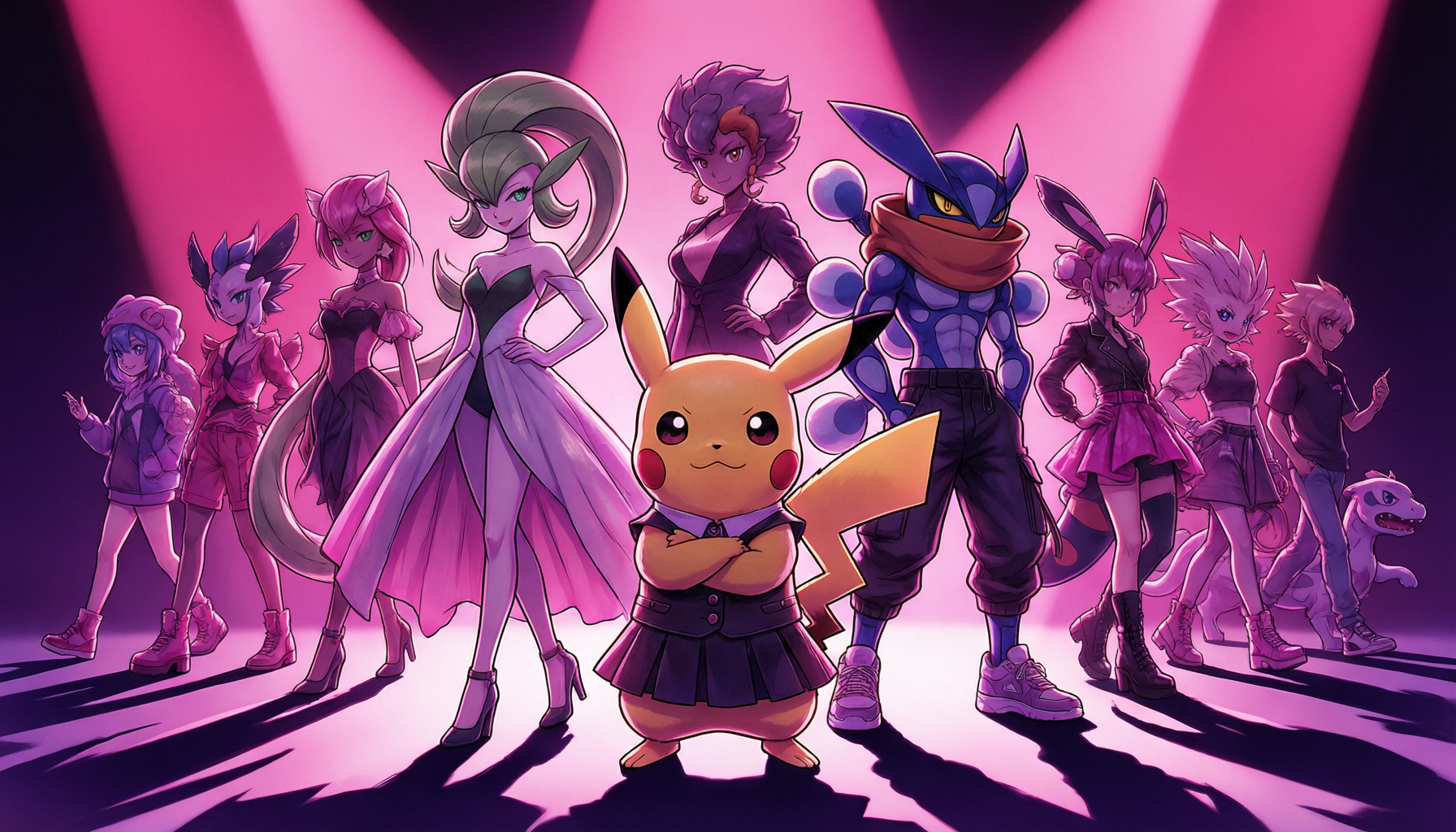
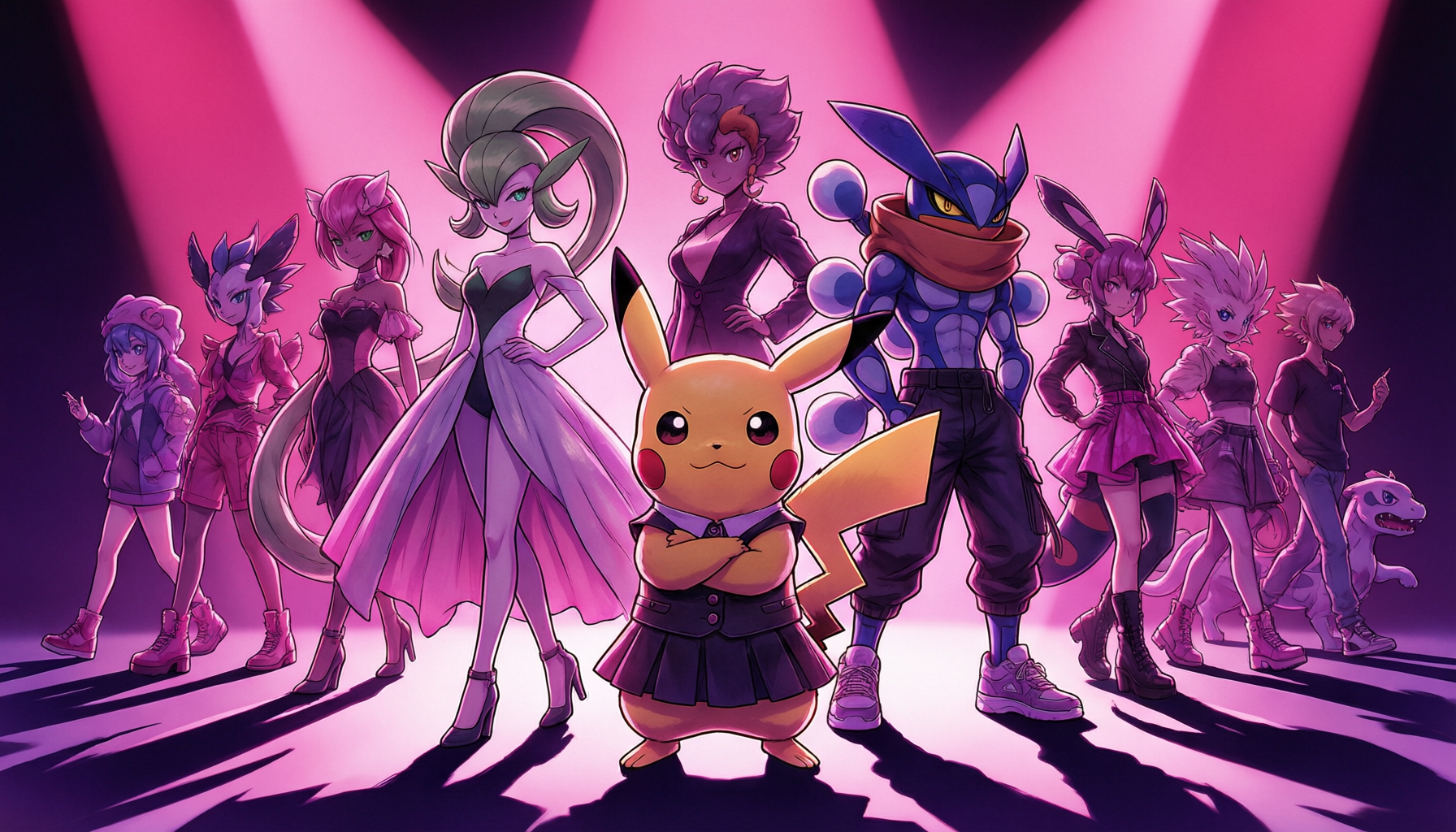
Gardevoir is arguably the poster child for this entire debate. Its design features a slender, bipedal frame, a flowing white "gown" formed from its body, a green "bob-cut" hairstyle, and large, gentle red eyes. The overall impression is of an elegant, almost ethereal human woman in a dress.
The controversy intensified because Gardevoir's Pokedex entries reference its devotion to its Trainer in almost romantic terms — "It will try to protect its Trainer even at the risk of its own life." Combined with its graceful silhouette, fans projected a romantic-partner archetype onto the design. Gardevoir consistently ranks among the most popular Pokemon in fan polls, and its presence in fan art is overwhelming.
Design intent: Likely inspired by Japanese idol and princess aesthetics. The "dress" is a natural extension of its psychic, elegant typing.
Salazzle (Generation VII)
Type: Poison/Fire | Debut: 2016
If Gardevoir represents subtle suggestion, Salazzle is the most overt example in the franchise. Its design includes a slim, curvy body, long tapered limbs, half-lidded eyes, and a tail that curves in a suggestive manner. The Pokedex describes it as a "reverse harem" leader that keeps multiple male Salandit as mates, and its Ability is literally called "Corrosion."
Salazzle's design reads as intentionally femme fatale — a seductive, dangerous figure drawn from noir and anime tropes. Unlike many other entries on this list, there is less debate about whether the design is sexualized; the more common argument is whether it went too far for a franchise aimed partially at children.
Design intent: Inspired by femme fatale archetypes in Japanese media and the real-world mating behavior of whiptail lizards.
Lopunny (Generation IV)
Type: Normal | Debut: 2006
Lopunny is a tall, bipedal rabbit with long legs, a narrow torso, fluffy "boots" of fur around its feet, and cream-colored fur that resembles a bodysuit or stockings. Its design is frequently compared to that of a Playboy Bunny or a showgirl — a comparison that becomes almost impossible to unsee once pointed out.
Base-form Lopunny was already drawing comparisons in 2006, but the controversy exploded with the introduction of Mega Lopunny in Generation VI. The Mega Evolution gave it longer ears, more defined proportions, darker fur "stockings," and an overall design that leaned significantly harder into the showgirl aesthetic. More on this below.
Design intent: Likely based on fashion models or showgirl aesthetics, blending rabbit characteristics with human glamour tropes.
Blaziken (Generation III)
Type: Fire/Fighting | Debut: 2002
Blaziken represents a different angle: male-coded sexualization. Its design features a muscular, broad-shouldered frame, flowing "hair" (the fire on its head), and a confident, almost heroic stance. While often praised as a "cool" design, Blaziken's proportions and dramatic flair place it in the same conversation — just from the opposite direction.
Blaziken's Mega Evolution amplified these traits further, adding more pronounced musculature and a more aggressive, dominant silhouette.
Design intent: Inspired by tokusatsu heroes and martial arts archetypes. The "sexy" reading is largely a byproduct of its heroic exaggeration.
Lucario (Generation IV)
Type: Fighting/Steel | Debut: 2006
Lucario occupies a unique space. Its design — upright, lean, with defined limbs and a focused expression — sits in an uncanny middle ground between creature and human. Lucario is consistently one of the most popular Pokemon worldwide, and its fan following includes a disproportionately large amount of fan art that anthropomorphizes or romanticizes the character.
The controversy around Lucario is less about its official design and more about the feedback loop between its popularity and the fan content it inspires. Game Freak has acknowledged Lucario's popularity by giving it a starring role in multiple movies, a Mega Evolution, and prominent placement in spin-off titles, which only reinforces the cycle.
Design intent: Based on Anubis (Egyptian jackal deity) and martial arts fighter archetypes. The sexualization is almost entirely community-driven.
Honorable Mentions
Other Pokemon frequently included in these discussions: Mewtwo (humanoid proportions and dramatic posing), Cinderace (athletic build and "shorts" marking), Inteleon (slender, spy-like design with suggestive Pokedex entries), Primarina (mermaid-inspired with a "performer" aesthetic), and Tsareena (dominant, leg-focused design with a literally haughty personality written into its lore).
The "Lopunny Problem": Mega Evolution and Design Escalation
Mega Evolution, introduced in Generation VI (X/Y, 2013), was meant to be a dramatic power-up that reimagined existing Pokemon with heightened designs. In practice, it became one of the biggest drivers of the sexualization debate.
Mega Lopunny is the clearest example. Where base Lopunny had a playful, model-like design, Mega Lopunny pushed every element further: the fur "stockings" extended higher, the body became slimmer and more defined, the ear arrangement evoked a showgirl headdress, and its overall silhouette became unmistakably more suggestive. Community reaction was immediate and polarized.
The core question: Did Mega Lopunny's design cross a line for a franchise rated E (Everyone) by the ESRB? Or was it simply a more stylized version of the existing design, with the "sexy" reading coming primarily from the audience rather than the designers?
Mega Gardevoir received similar treatment, with its "dress" becoming more elaborate and its silhouette more graceful. Mega Blaziken gained a more aggressive, almost superhero-like build. In each case, the Mega Evolution amplified the traits that already attracted fan attention — which led critics to argue that Game Freak was consciously catering to that audience.
The Mega Evolution mechanic was retired after Generation VII, and some observers believe the design controversy around certain Mega forms was a contributing factor in that decision.
Fan Art vs. Official Design: Where Does One End and the Other Begin?
Any honest discussion of this topic has to confront a fundamental reality: the vast majority of sexualized Pokemon content is fan-created, not official.
The Scale of Fan Content
Pokemon is the highest-grossing media franchise on Earth, with a fan base spanning every age group and every corner of the internet. On platforms like DeviantArt, Pixiv, Twitter/X, and Reddit, fan art of Pokemon numbers in the millions. A significant portion of this art sexualizes certain designs — particularly Gardevoir, Lopunny, Lucario, and Salazzle. The volume of this content creates an impression that the sexualization is more prevalent in official material than it actually is.
The Feedback Loop
Here is where things get complicated. Fan art creates demand. Demand influences community expectations. Community expectations can subtly influence design decisions — not necessarily through explicit directives, but through the osmosis of knowing what your audience responds to. Game Freak and Creatures Inc. designers are aware of fan trends. They track popularity metrics. When a Pokemon like Lucario dominates fan engagement, it gets more screen time, more merchandise, and more prominent placement in games.
The question is whether this extended to design choices. Did Salazzle's overtly suggestive design emerge organically from its concept, or was there a conscious awareness that "attractive" humanoid Pokemon generate enormous engagement? The truth is probably somewhere in between.
The Gijinka Phenomenon
Gijinka — the practice of reimagining non-human characters as human beings — is especially prevalent in Pokemon fandom. Humanized versions of Gardevoir, Lucario, and others flood fan art platforms, often depicted as conventionally attractive humans. This practice blurs the line further: when thousands of artists consistently draw a Pokemon as an attractive human, the public perception of that Pokemon shifts, regardless of what the official design actually shows.
Game Freak's Response: Quiet Course Correction
Game Freak has never issued a public statement specifically addressing the sexualization debate. However, their design decisions over recent generations tell a story of quiet adjustment.
Post-Generation VII Trends
- Reduced humanoid designs: Generation VIII (Sword/Shield) and Generation IX (Scarlet/Violet) introduced fewer humanoid Pokemon overall. The creature designs shifted toward more animalistic, object-based, and abstract concepts.
- Retirement of Mega Evolution: The mechanic most associated with "design escalation" was removed after Generation VII and has not returned as of 2026.
- More conservative proportions: Newer humanoid Pokemon like Miraidon, Koraidon, and Tinkaton feature stylized but less suggestive proportions compared to earlier generations.
- Focus on creature-first design: Recent design philosophy appears to prioritize "what animal/object/concept is this based on" over "what human archetype does this evoke."
The Pokedex Entry Problem
It is not just visual design. Pokedex entries have also drawn criticism. Salazzle's entries describing its "reverse harem," Inteleon's entries about its "sticky" secretions, and various entries referencing Pokemon "seducing" opponents have all been flagged by critics. In more recent games, Pokedex writing has become noticeably more restrained, focusing on ecological and behavioral details rather than suggestive personality traits.
Community Reactions
The Pokemon community is far from monolithic on this issue. Reactions generally fall into several camps:
The Critics
Argue that sexualized designs are inappropriate for a franchise with a large child audience. Often point to Salazzle and Mega Lopunny as examples of designs that went too far. Advocate for more creature-focused, less humanoid designs in future generations.
The Defenders
Counter that the sexualization is mostly in the eye of the beholder. Argue that a Pokemon's "sexy" traits are usually explainable through its animal/concept inspiration, and that the real issue is the fan art community, not Game Freak's designers.
The Nuanced Middle
Acknowledge that some designs carry intentional attractiveness markers while arguing this is not inherently harmful. Point out that many beloved franchises (Disney, Marvel, Studio Ghibli) design characters with appealing aesthetics without it being controversial.
The Fan Artists
Often push back against the framing of the debate itself. Argue that fan art is transformative expression, that artists have always been drawn to visually appealing characters, and that blaming Pokemon designs for fan art is blaming the subject rather than the artist.
The Western vs. Japanese Lens
A significant portion of the controversy stems from cultural mismatch. Japanese character design norms and Western expectations for children's media do not always align. What reads as mildly stylized in Japan can read as overtly suggestive in North America or Europe, and vice versa. Pokemon is a global franchise operating from a Japanese design sensibility, and this tension is baked into every discussion about its aesthetics.
It is also worth noting that in Japan itself, the sexualization debate around Pokemon is far less prominent. The designs that spark outrage on Western social media are generally received as simply "stylish" or "cool" in Japanese fan communities.
The Bigger Picture: Character Design Across Media
Pokemon is not unique in facing this conversation. Virtually every major character franchise — from Disney princesses to superhero comics to video game protagonists — has grappled with the tension between aesthetic appeal and age-appropriate design. What makes Pokemon's case distinctive is threefold:
- The audience includes very young children. A six-year-old playing Pokemon Scarlet is encountering the same designs as a twenty-five-year-old fan artist. That overlap creates inherent tension.
- The characters are not human. When a human character in a game or movie is designed attractively, audiences generally accept it as character design. When a creature — ostensibly an animal or monster — receives the same treatment, it creates cognitive dissonance.
- The franchise is inescapable. Pokemon's cultural footprint is so enormous that any design controversy reaches mainstream attention in a way that niche anime or game franchises can avoid.
Where Does the Conversation Go From Here?
The sexualization debate in Pokemon is unlikely to be resolved to everyone's satisfaction. Design is inherently subjective, and what one person sees as an elegant creature, another sees as an uncomfortably suggestive humanoid.
What seems clear is that Game Freak has absorbed the feedback — not through public statements, but through the more reliable metric of design decisions. Recent generations lean harder into creature-first, concept-driven design and away from the humanoid glamour aesthetics that defined some earlier entries. Whether this represents a genuine philosophical shift or simply a natural evolution of the design team's sensibilities is impossible to say from the outside.
For the community, the healthiest path forward may be acknowledging that both sides have valid points: some designs do carry suggestive elements, the fan art ecosystem amplifies this far beyond what exists in official media, and a franchise aimed at all ages benefits from thoughtful, intentional design choices that minimize ambiguity.
Pokemon will likely always include a range of design aesthetics — from the adorable (Pikachu, Eevee) to the intimidating (Tyranitar, Garchomp) to the elegant (Gardevoir, Milotic). The conversation is not about eliminating that range, but about understanding where the lines are and who gets to draw them.
What Do You Think?
Do you think certain Pokemon designs crossed a line, or is the sexualization debate overblown? Which Pokemon do you think has the most misunderstood design? Drop your thoughts in the comments below — we read every one.