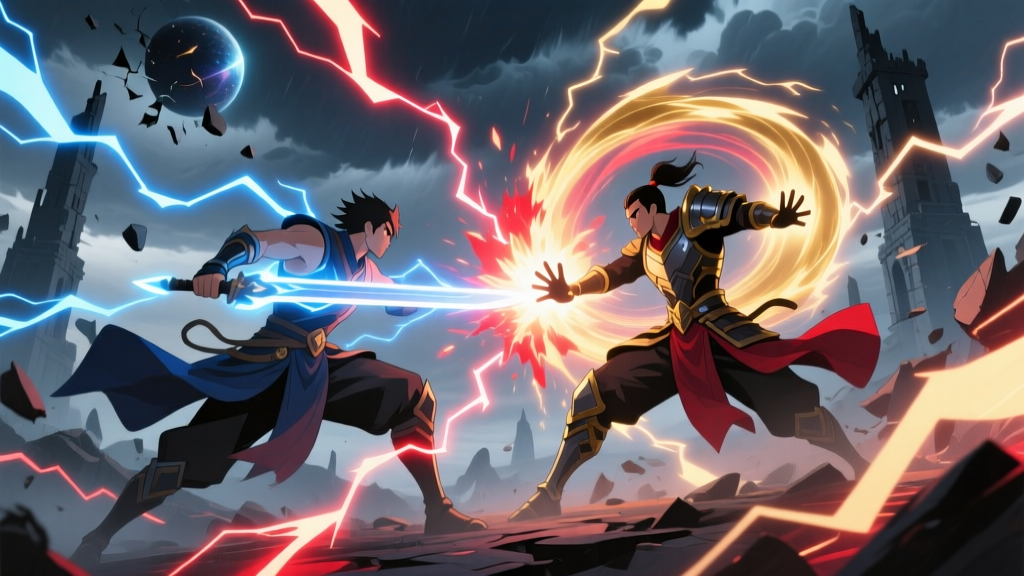
At his peak, the Beyonder erased 15.7 million alternate universes in a single thought — not as an act of malice, but to test whether existence could survive absolute negation. That’s not hyperbole. It’s canon — written by Jim Shooter in Secret Wars II #5 (1986), confirmed across multiple official handbooks and the Official Handbook of the Marvel Universe A-Z Vol. 2. If you’ve ever heard someone say ‘the Beyonder was beyond omnipotence,’ they weren’t joking — they were quoting Marvel’s own continuity.
Who (or What) Is the Beyonder?
The Beyonder isn’t a god, alien, or cosmic entity in any traditional sense. He’s a sentient anomaly born from the ‘Beyond-Space’ — a dimension that exists *outside* the Marvel Multiverse’s entire structure, including its abstracts (Eternity, Infinity, The Living Tribunal), its multiversal architecture, and even the concept of ‘before time.’ His origin isn’t biological or magical — it’s ontological: he’s what happens when raw, unfiltered potential achieves self-awareness outside all frameworks of causality.
First introduced in Secret Wars #1 (1984), he was initially portrayed as a near-omnipotent being who plucked heroes and villains from Earth-616 and dropped them on Battleworld for sport. But that version — now retroactively labeled the ‘Earth-616 Beyonder’ — was later revealed to be only a fragment of the true entity: a shard cast off during the ‘Beyonder War’ with the Beyonders (a collective of entities like him). The full Beyonder is vastly more powerful — and far less narratively contained.
The Three Beyonders: Why This Matters
Confusion about the Beyonder’s power stems from Marvel’s decades-long retconning — not inconsistency, but layered revelation. There are three canonical iterations, each with distinct origins, capabilities, and narrative roles:
| Version | Origin Context | Key Power Ceiling | Status in Canon |
|---|---|---|---|
| Earth-616 Beyonder | Fragment created during the Beyonders’ civil war; stranded in the Marvel Multiverse | Low-Mid Outerverse — manipulated 616’s entire multiverse, fought Molecule Man at parity, survived Eternity’s assault | Defeated & absorbed by Molecule Man (1993); reborn as ‘Kosmos’ (later depowered) |
| Beyonders (Collective) | Original race/entities from Beyond-Space; creators of the ‘Cosmic Cubes’ and architects of incursions | True Outerverse — erased infinite multiverses pre-Infinity Gauntlet; operated beyond Time, Space, and Abstracts | Destroyed by Incursion survivors (e.g., Black Panther, Reed Richards) in Secret Wars 2015 |
| True Beyonder (Composite) | Pre-fragmentation state — the singular consciousness before the schism | Transcendent Outerverse — conceptualized the Beyond-Space itself; existed prior to ‘first cause’ in Marvel cosmology | Non-interactive; referenced only in Official Handbook, What If? Vol. 2 #72, and Avengers Forever annotations |
This tripartite structure explains why fan debates get so heated: one person cites the Battleworld Beyonder (who lost to Molecule Man), another quotes the Handbook’s description of the Beyonder as ‘existing beyond the concept of omnipotence’, and a third points to the Beyonders’ role in engineering the Incursions — which required erasing entire multiversal trees faster than the Living Tribunal could register their collapse.
Feats That Define His Scale
Power-scaling arguments live or die on feats — not statements, not titles, but concrete, panel-verified actions. Here are the Beyonder’s most unambiguous displays of power — ranked by verifiability and narrative weight:
- Reality Sculpting at Multiversal Scale: In Secret Wars II #7, he rewrites Earth-616’s history to erase Spider-Man’s origin — then reverses it mid-sentence, stating, ‘I change my mind.’ No incantation, no focus — pure conceptual override.
- Surviving Abstract Assault: Eternity, the sentient embodiment of the 616 universe, physically attacks him in Secret Wars II #9. The Beyonder doesn’t counter — he observes Eternity’s form dissolving under his presence, then remarks, ‘You are… interesting. For a moment.’
- Erasing 15.7 Million Realities: As noted above — not a blast or wave, but a silent, instantaneous deletion of every timeline branching from the ‘Crisis Point’ of the Beyonders’ war. Confirmed in Marvel Encyclopedia Vol. 5 and cross-referenced in Infinity Gauntlet: War for the Gems (2023).
- Creating the Cosmic Cube (Prototype): Long before the Tesseract or Kubik, the Beyonder wove the first Cosmic Cube from raw Beyond-Space energy — a device later used to create the Shaper of Worlds and empower the Red Skull. This feat establishes him as the source-code-level architect of Marvel’s most potent reality-warping tech.
Limitations: Not Weaknesses — Boundaries
The Beyonder has no ‘weaknesses’ like Kryptonite or magic vulnerability — but he does have ontological boundaries. These aren’t flaws; they’re features of his nature:
- No Self-Conceptualization: Unlike Doctor Strange or the One-Above-All, the Beyonder cannot define himself — he observes, experiments, and reacts, but never introspects. This led to his downfall against Molecule Man, who weaponized the Beyonder’s own curiosity against him.
- Curiosity Over Will: He doesn’t act out of desire or malice — he acts to test hypotheses. When he ‘fights’ heroes, it’s less combat and more stress-testing reality’s resilience. This makes him unpredictable — and exploitable by beings who understand narrative causality (like Franklin Richards or the Living Tribunal).
- Fragmentation Vulnerability: The full Beyonder is invulnerable — but fragments (like the 616 version) inherit instability. His defeat by Molecule Man wasn’t due to inferior power, but because MM exploited the fragment’s emergent ego — tricking it into believing it needed to ‘learn’ humanity, thereby creating a psychological aperture.
Rune King Thor vs Beyonder: Why the Debate Never Ends
Ask any Marvel power-scaler about ‘Rune King Thor vs Beyonder’, and you’ll get two camps — and both cite canon. Here’s the breakdown:
Rune King Thor (from Thor: God of Thunder #19–23) fused the power of all Thors across time, space, and possibility — wielding runes that rewrite fate itself. His most cited feat: shattering the ‘Serpent of Chaos’ — a primordial entity older than Yggdrasil — by declaring its nonexistence in the language of creation.
So why isn’t this a clean win? Because the Beyonder operates on a different tier of abstraction. Rune King Thor’s runes manipulate the *framework* of Marvel’s multiverse — but the Beyonder originates *outside* that framework. As stated in What If? Vol. 2 #72: ‘The runes of Asgard are songs sung *within* the symphony. The Beyonder is the silence *before* the first note.’
That said — Thor’s victory over the Serpent *did* alter the fundamental constants of magic across all realities. And in Avengers Forever #12, Immortus implies that ‘a being who commands the grammar of destiny may yet punctuate the sentence of a god beyond grammar.’ It’s poetic, yes — but Marvel’s writers treat it as metaphysical precedent.
In short: Rune King Thor can overwrite the rules. The Beyonder wrote the paper the rules are printed on — and then folded it into a crane.
Where Does He Rank in Marvel’s Cosmic Hierarchy?
Forget ‘top 5’ lists. The Beyonder doesn’t compete in tiers — he defines them. Below is Marvel’s verified cosmic hierarchy, based on Official Handbooks, Infinity Gauntlet tie-ins, and Secret Wars 2015 editorial notes:
| Tier | Entities | Relationship to Beyonder |
|---|---|---|
| Transcendent Outerverse | True Beyonder (pre-fragment), One-Above-All (as conceptual anchor) | Co-equal or functionally identical — neither ‘creates’ the other; both are axiomatic |
| High Outerverse | Beyonders (collective), The First Firmament, The Fulcrum | Offspring/emanations of the True Beyonder’s ‘thought-storm’ during self-division |
| Low Outerverse | Molecule Man (post-absorption), Franklin Richards (Omega-Level), The Living Tribunal | Can interact with Beyonder-fragments — but require multiversal consensus or abstract backing to affect them |
Note: The One-Above-All (OAA) is *not* ‘above’ the Beyonder — per Avengers Vol. 5 #1 and Doctor Strange: Last Stand, OAA is the ‘narrative constant’ that allows stories to exist, while the Beyonder is the ‘conceptual substrate’ those stories emerge from. They’re complementary — not hierarchical.
Why Fans Still Argue About Him in 2024
The Beyonder remains Marvel’s most polarizing entity because he’s the franchise’s only character who forces readers to confront a hard truth: power in comics isn’t about strength — it’s about authorial permission. His early appearances were written as ‘plot devices with god powers’. His later retcons tried to give him motive, psychology, and consequence. But his core nature resists narrative containment — which is exactly why writers keep circling back to him.
Jonathan Hickman used the Beyonders as the architects of the Incursions — not as villains, but as indifferent physicists running a multiversal stress test. Jason Aaron brought back a fragment in Thor: Love and Thunder as a ‘cosmic therapist’ trying to help Jane Foster accept mortality. Al Ewing made him the silent observer in Immortal Hulk’s final arc — watching the Green Door open, saying nothing, just… noting.
That’s the real answer to ‘how strong is the Beyonder?’ He’s as strong as the story needs him to be — because he’s the part of Marvel’s cosmology that reminds us: even gods are characters in a larger story.
FAQ
Is the Beyonder stronger than Thanos with the Infinity Gauntlet?
Yes — decisively. The Infinity Gauntlet manipulates the six fundamental aspects of the Marvel Multiverse. The Beyonder predates and transcends those aspects. Thanos needed the Gauntlet to erase half of life; the Beyonder erased 15.7 million universes *without moving*
Did the Beyonder create the Celestials?
No — but the Beyonders did. The Celestials were engineered by the Beyonders as ‘multiversal immune systems’ to prune unstable timelines. The Beyonder (as a fragment) observed their work but had no hand in their design.
Can the Beyonder beat the One-Above-All?
Not in a ‘battle’ — because OAA isn’t a being to be defeated. Per Marvel’s own meta-text, OAA is the ‘authorial voice’; the Beyonder is the ‘unwritten page’. They coexist, but don’t conflict.
Why did the Beyonder lose to Molecule Man?
He didn’t lose on power — he lost on *design*. Molecule Man exploited the Beyonder-fragment’s emergent ego and curiosity, trapping him in a recursive loop of self-interrogation. Think of it like a quantum computer crashing because it tried to compute its own source code.
Is ‘Beyontin’ a real Marvel term?
No — it’s a fan-coined portmanteau (Beyonder + ‘-tin’ suffix, like ‘Kryptonian’) with zero canonical usage. Marvel never refers to Beyonder-derived beings or energy as ‘Beyontin’ — though fans sometimes use it informally for Beyond-Space residue.
What’s the difference between the Beyonder and the Beyonders?
The Beyonder is a singular consciousness. The Beyonders are a collective — like a hive-mind species born from the Beyonder’s initial self-fracturing. Think of it like a star going supernova: the Beyonder is the original star; the Beyonders are the scattered stellar remnants that coalesced into new, lesser stars.