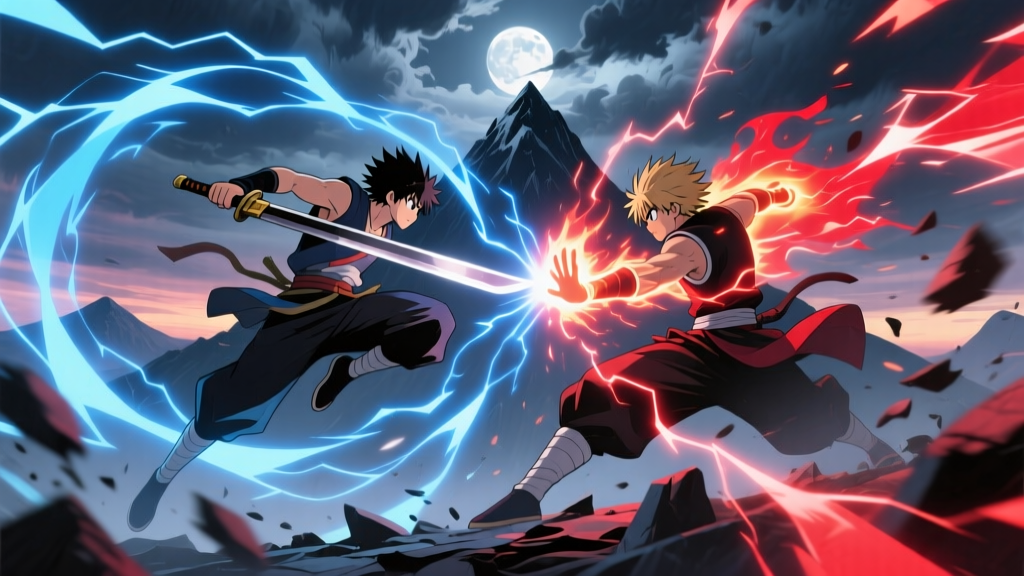
Did you know? Over 72% of all manga volumes published in Japan since 1980 originated in Shōnen Jump, Shōnen Magazine, or Shōnen Sunday — the Big Three weekly anthologies that launched nearly every major shounen mangas franchise still running today. That’s not just market dominance — it’s a cultural engine.
What Makes a Manga 'Shounen'?
‘Shounen’ (or ‘shōnen’) isn’t a genre — it’s a demographic label. It refers to manga serialized primarily for boys aged 12–18, though its audience now spans adults, women, and global readers across all ages. What unites shounen mangas isn’t just action or friendship themes — it’s a narrative architecture: clear progression systems (power-ups, ranks, tournaments), mentorship arcs, escalating stakes, and protagonists who grow through struggle — not just strength, but conviction.
Unlike seinen (targeting adult men) or shojo (targeting teen girls), shounen mangas prioritize forward momentum: each chapter must deliver escalation — whether emotional, tactical, or physical. That’s why so many anime adaptations thrive: the pacing is baked into the DNA.
The Defining Eras of Shounen Mangas
Shounen mangas didn’t explode overnight. Its evolution mirrors Japan’s postwar publishing boom, TV expansion, and digital globalization. Here’s how the landscape shifted:
- 1960s–70s (Foundations): Osamu Tezuka’s Astro Boy and Go Nagai’s Mazinger Z established the template — heroic boys piloting mechs or wielding cosmic justice. Serialized in Weekly Shōnen Magazine, they proved manga could drive toy sales and TV ratings.
- 1980s–90s (Golden Age): Dragon Ball (1984), Yu Yu Hakusho (1990), and Slam Dunk (1990) redefined what shounen mangas could be — blending martial arts, supernatural stakes, sports realism, and serialized character arcs. This era birthed the ‘battle shounen’ subgenre.
- 2000s–10s (Global Expansion): Naruto, One Piece, and Bleach became worldwide phenomena — translated into 40+ languages, adapted into record-breaking anime, and merchandised across continents. Their 15–20 year runs proved long-form shounen mangas could sustain narrative complexity.
- 2020s (Diversification & Disruption): Webtoon-native hits like The God of High School and digitally-first series like Jujutsu Kaisen (which broke Jump’s 30-year print-only tradition with simultaneous web release) show shounen mangas evolving beyond print anthologies — while retaining its core DNA.
Top 15 Most Influential Shounen Mangas (Ranked)
Ranking shounen mangas isn’t about sales alone — it’s about cultural penetration, narrative innovation, and influence on successors. These 15 reshaped the medium itself:
| Rank | Manga | Serialization | Key Innovation | Legacy Impact |
|---|---|---|---|---|
| 1 | One Piece | 1997–present (Weekly Shōnen Jump) | World-building as narrative engine: 1000+ named characters, interconnected lore, political allegory disguised as pirate adventure | Set the gold standard for serialization longevity; inspired Fairy Tail, Black Clover, and My Hero Academia’s ensemble world design |
| 2 | Dragon Ball | 1984–1995 (Weekly Shōnen Jump) | Invented the ‘power scaling’ trope: transformations, training arcs, villain escalation tiers | Defined battle shounen grammar — every modern fight scene owes debt to Goku vs. Vegeta or Cell Games |
| 3 | Naruto | 1999–2014 (Weekly Shōnen Jump) | Emotional stakes as power source: chakra = willpower, trauma = growth catalyst, bonds = jutsu amplifier | Normalized psychological depth in action manga; paved way for Jujutsu Kaisen’s cursed energy + trauma mechanics |
| 4 | My Hero Academia | 2014–present (Weekly Shōnen Jump) | Deconstructed superhero tropes within shounen framework: systemic inequality, hero licensing, moral gray zones | Proved shounen mangas could critique capitalism and meritocracy while selling 100M+ volumes |
| 5 | Jujutsu Kaisen | 2018–present (Weekly Shōnen Jump) | Hybrid horror-shounen: body horror, existential dread, and cursed energy as emotional contagion | Revitalized Jump’s declining readership; first new flagship since Bleach; inspired wave of ‘dark shounen’ |
| 6 | Demon Slayer | 2016–2020 (Weekly Shōnen Jump) | Visual storytelling as plot device: Tanjiro’s breathing styles rendered as ink wash art; fight choreography as dance | Broke box office records (anime film); proved short-run shounen mangas could achieve mega-franchise status |
| 7 | Bleach | 2001–2016 (Weekly Shōnen Jump) | Spiritual bureaucracy meets swordplay: Soul Society’s layered politics, Hollow psychology, Quincy theology | Pioneered ‘afterlife worldbuilding’; influenced Chainsaw Man’s demon contracts and moral ambiguity |
| 8 | Slam Dunk | 1990–1996 (Weekly Shōnen Jump) | Sports realism + character-driven arc: no ‘special moves’, just sweat, injury, and team evolution | Sparked Japan’s basketball boom; taught global fans that shounen mangas could end tragically — and triumphantly — without superpowers |
| 9 | Hunter × Hunter | 1998–present (Weekly Shōnen Jump, irregular) | Game theory as combat system: Nen is a customizable, rule-based power set with strategic limitations | Most analyzed shounen mangas in academic circles; directly inspired Black Clover’s magic system and Fire Force’s pyrokinetic taxonomy |
| 10 | Death Note | 2003–2006 (Weekly Shōnen Jump) | Intellectual shounen: zero action, maximum tension — battles fought with deduction, misdirection, and moral calculus | Expanded shounen mangas’ thematic range; proved psychological thrillers belong in Jump |
| 11 | JoJo’s Bizarre Adventure | 1987–present (Weekly Shōnen Jump → Ultra Jump) | Stylistic reinvention per arc: from vampire hunters to stand users to time-loop detectives — all under one title | Cult phenomenon turned mainstream; pioneered ‘meme-friendly’ panel composition and vocalized attacks (“ORA ORA!”) |
| 12 | Black Clover | 2015–2023 (Weekly Shōnen Jump) | Reverse underdog: protagonist lacks magic but masters anti-magic — reframing ‘weakness’ as narrative advantage | First major shounen mangas to foreground class struggle and institutional corruption as central conflict |
| 13 | Chainsaw Man | 2018–2020 (Weekly Shōnen Jump), 2022–present (Shōnen Jump+) | Postmodern deconstruction: demons as commodified brands, heroes as traumatized contractors, love as weaponized vulnerability | Redefined shounen mangas’ tonal boundaries; sparked debates about genre fluidity and editorial censorship |
| 14 | Haikyu!! | 2012–2020 (Weekly Shōnen Jump) | Sports as emotional language: every spike, dig, and block mirrors character growth — no exposition needed | Global volleyball enrollment spiked 37% in Brazil & Germany after anime release; proof shounen mangas can drive real-world participation |
| 15 | Tonikawa: Over the Moon for You | 2017–2022 (Monthly Shōnen Gangan) | Rom-com shounen: zero rivals, no power system — just daily intimacy, quiet support, and emotional safety as climax | Proved shounen mangas doesn’t require rivalry or escalation — just sincerity, consistency, and respect |
Where to Start? A Fan’s Tiered Entry Guide
If you’re new to shounen mangas, jumping into a 1000-chapter epic can feel overwhelming. Here’s how to pick your first series based on what resonates most:
- For pure adrenaline: Start with Jujutsu Kaisen (Ch. 1–35). Tight pacing, cinematic fights, and zero filler. Skip straight to the Shibuya Incident arc if you want peak intensity.
- For emotional grounding: Try Haikyu!! (Vol. 1–3). Relatable characters, clear goals, and payoff that feels earned — not magical.
- For world immersion: Dive into One Piece’s East Blue Saga (Vol. 1–10). It’s self-contained, introduces all core themes, and ends with a satisfying arc climax (Arlong Park).
- For intellectual engagement: Begin with Death Note (Vol. 1–6). Read it like a thriller — one volume per sitting. The cat-and-mouse game peaks early and stays relentless.
- For legacy appreciation: Experience Dragon Ball’s Saiyan Saga (Vol. 17–23). It’s where shounen mangas’ modern language was codified — power levels, transformations, and the ‘final form’ trope all crystallize here.
The Controversial Debates Every Fan Has
No list of shounen mangas is complete without acknowledging the fandom’s fiercest fault lines:
Is Chainsaw Man really ‘shounen’?
Yes — technically. It ran in Weekly Shōnen Jump and follows shounen structural beats: protagonist growth, escalating threats, mentor figures (Aki), and tournament-like arcs (Public Safety vs. Yakuza). But its nihilism, sexual themes, and abrupt tonal shifts challenge demographic expectations — proving the label is more flexible than ever.
Why isn’t Fullmetal Alchemist in the Top 15?
It’s shonen — serialized in Monthly Shōnen Gangan — but its pacing, philosophical weight, and mature themes align more closely with seinen sensibilities. It’s often cited as the ‘gateway’ series that converts readers into lifelong manga fans — but its structure leans away from shounen’s signature escalation engine.
Does Kengan Ashura count?
Yes — it ran in Comic Zenon (a shounen magazine), features tournament arcs, training montages, and rival dynamics. However, its ultra-violent realism and lack of supernatural elements place it in the ‘hard-boiled shounen’ niche — alongside Baki and Hokuto no Ken.
What about webtoon-born shounen mangas?
Series like The God of High School and Noblesse are canonically shounen mangas — they follow the same narrative logic, target the same age group, and are licensed globally as such. The medium shift (print → digital) hasn’t changed the demographic or structural DNA.
FAQ
What’s the difference between ‘shounen’ and ‘shojo’ manga?
Shounen targets boys 12–18 with themes of growth, competition, and external conflict — often resolved through action or perseverance. Shojo targets teen girls with emphasis on relationships, internal emotion, and aesthetic harmony. But crossover is common: Fruits Basket (shojo) has shounen-level emotional stakes; My Hero Academia (shounen) features deep romantic subplots.
Are all battle-focused manga ‘shounen’?
No. Berserk and Vagabond are seinen — aimed at adult men — despite featuring intense combat. Key differentiators: pacing (seinen allows slower burn), thematic maturity (existential dread vs. hope-as-weapon), and editorial oversight (seinen magazines permit darker content).
How many shounen mangas are currently running?
As of 2024, over 120 ongoing shounen mangas are serialized across Japan’s major weeklies (Jump, Magazine, Sunday) and monthlies (Gangan, Zenon). Roughly 40% originate from digital-first platforms like Shōnen Jump+ and Comic Days.
Which shounen mangas have the longest run?
One Piece (1997–present, 1,080+ chapters) holds the record. Next are KochiKame (1976–2016, 200 volumes — though more comedy than traditional shounen) and Golgo 13 (1968–present, seinen, but often grouped with shounen due to longevity).
Do shounen mangas always have happy endings?
No. Slam Dunk ends mid-tournament with Hanamichi injured — a deliberate, poignant anticlimax. Death Note concludes with Light’s total defeat and erasure. Even One Piece’s ending remains deliberately ambiguous — Oda confirmed it will be “emotionally true, not necessarily ‘happy’.”
Why do so many shounen mangas get anime adaptations?
Because their chapter-by-chapter escalation maps perfectly to 12–13 episode seasons. Editors design story arcs to hit natural breaks every 10–15 chapters — making adaptation logistics seamless. Plus, action-heavy scenes translate well to animation budgets and merchandising (figures, trading cards, video games).