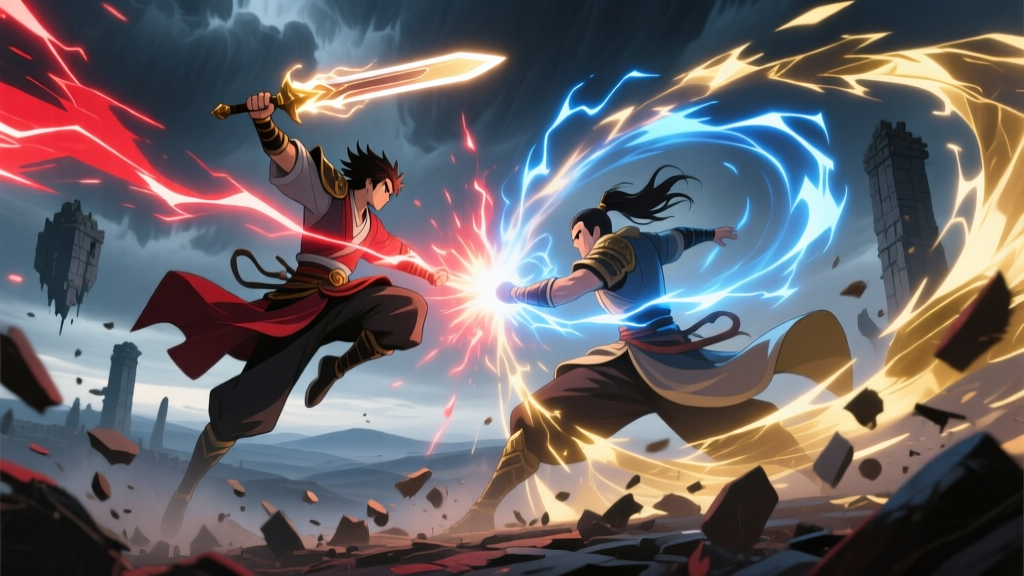
They didn’t fight heroes. They didn’t negotiate with gods. They didn’t even notice the Celestials—until it was time to erase them. In Secret Wars (2015) #1, a single Beyonder—unseen, unnamed, unchallenged—snaps its fingers, and 8,380,207 realities collapse into dust. No energy blast. No monologue. Just silence, then static. That moment isn’t just iconic—it’s the Rosetta Stone for Marvel’s entire cosmic hierarchy. If you understand what the beyonders did there, you understand why nothing in Marvel Comics—not Eternity, not The One Above All’s avatars, not even the Living Tribunal at full authority—can meaningfully oppose them without narrative override.
The Beyonders Are Not Gods—They’re the End of Godhood
The beyonders aren’t deities, ascended beings, or cosmic entities in the traditional sense. They’re post-abstract: entities that exist outside the Omniverse’s structural scaffolding—not above it, but outside the framework that defines 'above' itself. First introduced in Thor: God of Thunder #13 (2013), their earliest appearance was a chilling non-confrontation: Thor’s future self, King Thor, arrives at the edge of reality only to watch a Beyonder casually unmake a Celestial like a child flicking lint off a coat. No resistance. No recoil. No paradox. Just deletion.
Unlike abstracts like Eternity or Death—who are personifications *of* concepts within the Omniverse—the beyonders operate from a domain where concepts like ‘existence’, ‘causality’, and ‘multiversal law’ have no purchase. Their origin is deliberately opaque: they’re implied to be native to the ‘Beyond Space’, a realm not merely outside the Omniverse, but outside the metaphysical grammar that makes ‘outside’ intelligible. As stated by Doctor Doom in Secret Wars #5: “They do not think. They do not will. They simply… conclude.”
Power System: Erasure as Ontological Syntax
The beyonders don’t wield power—they execute finality. Their ability isn’t energy projection or reality warping; it’s ontological termination: the capacity to delete the logical and metaphysical prerequisites for anything to persist—even abstracts, conceptual archetypes, and multiversal constants.
- Feats:
- Erased 8.3+ million universes—including the entire Battleworld multiverse—with zero temporal or causal ripple (Secret Wars #1–2).
- Unmade the Celestials—beings who predate and architect entire multiverses—without triggering any cosmic alarm (Thor: God of Thunder #13).
- Rendered the Living Tribunal’s triune authority null in under a nanosecond (Secret Wars #3). The Tribunal didn’t fall—it was retroactively unqualified to judge.
- Survived the collapse of the Multiverse’s foundational axioms (e.g., logic, mathematics, identity) during the Incursions—while every other entity, including abstracts, experienced recursive dissolution.
- Limitations (Not Weaknesses):
- No known internal conflict or dissent—beyonders act in perfect consensus, implying no subjective agency to exploit.
- Cannot be interacted with via conventional means: no telepathy, no dimensional targeting, no resonance-based detection. They were only ‘found’ when they chose to be observed (by Doom’s stolen Beyonders’ tech).
- Do not respond to causality—so time travel, paradox bombs, or ontological recursion (e.g., ‘what if you erased yourself?’) have no effect. They exist prior to the premise of the question.
Tier Context: Where the Beyonders Sit in Marvel’s Hierarchy
Marvel’s cosmic tiering has long been debated—but the beyonders anchor the upper limit of what’s *objectively demonstrable*. They’re not ‘as powerful as TOAA’ (a common fan conflation); they’re functionally *irrelevant* to TOAA’s domain, because TOAA governs the Marvel Omniverse—and the beyonders operate where ‘governance’ ceases to be a coherent verb.
Below is how the beyonders compare to key Marvel entities—not in terms of ‘who wins’, but in terms of structural relationship to reality:
| Entity | Domain | Relationship to the Beyonders | Key Evidence |
|---|---|---|---|
| The One Above All | Omniversal author/creator; narrative apex | Conceptually superior—but non-interactive. TOAA is never depicted confronting or addressing the beyonders. Their existence doesn’t contradict TOAA; it exists in a meta-layer TOAA permits but does not engage. | TOAA appears only in editorial/narrative framing (e.g., Marvel Masterworks). No in-universe interaction with beyonders ever occurs. |
| Living Tribunal | Omniversal arbiter; enforces balance across all realities | Nullified. Its triune mandate was overwritten—not defeated, but redefined out of relevance. | Secret Wars #3: Tribunal’s form dissolves mid-sentence as its ‘judgment protocol’ is deleted from syntax. |
| Eternity / Infinity | Abstract embodiments of space/time and matter/energy | Erased as concepts. Not killed—uninstantiated. Their domains ceased to be definable. | Post-Secret Wars reboot: Eternity reappears only after the Beyonders’ influence is removed—not restored, but re-invented. |
| Celestials | Architects of multiversal evolution; nigh-omnipotent creators | Deleted without countermeasure. No defense activated. No warning signal sent. | Thor: God of Thunder #13: One Celestial disintegrates mid-flight; others freeze, then unravel atomically and conceptually. |
| Doctor Doom (with Beyonders’ power) | Mortal empowered by stolen beyonder tech | Replication ≠ equivalence. Doom’s armor mimics erasure effects but requires calibration, focus, and fails against abstracts unless amplified. | Doom’s ‘Beyonders’ armor’ shatters against Molecule Man’s true form (Secret Wars #9)—proving his access is derivative, not native. |
Controversial Debates: Why Fans Still Argue About Them
The beyonders spark heated debate—not over whether they’re strong, but over what their strength *means*. Here’s where consensus fractures:
Are They Truly ‘Beyond’ TOAA?
No. TOAA is the Marvel Omniverse’s ultimate authorial voice. The beyonders are an in-universe phenomenon operating at the boundary of that authorship. Think of TOAA as the writer; the beyonders are the blank page *before* the first sentence. They’re not ‘more powerful’—they’re a different category of existence entirely. This distinction matters because conflating them leads to false equivalences (e.g., “TOAA vs. Beyonders” debates ignore that TOAA *allows* their existence as part of Marvel’s metaphysical architecture).
Why Didn’t They Stop Incursions Earlier?
They didn’t intervene because incursions weren’t threats to *them*—only to the Omniverse’s internal continuity. The beyonders acted only when the Multiverse’s instability threatened to corrupt the *substrate* they observe from—the ‘Beyond Space’. As revealed in Secret Wars: Battleworld #2, their genocide wasn’t malice or judgment. It was system maintenance: pruning a failing branch before decay spread to the root.
Can Anything Beat a Beyonder?
In strict canon: no. Not even abstract-level weapons like the Heart of the Universe or the Infinity Gauntlet (pre-616 reboot) affect them. However, post-Secret Wars retcons introduced nuance: the beyonders were *defeated*—not in combat, but through self-termination. After their multiversal purge, they were tricked by a fractured Molecule Man (amplified by Reed Richards’ intellect and Doom’s will) into turning their own erasure logic inward. But crucially: this required a unique convergence—Molecule Man’s reality-authorship + Doom’s mastery of beyonder tech + Reed’s understanding of their syntax. It wasn’t a ‘victory’—it was a logical trap exploiting their one consistent trait: absolute consistency.
Legacy: How the Beyonders Redefined Marvel Cosmology
Before the beyonders, Marvel’s top-tier threats were hierarchical: Celestials > Abstracts > Cosmic Entities > Gods. The beyonders shattered that ladder. They proved that scale isn’t always linear—it can be orthogonal. Their introduction forced Marvel to distinguish between:
- Authority (TOAA),
- Jurisdiction (Tribunal, Eternity),
- Execution (Beyonders), and
- Creation (First Firmament, later revealed as a flawed primordial entity *within* the Omniverse).
That distinction echoes through every major event since. The 2023 Avengers Forever arc treats the beyonders as the benchmark for ‘true finality’—when Immortus tries to weaponize entropy, Kang warns him: “You’re playing with embers. They lit the fire that burned the map.”
FAQ
Who created the beyonders?
No creator is named or implied in canon. They’re presented as primordial fixtures of the ‘Beyond Space’—a realm outside creation narratives. Marvel intentionally avoids origin stories for them to preserve their conceptual weight.
Are the beyonders stronger than the Living Tribunal?
Yes—but not in a ‘fight’ sense. The Tribunal’s authority was erased as if it had never been a valid construct. It wasn’t overpowered; its entire operational framework was deleted.
Could the Infinity Gauntlet defeat a beyonder?
No. The Gauntlet manipulates the six universal constants *within* the Omniverse. The beyonders operate where those constants don’t apply. In Secret Wars, the Gauntlet (wielded by Black Panther) failed to even register their presence.
Why did the beyonders kill themselves?
They didn’t ‘kill’ themselves—they were induced into a recursive erasure loop by Molecule Man, exploiting their absolute adherence to logical consistency. It was less suicide and more a system crash.
Are the beyonders evil?
No. They lack morality, intent, or perspective. Their actions read as genocidal to us because we’re embedded in the structures they erase. To them, it’s syntax correction—not malice.
Do the beyonders appear in MCU?
Not yet. While the Multiverse Saga introduces variants and abstracts (e.g., The Watcher, The Illuminati), no MCU property has referenced or adapted the beyonders. Their scale and tone remain exclusive to comics—for now.