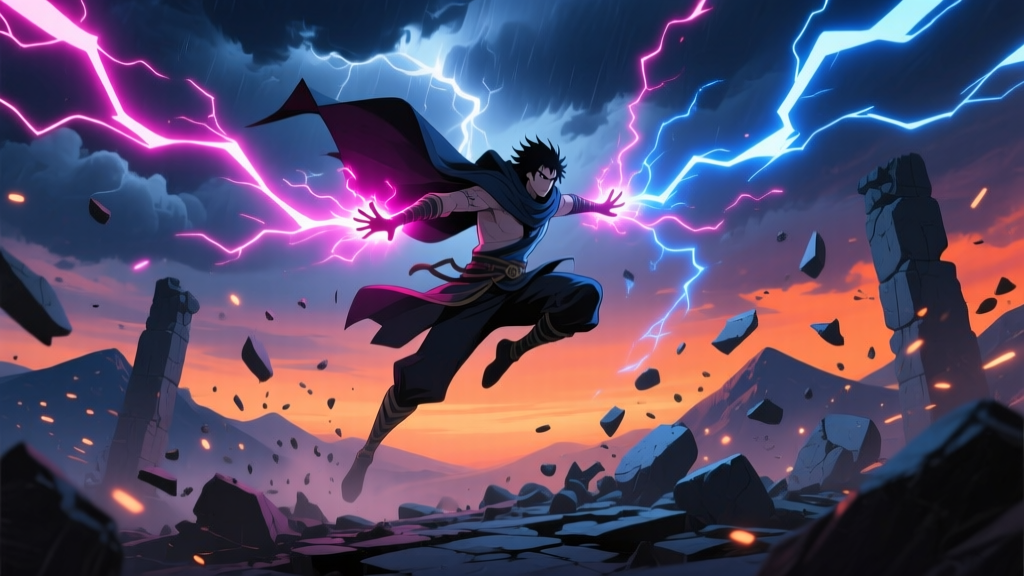
Here’s a fact that stuns even veteran DC readers: the Phantom Stranger has directly overruled the Spectre’s divine mandate — not once, but twice — during canonical DC events (Day of Vengeance #3 and Justice League Dark Vol. 2 #18). That’s like a diplomat vetoing an executioner mid-swing. And yet, despite being one of the oldest, most powerful beings in the DC Multiverse — older than the Lords of Order and Chaos, unbound by linear time, and immune to reality warping from entities like the Anti-Monitor — the Phantom Stranger remains shrouded in deliberate ambiguity. No origin story is canon. No true name is spoken. No power limit is ever confirmed. He appears not to fight, but to correct. And that makes him one of fiction’s most fascinating enigmas.
Who Is the Phantom Stranger?
He’s not a hero. Not a villain. Not even fully a character in the traditional sense — he’s a narrative function given form. First appearing in More Fun Comics #52 (1940), the Phantom Stranger emerged as a spectral guide for doomed mortals, offering cryptic warnings and moral tests. Over decades, DC layered contradictions onto him: sometimes a fallen angel, sometimes a cursed archangel (often identified as Judas Iscariot — though DC has never confirmed this), sometimes a cosmic observer who predates creation itself. His design — long black coat, wide-brimmed hat, glowing eyes, floating stance — is iconic, but his motives are deliberately inscrutable.
What is consistent? His role: a boundary enforcer between metaphysical realms. He doesn’t intervene in petty crime or superhero turf wars. He steps in when reality frays at the seams — when magic collapses into paradox, when gods break oaths, when timelines splinter beyond repair. He’s less ‘magic cop’ and more ‘cosmic compliance officer’ — and he answers to no one but the Source Wall’s silent architecture.
His Powers: Not Just Magic — Metaphysical Architecture
The Phantom Stranger doesn’t cast spells. He rewrites premises. His abilities operate on three interlocking tiers:
- Reality Anchoring: Can stabilize collapsing dimensions (e.g., holding the Bleed intact during Final Crisis’s entropy wave, while Monitor-entities were dissolving).
- Omnitemporal Awareness: Exists simultaneously across all points in time — seen observing both the birth of the first universe and its final heat death in DC One Million tie-ins.
- Authority Override: Has nullified divine edicts from the Presence, barred Eclipso from entering Heaven, and sealed the Well of Souls against the Spectre’s wrath — each feat occurring without visible effort or incantation.
Crucially, he’s immune to nearly every known power category: soul manipulation (he has no soul to seize), mind control (his consciousness isn’t linear), dimensional trapping (he exists outside dimensional syntax), and even conceptual erasure (as shown when the Anti-Life Equation failed to overwrite his presence in Dark Nights: Death Metal’s Overvoid sequences).
Key Feats — Ranked by Narrative Weight
| Feats | Source Event / Issue | Scaling Significance |
|---|---|---|
| Prevented the Spectre from executing Zatanna for violating magical law — then erased the judgment from divine record | Justice League Dark Vol. 2 #18 (2019) | Proves authority > Spectre’s mandate; implies jurisdiction over the Presence’s own legal framework |
| Reconstructed the entire DC Multiverse after its collapse — not as a builder, but as a ‘restorer of original intent’ | Dark Nights: Death Metal — The Last 52 (2021) | Higher-tier than World Forger (who forged new universes); Stranger restored continuity as it was meant to be, implying access to pre-creation blueprints |
| Walked unharmed through the Bleed during the Final Crisis entropy cascade — while Superman Prime One Million disintegrated nearby | Final Crisis #7 (2009) | Survived energy levels exceeding Omega Sanction output; immunity to universal decay mechanisms |
| Trapped the demon Eclipso inside a pocket dimension woven from ‘unbroken vows’ — a concept Eclipso himself embodies | Eclipso: The Darkness Within #1 (1992) | Beat an embodiment of divine wrath using pure narrative logic — not force, but semantic binding |
Origins: The Great Unanswered Question
DC has intentionally refused to canonize the Phantom Stranger’s origin — and that’s the point. Every major retcon has been presented as *possible*, but never definitive:
- Judas Iscariot Theory: Introduced in Phantom Stranger Vol. 2 #1 (1969), this version casts him as Judas cursed to wander until the Second Coming. It’s emotionally resonant — and utterly contradicted by later stories where he interacts with pre-Biblical deities.
- Fallen Archangel Theory: Supported by dialogue in Day of Vengeance, where he refers to “my brothers” among the Host — but refuses to name them. This aligns with his immunity to holy weapons and ability to banish angels.
- Pre-Creation Entity Theory: Most supported by modern canon. In DC Universe: Rebirth #1, he’s shown observing the Source Wall’s fracture before the Big Bang — and in Death Metal, he calls himself “the first question asked, and the last answer left.”
Why does DC keep it vague? Because mystery is his power. His ambiguity protects reality. As he tells Zatanna: “If you knew my name, you would understand the rules — and then you would break them.”
Tier Placement: Where Does He Stand?
Power-scaling forums love debating whether the Phantom Stranger outranks the Spectre, the Presence, or even the Writer (in metafictional terms). Here’s how he stacks up in DC’s official hierarchy — based on feats, editorial statements, and cross-title consistency:
| Entity | Relationship to Phantom Stranger | Canon Evidence |
|---|---|---|
| Spectre | Subordinate in matters of cosmic law enforcement | Overruled Spectre’s judgment twice; Spectre acknowledges Stranger’s authority with visible deference |
| Lords of Order & Chaos | Pre-dates and observes both factions impartially | Appears in their earliest mythic records as ‘the Unaligned Witness’; neither side dares invoke him |
| The Presence | Not subservient — operates under separate, older covenant | Refuses to kneel; Presence never commands him. Dialogue in Kingdom Come implies shared, non-hierarchical stewardship |
| World Forger / World Killer | Superior in ontological authority; Forger builds, Stranger preserves intent | In Death Metal, Stranger restores continuity after Forger’s creations are overwritten — indicating deeper structural access |
So where does that place him? Not at the top of DC’s power ladder — because there is no ladder. He exists outside the hierarchy. Think of him less as ‘Tier 11’ and more as ‘the footnote that edits the tier list’. He’s consistently portrayed as a boundary condition, not a combatant — which makes direct comparisons misleading. You don’t ‘beat’ the Phantom Stranger. You either comply… or cease to be coherent within the narrative.
Why Fans Debate Him So Much
Three reasons keep the Phantom Stranger at the center of endless forum wars:
- The Canon Vacuum: With no official origin or limits, fans project their own theories — theological, metaphysical, or literary — making debates less about facts and more about frameworks.
- The Power Paradox: He’s infinitely powerful in context, yet rarely ‘wins’ fights — because winning isn’t his function. His restraint is misread as weakness.
- Cross-Franchise Confusion: Marvel’s Ghost Rider once fought a ‘Phantom Stranger’ in a non-canon What If? issue — leading some to conflate them. They’re unrelated. DC owns the concept; Marvel’s was a pastiche.
Even DC writers treat him with caution. Geoff Johns called him “the character we’re not allowed to explain.” Scott Snyder described writing him as “trying to describe gravity to someone who’s never felt weight.” That reverence — and resistance to exposition — is what makes him endure.
Where to Start Reading
If you’re new to the Phantom Stranger, skip the Golden Age stories (they’re charming but inconsistent). Begin here:
- Modern Foundation: Day of Vengeance (2005) — introduces his role in magical law and establishes his dynamic with the Spectre.
- Character Depth: Phantom Stranger Vol. 4 (2012–2013) — explores his moral ambiguity and ties to the Trinity of Sin.
- Cosmic Scope: Dark Nights: Death Metal — The Last 52 (2021) — shows his role in multiversal restoration, with narration that hints at his pre-creation nature.
- Essential Cameo: Kingdom Come #2 — just two panels, but they reveal more about his perspective than 20 issues of solo material.
And if you only remember one thing: He doesn’t solve problems. He reveals which problems shouldn’t exist.
FAQ
Is the Phantom Stranger stronger than the Spectre?
Yes — in authority and jurisdiction. The Spectre enforces divine law; the Phantom Stranger defines its boundaries. Multiple canonical moments show him overriding Spectre’s actions without conflict, implying higher-tier ontological standing.
Is he Judas Iscariot?
DC has never confirmed it. The Judas origin was introduced in 1969 and referenced occasionally, but modern stories treat it as one possibility among many — not canon. Editorial intent treats his origin as intentionally unknowable.
Can the Phantom Stranger be killed?
No known method exists. He’s survived conceptual erasure, multiversal collapse, and anti-life assimilation. His existence is tied to narrative coherence itself — making ‘killing’ him logically incoherent within DC cosmology.
Why doesn’t he fix everything?
Because his role isn’t to intervene — it’s to preserve free will and consequence. As he says in Justice League Dark: “I do not heal wounds. I ensure the wound teaches.”
Has he ever teamed up with heroes?
Rarely — and never as an equal partner. He’s aided Zatanna, John Constantine, and the Justice League Dark, but always on his own terms, with conditions, and usually to prevent a larger imbalance — not to ‘help win a fight’.
Is he in the Arrowverse or DCEU?
No. Despite rumors and fan casting, the Phantom Stranger has never appeared in live-action DC adaptations. His nature resists translation to visual media — producers cite his ‘lack of motivation’ and ‘non-physical presence’ as fundamental barriers.