Spring 2026 Anime Winners and Losers: What Actually Delivered vs What Disappointed
Spring 2026 wasn’t flashy—but it was revealing. No mega-hits exploded onto the scene, no viral memes dominated Twitter for six straight weeks. Instead, what emerged were quiet, deliberate choices: studios doubling down on craft over spectacle, writers trusting character rhythm over plot velocity, and a handful of productions that either cracked under pressure or quietly mastered their own constraints. I watched all 23 simulcasts—some weekly, some in binges—and here’s what stuck, what soured, and what blindsided me.
The Winners: Craft Over Hype
Kokoro no Kage (Shadows of the Heart) is the season’s undisputed winner—not because it broke records, but because it refused to compromise. Adapted from Yūki Midorikawa’s 2024 manga, this 12-episode psychological drama about a forensic sound analyst reconstructing crime scenes through audio residue landed with surgical precision. Episode 7—where protagonist Rina isolates a single breath beneath rain static to identify a suspect—is animated in near-total silence for 92 seconds, punctuated only by subtle mouth movements and shifting light on her headphones. The restraint is breathtaking. Studio Lapin handled every frame like a museum curator: zero motion blur, hand-painted gradients on cityscapes, and a color palette built around muted teals and ash grays that made even convenience store interiors feel emotionally charged.
Tsuki no Koe ni Sasagu (To the Voice of the Moon) surprised everyone—including its own production committee. A low-budget romance about a deaf composer and a voice actor who records ASMR for the hearing-impaired, it was nearly canceled after episode 2 due to poor initial ratings. Then episode 5 aired: a 17-minute sequence where the two leads share headphones, and the animation shifts between dual perspectives—her visual world (subtle vibration lines pulsing across surfaces) and his auditory one (soundwaves rendered as ink-wash ripples). MAPPA didn’t animate it; they composed it. The pacing is glacial, yes—but intentional. Every pause carries weight. By episode 11, when she conducts an orchestra using only tactile feedback from the floorboards, you’re not watching anime. You’re holding your breath.
The Disappointments: When Ambition Outran Execution
Chrono Vanguard: Requiem had everything on paper: veteran director Kenji Kamiyama, a $2M/episode budget, and a premise that promised time-loop deconstruction with moral heft. What we got was a masterclass in misallocated resources. Episodes 3 and 4—the ones meant to pivot the narrative—were outsourced to a Korean studio with no prior experience in complex temporal editing. The result? Characters blinked out of sync with dialogue, jump cuts disguised as “stylistic time skips,” and a climactic confrontation in episode 6 where the protagonist’s face literally repeated the same three expressions across 48 seconds. Worse: the script kept teasing philosophical depth (“Is free will just delayed causality?”), then undercut it with exposition dumps delivered by floating text boxes during battle scenes. I remember watching episode 8’s final shot—a shattered hourglass refilling itself—and thinking, This image means nothing because nothing before it earned it.
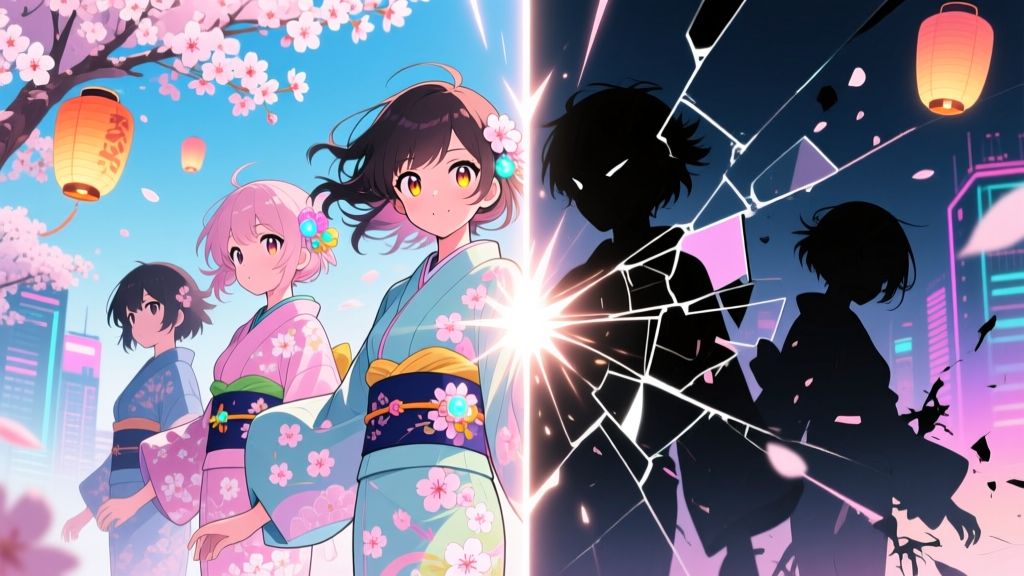
Bloom & Blade collapsed under its own lore. Based on a beloved light novel series, it opened strong: lush sakura-draped animation, sharp banter, and a genuinely clever magic system where floral growth patterns dictate spellcasting. But by episode 6, the pacing curdled. Flashbacks bloated to 14 minutes per episode. New characters arrived without motivation—just names, titles, and identical hair colors. Episode 9 tried to retroactively explain the villain’s motive via a 22-minute monologue over static-laced archival footage, while the background art regressed to 2012-level CG models. The voice cast remained stellar (especially Yūki Kaji as the morally ambiguous gardener-sorcerer), but even his performance couldn’t anchor a ship sinking under exposition sludge.
The Surprises: Unlikely Standouts
No one predicted Dust Mite Diaries would land on anyone’s top-ten list. A 13-episode slice-of-life comedy about four part-time workers at a Tokyo dust-mite research lab, it looked like parody. Instead, it became the season’s stealth emotional core. Episode 4—“The 0.3mm Rebellion”—follows a junior researcher trying to prove mites exhibit collective decision-making by observing them navigate a custom-built maze. The animation switches to macro photography-style realism for the mite POV sequences: blurred human hands loom like tectonic plates; fluorescent lights pulse like dying stars. It’s absurd, tender, and weirdly profound. And the humor lands because it’s rooted in specificity: the way one character organizes her microscope slides by pH level, or how another hums show tunes while calibrating humidity sensors. This isn’t “anime about science.” It’s anime about people finding dignity in microscopic work.
Then there’s Neon Static, the cyberpunk thriller that shouldn’t have worked. Its first episode opens mid-chase—no names, no context, just rain-slicked neon and a woman sprinting in heels too high for survival. Critics called it “style over substance.” They missed the point. Every subsequent episode peels back one layer of that chase, revealing how each visual choice—stutter-frame glitches, corrupted subtitle overlays, ambient noise that subtly changes pitch depending on the viewer’s headphone brand (yes, really)—is diegetic. The protagonist isn’t running from assassins. She’s fleeing her own neural implant’s deteriorating firmware. The “animation drop” in episode 10? Intentional degradation mimicking memory fragmentation. It’s not lazy—it’s layered. And it’s the only Spring 2026 show where I rewatched episodes just to catch how the lighting shifted between reality and simulation.
What the Season Said About the Industry
Spring 2026 exposed two widening fissures. First: the outsourcing crisis isn’t slowing—it’s evolving. Studios aren’t just farming out episodes anymore; they’re farming out *narrative responsibility*. When Chrono Vanguard handed off key structural episodes, they didn’t just lose visual continuity—they lost thematic throughlines. Second: audiences are getting savvier about pacing. Tsuki no Koe ni Sasagu and Dust Mite Diaries succeeded precisely because they treated slowness as a tool, not a flaw. Meanwhile, shows like Bloom & Blade mistook “more lore” for “more meaning.”
I’ll remember this season not for its spectacle, but for its honesty. It didn’t hide behind flash. It showed us where the seams are—and sometimes, stitched them with gold thread.