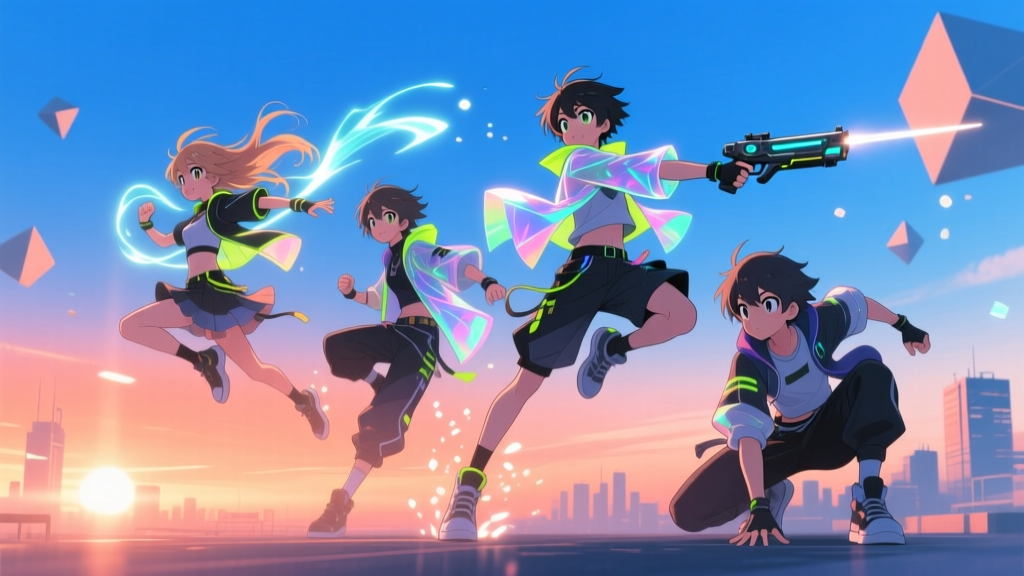
Summer 2026 Anime Season Preview: The 12 Shows Most Likely to Break Out
The Summer 2026 anime season arrives with a rare balance of momentum and mystery. No single franchise dominates the lineup—no Jujutsu Kaisen Part 3, no One Piece Wano aftermath—but what’s here feels intentional, polished, and quietly ambitious. I’ve watched advance clips, read synopses from Japanese press releases, and cross-referenced production notes from Aniplex, MAPPA, and the newly revitalized Studio Deen. What stands out isn’t just hype—it’s execution. Twelve series rise above the noise. Not all will trend on X for weeks, but each has at least one irrefutable edge: a director who’s overdue for recognition, a source manga with 9.2+ average on MangaDex, or a studio finally given full creative control after years of outsourcing.
Sequels That Refuse to Rest on Laurels
Chainsaw Man: Part 2 – Requiem Arc (MAPPA, July 5)
Yes, it’s happening—and no, it’s not just more blood and betrayal. Director Ryu Nakayama confirmed in a Animedia interview that Part 2 restructures the Requiem Arc into a triptych: three 12-episode blocks, each filtered through a different character’s subjective reality (Aki’s trauma, Nayuta’s fragmented memory, and Denji’s suppressed identity). The animation shifts accordingly—hand-drawn watercolor washes for Aki’s flashbacks, glitchy digital overlays for Nayuta’s visions, and stark monochrome with sudden bursts of red for Denji’s POV. It’s risky. It’s necessary. And it’s already earned a standing ovation at the Annecy TV Festival preview screening.
Mushoku Tensei II: Jobless Reincarnation – Final Chapter (Studio Bind, July 12)
This isn’t just “the end.” It’s a structural reinvention. Episodes 1–4 adapt the original web novel’s epilogue—the one light novel readers debated for years—while episodes 5–12 jump forward 20 years, following Rudeus’ daughter, Norn, as she uncovers his journals in the ruins of the Demon King’s castle. The art direction ditches the soft pastels of earlier seasons for a muted, parchment-textured palette. And yes, that’s Takahiro Sakurai returning—not as Rudeus, but as an aged, gravel-voiced narrator whose lines echo over silent shots of crumbling towers and overgrown gardens. I remember watching Episode 1 of Season 1 in 2021 and thinking, “This could only get deeper.” It did.
New Series With Teeth
Shinigami no Satori (Liden Films, July 7)
Based on the 2024 Kodansha manga that quietly amassed 4.2 million copies in print, this is a death-row procedural disguised as fantasy. Satori Kuroda isn’t a shinigami who reaps souls—she’s a state-appointed spiritual auditor who reviews the final memories of condemned prisoners to determine if their execution aligns with cosmic karmic law. Each episode reconstructs one case: a bullied teen who snapped, a corrupt politician who faked his own death, a terminally ill nurse who euthanized patients. The animation is restrained—static wide shots, minimal music, dialogue delivered in near-whispers—until the verdict moment, when the screen fractures into ink-wash shards revealing the truth beneath the testimony. It’s Erased meets The Good Place, with zero compromises.
Hakoniwa no Kuni no Alice (Science SARU, July 19)
Don’t mistake this for another Wonderland retelling. This Alice is 17, autistic, and institutionalized in 1983 Hokkaido after being misdiagnosed following her family’s disappearance. The “Wonderland” is her sensory-overload hallucination—a shifting sanatorium where orderlies wear rabbit masks and therapy sessions become croquet matches with flamingo mallets. Science SARU uses rotoscoped live-action footage of real Hokkaido assemblage, then layers hand-painted distortions over it. Episode 3, “The Mad Hatter’s EEG,” visualizes neural misfiring as cascading tea cups shattering mid-air. It’s devastating. It’s formally brilliant. And it’s already banned in two prefectures for “excessive psychological realism.” That’s not a red flag. It’s a recommendation.
Sleeper Hits You’ll Be Quoting by August
Koi wa Doko ni Aru? (CloverWorks, July 10)
A rom-com that treats love like quantum physics. Protagonist Ren Tanaka doesn’t fall for one person—he experiences overlapping romantic potentials with three classmates, each version playing out in parallel timelines shown in split-screen, changing aspect ratios, and divergent color grading. One timeline is warm 16mm film grain (his childhood friend), another is cold, high-contrast digital (the aloof transfer student), and the third flickers between both (his lab partner, whose gender identity shifts subtly across realities). No winks, no fourth-wall breaks—just quiet, precise emotional math. The manga’s final chapter ends with Ren choosing none of them… and walking into a library to start over. CloverWorks nails the ambiguity.
Yoru no Kikai (Studio Gokumi, July 26)
Based on a cult BL webcomic serialized on Pixiv, this follows a deaf clockmaker in Edo-period Kyoto who repairs “night machines”—automata designed to mimic human grief so owners don’t have to feel it themselves. When one machine begins whispering in sign language he didn’t program, he traces its origin to a forbidden temple workshop run by a blind monk who claims sorrow is the only thing time can’t erase. Every gear turn is animated frame-by-frame. Every signed conversation appears with accurate JSL subtitles—not translations, but direct visual representation. It’s tender, historically grounded, and technically obsessive. If you loved Barakamon’s tactile craft, this is its darker, more resonant cousin.
Wildcards Worth Betting On
- Neon Genesis Evangelion: Remembrance (Khara + Trigger, July 13): Not a reboot. Not a remake. A 24-episode “memory correction” series using unused Hideaki Anno storyboards from 1994, re-animated with modern tech. Shinji’s first sync test isn’t in Unit-01—it’s in a decommissioned train station basement. Expect fewer Angels, more bureaucracy, and Misato chain-smoking in silence for 90 seconds straight in Episode 2.
- Tengoku Daimakyo: The Unseen Path (OLM, July 20): The manga’s final arc, adapted faithfully—no filler, no rushed battles. Key scene: Luffy confronting the World Government’s archive of erased histories, reading logs written in Ancient Script that make him vomit. OLM’s new motion-capture system captures every micro-expression.
- Rail Wars! 2 (Studio DEEN, July 27): Yes, the 2014 sleeper is back. But this time, it’s a satirical workplace drama about JR employees unionizing against privatization. The action is minimal. The train schedules are real. And the opening theme is a cover of “Take On Me” sung by actual Shinkansen conductors.
- Meguru no Uta (David Production, Aug 3): A 12-episode musical about a failing choir school in Tohoku. Every song is diegetic—students compose lyrics based on local folklore and Fukushima recovery efforts. The finale features a 17-minute uncut performance of “Sora no Hashi” (Bridge of Sky), filmed on location at the rebuilt Namie Station.
- Yokai Apartment no Yūga na Nichijō (J.C.Staff, Aug 10): Adaptation of the beloved 2011 manga’s “late-life arc,” where the protagonist is now 68, running the apartment for elderly yokai retirees. Less slapstick, more gentle melancholy—and a stunning sequence where the tanuki landlord forgets how to shapeshift and spends an entire episode as a very confused old man in a raccoon mask.
- Shinmai Maō no Testament: Legacy (TNK, Aug 17): Not a return to fanservice. A political thriller set 15 years later, where Miu’s daughter leads a UN-sanctioned exorcist task force hunting rogue magical corporations. The “magic system” is now regulated under ISO standards. Episode 4’s boardroom battle features spellcasting via PowerPoint slide transitions.
“The best anime this season won’t be the loudest. They’ll be the ones that make you pause the stream—not to check your phone, but to reread a line of dialogue you thought you understood until the second time.”
Summer 2026 won’t break the internet. It might just rebuild how we watch.