‘Tokyo Revengers’ Season 3 Doesn’t Fix the Time Travel — It Abandons It
Let’s be real: by the end of Season 2, most of us had stopped caring whether Takemichi could “change the past.” We’d seen him scream into the void, fail, cry, scream again — and watched his trauma get repackaged as plot armor. The time loops weren’t tragic; they were tedious. So when Season 3 dropped with a clean, blinking “DIVERGENCE: 3.4%” overlay in Episode 1 — not on a phone screen, but *etched onto Takemichi’s forearm* in shaky ink — I didn’t roll my eyes. I leaned in. Because this wasn’t Steins;Gate cosplay. This was a surrender note written in metaphor.
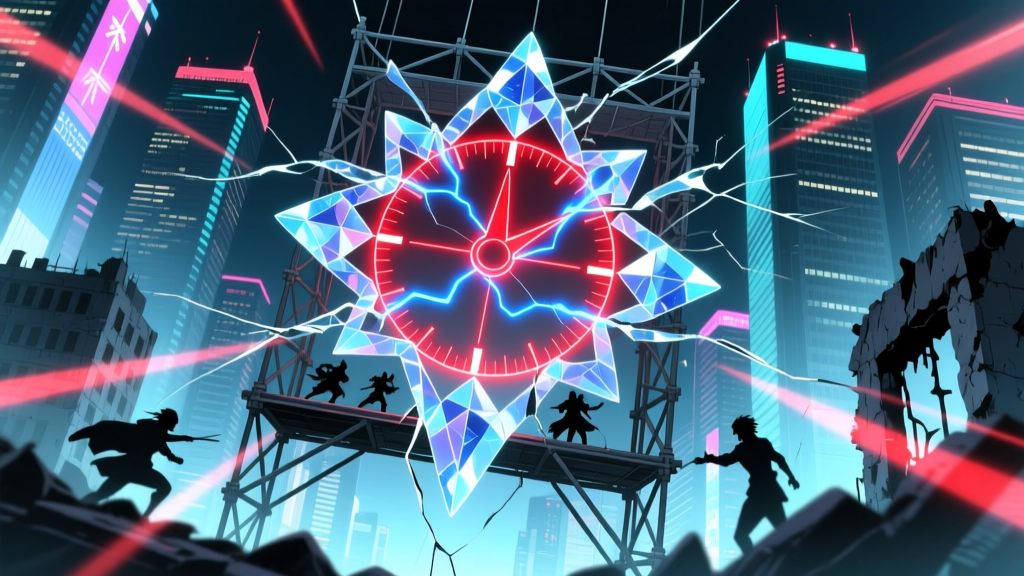
The divergence meter isn’t recalibrated — it’s recontextualized.
Yoriko Tomita, lead scriptwriter for Season 3, confirmed it outright at the Aniplex Writers’ Roundtable in March 2024: *“We stopped asking ‘What changes the timeline?’ and started asking ‘What changes *him*?’ The numbers aren’t physics — they’re pulse readings.”* That’s the thesis. And it works — because Season 3 stops treating divergence as a variable to be optimized, and starts treating it as a scar tissue index.
Take that 3.4% moment — Episode 2, right after Takemichi lets Kazutora walk away from the alley fight instead of tackling him. No grand speech. No blood. Just Takemichi breathing, knuckles raw, watching Kazutora’s silhouette shrink down the street while the divergence counter ticks up — *not* because history shifted, but because *he didn’t intervene*. His instinct to control, to fix, to *force* redemption through violence… faltered. And the number rose. Not because causality bent — but because his relationship to power did.
That’s the scaffold. Every divergence shift maps to a quiet emotional rupture:
- 7.1% (Ep. 5) — When Takemichi hands Mikey his phone *without* checking the messages first. He trusts Mikey’s word over his own paranoia. The number jumps — not because Mikey’s lying (he is), but because Takemichi chose vulnerability over surveillance.
- 12.8% (Ep. 9) — The bathhouse scene with Emma. Takemichi doesn’t deflect her grief with “I’ll save everyone.” He says, *“I don’t know how to hold this.”* She cries. He doesn’t move. The divergence spikes — because he finally stopped performing competence as love.
- 19.6% (Ep. 13 finale) — Not a battle. Not a revelation. Takemichi sits with Draken — alive, breathing, *not* a ghost — and says, “You don’t have to be okay for me.” Divergence surges. Because he unclenched his fists — emotionally, narratively, existentially.
This is where ‘Re:Zero’ becomes the perfect foil — not competitor, but contrast. Subaru’s loops are *triggered* by guilt. Every reset is an act of penance: *If I hadn’t looked away, if I’d screamed louder, if I’d held her hand tighter.* His trauma is cyclical, self-punishing, inwardly spiraling. Takemichi’s Season 3 loops? They’re *released* — not by fixing the past, but by refusing to treat the present as collateral damage. His triggers aren’t failures — they’re thresholds crossed: the first time he doesn’t beg, the first time he listens without planning his rebuttal, the first time he names his fear instead of weaponizing it.
And yes — it’s still messy. There are still clumsy flashbacks. There’s still Mikey doing something inexplicably violent in Ep. 7 (though now, crucially, *Takemichi doesn’t rationalize it* — he just stares at his own trembling hands). But the mess feels *human*, not lazy. Because the show no longer hides behind time travel logic — it uses the divergence meter to spotlight what the earlier seasons buried under spectacle: Takemichi’s chronic emotional dysregulation.
Think back to Season 1, Episode 8 — the infamous “I’m not strong!” monologue in the rain. It landed because it was raw, yes — but also because it was *isolated*, performative, and instantly overwritten by a fistfight. In Season 3, that same line appears — twice — but stripped bare: once whispered into a pillow (Ep. 4), once mouthed silently while tying shoelaces (Ep. 11). No music. No slow-mo. Just breath, light, and the divergence counter hovering at 8.2%. That’s the shift. The meter isn’t measuring worldlines — it’s measuring *how long he can stay in his own body without fleeing into savior fantasy.*
Even the animation leans in. MAPPA ditches the hyper-kinetic cuts of Season 2 for longer holds: 4-second shots of Takemichi blinking, 6 seconds of him watching steam rise off tea, 12 seconds of him tracing the crack in his apartment wall — each punctuated by a subtle divergence tick. It’s not flashy. It’s *exhausting*, in the best way. Like watching someone learn how to stand after years of bracing for impact.
Some fans will miss the old stakes. The life-or-death urgency. The clear villains. But here’s what I remember watching Episode 10 — the one where Takemichi walks Emma home and doesn’t mention the future once — and realizing I hadn’t checked my phone in 22 minutes. Not because the episode was “so gripping,” but because it *refused* to grip me. It let me breathe. It treated my attention like something to be earned, not hijacked.
That’s the quiet revolution of Season 3: it trades the illusion of control for the weight of presence. The divergence meter isn’t a plot device anymore — it’s a mirror. And for the first time since 2021, Tokyo Revengers isn’t asking us to believe in time travel.
It’s asking us to believe in *this*: the terrifying, fragile, unquantifiable act of showing up — broken, uncertain, and finally, blessedly, unarmed.