Is There Any 18+ Content in One Piece? (The Honest Answer)
Updated: June 2026 | Category: Anime Q&A | Reading time: ~7 min
TL;DR
No. One Piece does not contain 18+ or pornographic content in any official capacity. The manga is serialized in Weekly Shonen Jump, a magazine aimed at boys and teens, and the anime carries a TV-14 / T for Teen rating across most regions. There are brief moments of suggestive humor and moderate violence, but nothing that crosses into adult or explicit territory. The widespread perception that One Piece has 18+ content comes almost entirely from fan-made doujinshi, NSFW fan art, and internet memes — none of which are official.
The Short Answer
One Piece is not an 18+ series. It has never been classified as adult content by any official rating body, and it is not marketed toward adults. The manga has run in Weekly Shonen Jump since 1997 — a publication whose core demographic is boys aged 10 to 18. The anime adaptation airs on mainstream Japanese television during time slots accessible to younger viewers.
That said, the question keeps coming up for a reason. One Piece is one of the most popular franchises in the world, which means it generates an enormous volume of fan content, misinformation, and out-of-context screenshots. This article breaks down exactly what is and isn't in the series so you can make an informed decision.
What's Actually in One Piece: A Content Breakdown
Before addressing the rumors, here is a clear picture of the mature elements that do appear in the official manga and anime.
Violence and Combat
One Piece is an adventure-action series about pirates. Combat is a core element of the story, and the violence level is moderate to intense. Characters are punched, slashed, shot, and subjected to elemental attacks on a regular basis. Major story arcs include:
- Warfare and mass battles (Marineford arc) with on-screen casualties
- Character deaths — both on-screen and emotionally heavy (e.g., Ace, Whitebeard, Pedro)
- Slavery, human trafficking, and experimentation (Celestial Dragons, Caesar Clown)
- Torture and imprisonment (Impel Down)
- Blood is shown, though it is stylized rather than graphic
Despite the intensity, the violence never reaches the level of seinen horror or splatter-fest series like Berserk or Gantz. It stays firmly in the shonen category.
Suggestive Humor and "Ecchi" Moments
This is the area that generates the most confusion. One Piece does include recurring suggestive comedy, primarily through:
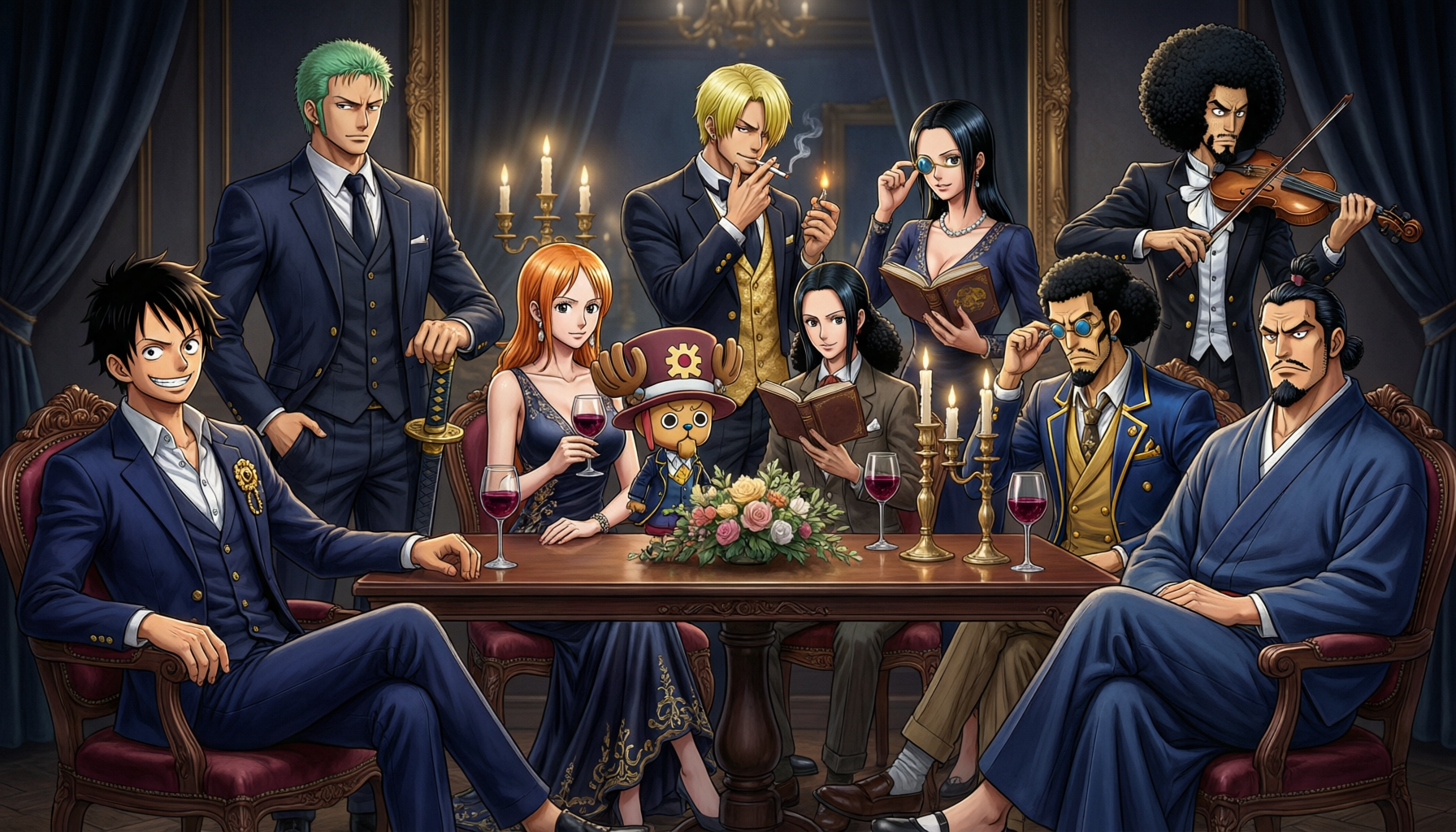
- Sanji's perverted reactions: Sanji regularly gets nosebleeds, googly eyes, and over-the-top physical comedy when he sees attractive women. This is played purely for laughs and is a long-running gag.
- Brook's skeleton jokes: Brook frequently asks women to show him their panties ("Panty shot!"). Again, this is slapstick comedy, not sexual content.
- Female character designs: Characters like Nami, Robin, Boa Hancock, and Jinbe are drawn with exaggerated proportions. Some outfits are revealing (Nami's bikini tops, Hancock's cheongsam). This is often described as "fan service" — but it never crosses into nudity or sexual acts.
- Bath scenes: There are occasional bath or hot spring scenes. These use steam, water, and strategic framing to avoid showing anything explicit. They are comedic, not titillating.
Context matters: These moments are brief gags in a 1,100+ chapter story. They occupy a tiny fraction of screen/page time and are never the focus of any arc. If you have seen Dragon Ball (Master Roshi's nosebleeds) or Naruto (Jiraiya's "research"), you already understand the tone.
Heavy and Emotional Themes
One Piece deals with surprisingly mature subject matter beneath its colorful surface. These are not "18+" in the sexual sense, but they may be intense for very young children:
- Racism and discrimination: Fish-Man Island arc directly addresses systemic racism, slavery, and hatred between species.
- Government corruption: The World Government, Marines, and Celestial Dragons represent authoritarian abuse of power.
- Child abuse: Several backstories involve child neglect, abuse, and abandonment (Sanji, Chopper, Robin, Big Mom's children).
- Genocide and destruction: The Ohara incident, the Buster Call, and the destruction of Lulusia are depicted as war crimes.
- Suicide and self-sacrifice: Some characters face death willingly, and these scenes are emotionally devastating.
Why Do People Think One Piece Has 18+ Content?
If One Piece is a shonen series, why does this question keep coming up? There are several reasons, and almost all of them trace back to fan-created content and internet culture.
1. Doujinshi and Fan-Made Hentai
One Piece is one of the most popular subjects for doujinshi (self-published fan comics) in Japan. A significant volume of these doujinshi are sexually explicit. Because they feature One Piece characters and art styles that sometimes closely mimic Eiichiro Oda's work, people who encounter them online may assume they are official. They are not.
Doujinshi culture in Japan is vast and operates in a legal gray area. Creators sell these works at events like Comiket, and they cover every franchise imaginable. One Piece, being the best-selling manga of all time, naturally attracts a disproportionate share.
2. NSFW Fan Art
Search for almost any One Piece character on platforms like Twitter/X, Pixiv, or Reddit and you will find explicit fan art. Popular female characters — Nami, Robin, Boa Hancock, Yamato, Uta — are frequently depicted in sexual scenarios by fan artists. This content circulates widely and often lacks any disclaimer that it is unofficial.
3. Out-of-Context Screenshots
One Piece has over 1,100 manga chapters and 1,100+ anime episodes. With that much content, it is easy to find a single frame or panel that looks suggestive without context. A screenshot of Sanji's nosebleed, a bath scene obscured by steam, or Brook's panty-request gag can be framed as evidence of "18+ content" when the full scene makes it clear it is comedy.
4. AI-Generated and Deepfake Content
Since 2023, AI-generated explicit images of anime characters have proliferated online. One Piece characters are common subjects. These images can be extremely convincing and are sometimes mistaken for official artwork, further fueling the misconception.
5. Confusion With Other Series
Some people conflate One Piece with genuinely mature anime. Series like Redo of Healer, Interspecies Reviewers, or Berserk contain explicit content and are sometimes discussed in the same online spaces. When someone hears "anime has 18+ content," they may incorrectly apply that to all popular anime, including One Piece.
Official Content vs. Fan-Made Content: What's the Difference?
This is the most important distinction to understand, and it applies to every major anime and manga franchise:
If you encounter explicit One Piece content online, ask yourself: Did this come from an official source — the manga, the anime on Crunchyroll, an official movie? If the answer is no, it is fan-created and should not be used to judge the series itself.
Age Ratings by Country
Official age ratings give the clearest picture of how regulatory bodies around the world classify One Piece:
No country has rated One Piece as 18+ or adult-only. The highest classifications it receives are TV-14 (US) and M / 12 (Australia / UK), both of which indicate content appropriate for teenagers.
Has One Piece Ever Been Censored?
Yes — and ironically, the censorship itself sometimes makes people think the original content was more explicit than it actually was.
- Sanji's cigarette: In some international broadcasts (notably the 4Kids English dub), Sanji's cigarette was replaced with a lollipop. The original Japanese version always showed him smoking.
- Blood and injuries: Certain international broadcasts have reduced visible blood or toned down injury scenes.
- Religious imagery: Some cross-shaped gravestones and religious symbols were edited in specific regional broadcasts.
- Cleavage adjustments: A small number of scenes had female character outfits slightly adjusted for certain international airings.
None of these edits involved removing sexual content. They were routine localization adjustments that are standard practice for shonen anime distributed internationally.
Is One Piece Appropriate for Kids?
This is a separate question from "is it 18+," and the answer depends on the child's age and maturity level:
Ages 7 and under: Probably too intense. The violence, character deaths, and emotional weight of later arcs (Marineford, Whole Cake Island) are heavy for young children.
Ages 8 to 12: Generally fine with parental awareness. Most kids in this range handle shonen violence well, but parents should be aware of the suggestive humor gags and some scary character designs (e.g., certain villains).
Ages 13 and up: Fully appropriate by any standard. The themes — friendship, justice, freedom, sacrifice — are genuinely excellent and many parents actively enjoy watching it with their teens.
Related Questions
Does One Piece have nudity?
No. There are bath and hot spring scenes, but they use steam and strategic framing to avoid showing anything. Some female characters wear revealing outfits, but there is no nudity in the manga or anime.
Is the One Piece manga more mature than the anime?
Not significantly. The manga and anime follow the same story. The anime occasionally adds filler but does not add mature content. If anything, the manga's black-and-white art makes suggestive moments less visually prominent.
Are One Piece movies rated differently?
Most One Piece films carry similar ratings to the series. One Piece Film: Red (2022) was rated PG-13 in the US for violence and some suggestive material — slightly higher than the series average but still not 18+.
What anime actually has 18+ content?
Series like Berserk (1997), Elfen Lied, Interspecies Reviewers, and Redo of Healer contain genuinely explicit content. These are seinen or late-night anime, not shonen series like One Piece.
Why is One Piece rated TV-14?
The TV-14 rating in the US is primarily due to action violence, some blood, mild suggestive humor (Sanji's gags), and occasional coarse language in the English dub. It is the same rating given to many mainstream action shows.
You Might Also Like
This article is based on the official One Piece manga (Shueisha) and anime (Toei Animation) as of June 2026. All age ratings are sourced from their respective national rating boards. Fan-made content discussed herein is referenced only for informational purposes and is not endorsed by or affiliated with the One Piece franchise.