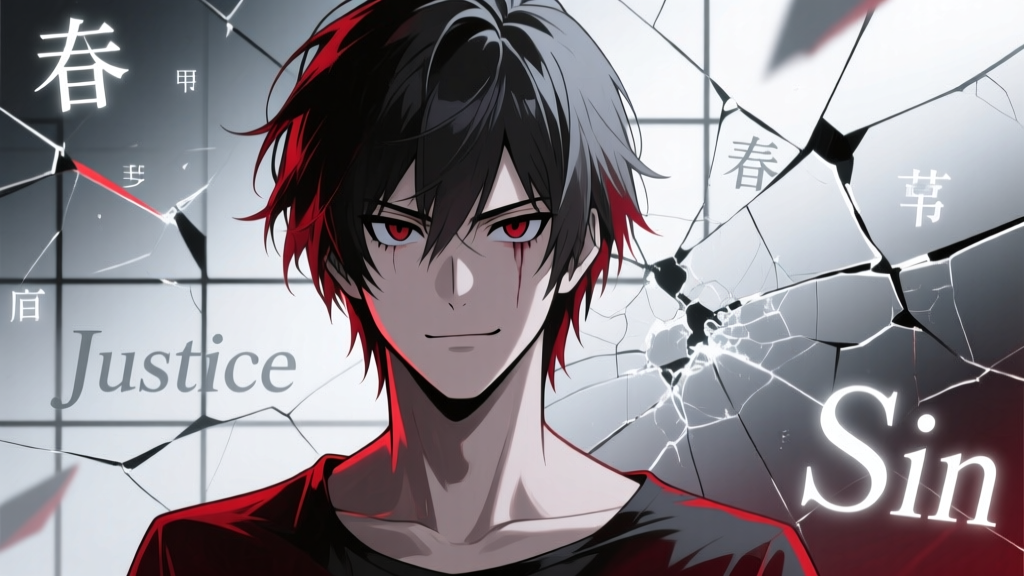
Light Yagami Revisited: Death Note's Villain-Protagonist Still Hits Different
By Yuki Tanaka
Light Yagami Revisited: Death Note's Villain-Protagonist Still Hits Different
Let’s be honest—I rewatched *Death Note* last month. Not the whole thing, not even most of it. Just episodes 12 through 14. The L confrontation arc. The one where Light stands in that rain-slicked alley behind the convenience store, breath shallow, fingers twitching at his side—not because he’s afraid, but because he’s *calculating*. And I sat there, heart pounding, thinking: *This still shouldn’t work. And yet it does.*
It’s been nearly two decades since Light Yagami first wrote a name in a notebook and declared himself “the new god of the world.” In 2026—amidst a wave of morally malleable antiheroes (think *Jujutsu Kaisen*’s Gojo who bends rules with a smirk, or *Chainsaw Man*’s Denji whose ethics evaporate faster than blood on hot pavement)—Light feels *stranger*, more unsettling, and paradoxically *more precise* than ever.
Not Just Arrogant—Architecturally Arrogant
Light isn’t just “cocky.” His arrogance is structural. It’s baked into how he organizes time, space, and human behavior. Watch episode 17—the one where he orchestrates the fake “L’s death” using Misa’s eyes and the TV broadcast. He doesn’t just lie. He *stages reality*: scripting camera angles, timing commercial breaks, weaponizing mass media as if it were a subroutine in his personal OS. That scene isn’t about deception—it’s about *ontological control*. Light doesn’t want to win an argument. He wants to redefine what counts as evidence, memory, truth.
Modern villain-protagonists often trade in chaos or trauma. Sukuna thrives in disarray. Griffith fractures himself across timelines. Light? He *abominates* entropy. His god complex isn’t mystical—it’s bureaucratic. He keeps spreadsheets (yes, *Death Note* implies them), cross-references alibis down to the minute, and treats human psychology like a set of predictable variables. That’s why his downfall stings so sharply: it’s not fate or karma. It’s *overfitting*. He builds a model so perfect for L that it collapses the second Near enters the frame—and Light, for all his genius, never even *considers* that someone could think *differently*, not just *better*.
His Moral Philosophy Isn’t Hypocritical—It’s Horrifyingly Consistent
I used to roll my eyes at Light’s “world without crime” speech—especially when he kills innocent cops or engineers the Shinigami Eyes trade that dooms Misa. But rereading the manga’s *How to Read* appendix and rewatching episode 25—the “Kira’s Kingdom” press conference—I realized: Light *means it*. Every word. His utilitarian calculus isn’t performative. It’s chillingly literal.
He doesn’t kill because he enjoys it (though let’s be real—there’s a flicker of euphoria when he watches the first Kira victim drop dead on live TV). He kills because he believes *preemptive elimination* is the only scalable justice. Crime isn’t a social symptom to him—it’s a *design flaw* in humanity’s operating system. So he patches it. Brutally. Efficiently. With zero tolerance for edge cases.
Compare that to *Demon Slayer*’s Tanjiro, who agonizes over every demon’s backstory, or even *My Hero Academia*’s Deku, who clings to redemption like a lifeline. Light wouldn’t waste breath on “what made them this way?” He’d ask: *What’s their threat vector? What’s the optimal termination window?* There’s no moral ambiguity in his mind—only inefficiency. That’s why his final breakdown isn’t tragic in the Shakespearean sense. It’s *technical*. He fails because his model can’t accommodate irrational variables—like Near’s silence, or Matsuda’s accidental shot, or Ryuk’s boredom.
Why Modern Villain-Protagonists Feel… Softer
Don’t get me wrong—I love *Chainsaw Man*. Denji’s raw, feral hunger for affection makes him devastatingly human. But his violence is reactive, emotional, *messy*. Light’s violence is sterile. Clinical. He doesn’t scream when he kills—he *confirms*. He checks the time. He updates his mental ledger.
Even *Jujutsu Kaisen*’s Suguru Geto—a character explicitly framed as Light’s spiritual successor—leans into ideology-as-trauma-response. His “humans are evil” speech isn’t cold logic; it’s grief curdled into doctrine. Light has no such wound. His parents are kind. His grades are stellar. His life is *fine*. Which makes his choice *worse*. He doesn’t snap. He *ascends*—voluntarily, deliberately, joyfully.
That’s what sets Light apart in 2026: he’s the rare villain-protagonist who isn’t asking for empathy. He’s offering a *blueprint*. And that blueprint is still terrifyingly legible.
Think about algorithmic policing, predictive sentencing, AI content moderation that bans dissent before it trends. Light didn’t invent surveillance capitalism—but he *predicted its theology*. His belief that “a few deaths now prevent millions later” echoes in every “trust the algorithm” corporate memo. His dismissal of due process (“The law protects criminals better than victims”) sounds like a Reddit thread from 2024. He’s not a relic. He’s a prototype.
Ryuk Is the Real Protagonist—And That Changes Everything
Here’s something I only caught on my fourth rewatch: Ryuk isn’t comic relief. He’s the narrative’s immune system. Every time Light gets too self-serious, Ryuk snorts, drops an apple, or mutters, *“Humans are so interesting.”* He doesn’t judge Light—he *observes*. Like a scientist watching a particularly aggressive strain of mold consume its petri dish.
Ryuk’s presence reframes Light’s entire arc. This isn’t a tragedy about hubris. It’s a case study in *what happens when intelligence divorces itself from consequence*. Ryuk can’t die. He can’t be punished. He can’t even be *surprised*—he’s seen gods rise and crumble. So when Light finally screams *“I am justice!”* in episode 37, Ryuk doesn’t flinch. He just writes his name—and eats an apple.
That moment lands harder now. Not because Light loses, but because *nothing changes*. The Shinigami realm doesn’t shudder. The world doesn’t mourn. Ryuk flips to a new page and finds a new host. Light wasn’t fighting for a future. He was performing for an audience that had already tuned out.
So Why Does He Still Hit Different?
Because Light Yagami refuses the comfort of modern storytelling. No redemption arcs. No hidden trauma that “explains” him. No last-minute hesitation. He dies mid-scream, covered in his own blood, still reaching—not for salvation, but for *more time to optimize*.
In an era where villains get spin-offs, prequels, and therapy sessions (*Looking at you, Frieren*), Light remains stubbornly, beautifully *unredeemable*. You don’t understand him to forgive him. You understand him to *recognize* him—in the corner office, the comment section, the quiet confidence of someone who’s already decided what’s right… and won’t waste breath explaining it to you.
I still pause the show sometimes. Not at the big moments—the rooftop duel, the final confrontation—but at small ones. When Light adjusts his glasses after lying to Soichiro. When he smiles faintly while reading a news report about a Kira execution. When he tells Misa, voice soft and utterly sincere, *“You’re the only person I’ve ever truly trusted.”*
That’s the hit. Not the grandiosity. The intimacy of the lie. The sheer, staggering *focus* of a mind that sees love, loyalty, and morality as variables to be managed—not values to be lived.
Light Yagami isn’t outdated. He’s waiting. Patient. Polished. And if you listen closely, beneath the chatter of new anime seasons and trending TikTok analyses—you can still hear the scratch of his pen.
Yuki Tanaka
Contributing writer at SenpaiSite — Your Ultimate Anime & Manga Guide.