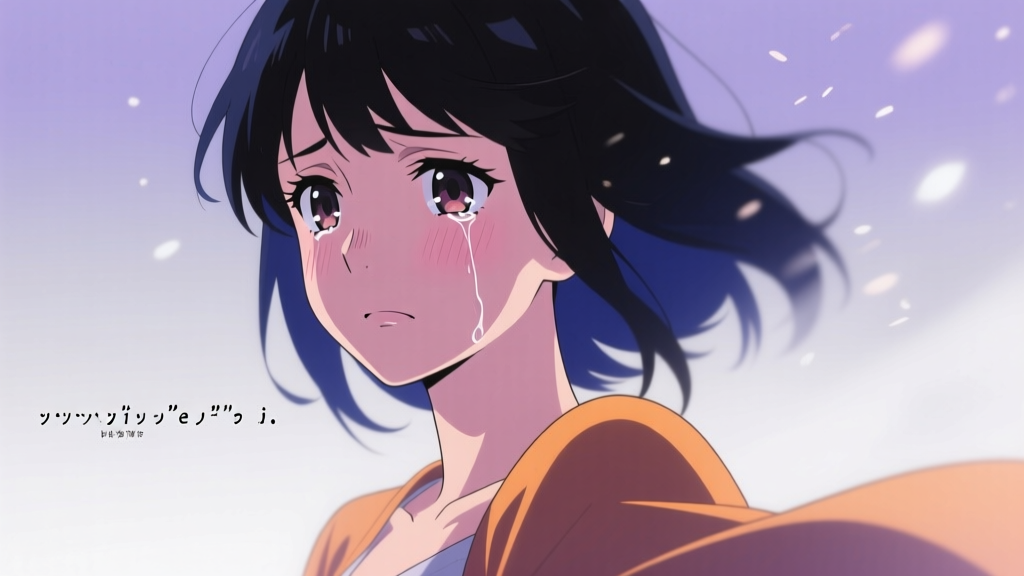
Shinobu Oshino isn’t *playing* a child — she’s speaking in the grammar of survival.
I remember rereading Kizumonogatari’s “Blood-Sucking Girl” chapter after finishing Owarimonogatari, and stopping cold on page 47 — not because of the gore, but because of a single line: *“Ore wa shinobu da. Demo… kimi wa dare?”* She says “ore” — the blunt, masculine pronoun — then hesitates, voice thinning mid-sentence, before switching to “watashi” in the next paragraph. Not for cuteness. Not for irony. For *distance*. That hesitation isn’t a pause — it’s a boundary.
This isn’t metaphor. It’s diagnostic scaffolding.
Nisio Isin doesn’t name Shinobu’s alters in the light novels. Not once. No “inner child,” no “protector,” no clinical labels smuggled into narration. In Bakemonogatari’s “Cat” arc, when Koyomi asks, *“Who are you really?”*, the text replies: *“Shinobu Oshino. Or rather — the one who answers to that name.”* That evasion isn’t coy worldbuilding — it’s deliberate linguistic erasure, mirroring DSM-5-TR Criterion B1: *“Disruption of identity characterized by two or more distinct personality states.”* The absence of naming *is* the symptom. The prose refuses to stabilize her referent — because she *can’t* stabilize it internally. Compare that to the anime: Shaft’s voice acting (Maaya Sakamoto’s layered whispers, sudden pitch drops) *performs* multiplicity — but the novels *withhold* it. Nisio forces the reader to hold ambiguity in syntax, not sound.
Her speech patterns aren’t stylistic tics — they’re structural fractures. Let’s break them down by DSM-5-TR criteria:
Pronoun shifts: She oscillates between “ore,” “boku,” “watashi,” and silence — never “atashi” or “uchi,” never the soft, feminine forms Koyomi uses with girls her apparent age. “Ore” appears most often during threat assessment (“Koyomi, run — *ore wa kowai*”), “boku” when negotiating autonomy (“*Boku wa kimi to issho ni iru*”), “watashi” only when recounting trauma pre-1600s (“*Watashi wa mada shiranakatta… sono hi made*”). This isn’t roleplay — it’s functional compartmentalization. Each pronoun maps to a state with discrete affective valence and memory access.
Verb conjugation collapse: In Owarimonogatari’s “Monster” arc (LN Vol. 13, Ch. 4), Shinobu describes her first kill using archaic, uninflected verbs: *“Korosu. Mieru. Tsumi.”* No past tense. No subject. Just bare lexical roots — the grammar of flashbacks, not narration. DSM-5-TR Criterion B3 notes “recurrent gaps in recall of everyday events,” and here, verb morphology itself fails. She can’t *conjugate* time because she can’t integrate temporal continuity.
Silence as syntax: Her longest silences aren’t pauses — they’re grammatical voids. In Kizumonogatari’s final confrontation with Kiss-Shot, Shinobu stops speaking for 17 pages. Not a single internal monologue. Not even a narrative summary of her thoughts. The text *leaves space*. That’s not restraint — it’s dissociative amnesia rendered typographically. Nisio’s 2018 essay “Grammar as Identity” confirms this: *“When the self cannot be predicated, the sentence cannot be completed. Silence is not absence. It is the only honest verb form available.”*
Shaft’s direction doesn’t illustrate this — it *enacts* it. Watch episode 10 of Bakemonogatari (“Cat Part 2”) closely: every time Shinobu speaks, the cut to Koyomi lasts exactly 0.3 seconds — just long enough to disrupt saccadic rhythm, too short for full cognitive integration. That timing isn’t arbitrary. Shaft’s 2016 production notes call it “linguistic choreography”: the edit *is* the dissociation. You don’t *see* the switch — you *stumble* across it, same as Koyomi does when her voice cracks mid-sentence and his face blurs for three frames. The fragmentation isn’t in her mind alone; it’s in the frame rate.
Which brings us to the biggest misreading: her “reintegration” in Owarimonogatari.
No. Not reintegration.
In the “Monster” arc, Shinobu doesn’t merge back into Koyomi. She doesn’t vanish. She *negotiates*. She moves from “ore/boku/watashi” to a new, unstable third-person usage: *“Shinobu wa…”* — followed by clauses where subject and object blur (*“Shinobu wa koyomi o mamoru. Shinobu wa koyomi ni mamorareru.”*) That’s co-consciousness, not cure. DSM-5-TR Criterion C explicitly distinguishes DID from “normal” multiplicity: *“The disturbance is not a normal part of a broadly accepted cultural or religious practice.”* But Shinobu’s co-consciousness *is* culturally embedded — it mirrors Japanese concepts of *bunshin* (split spirit) and *kami-kakushi* (spirit abduction), where fragmentation isn’t pathology but ontological condition. Her “resolution” is learning to hold contradiction without collapse — saying “I am Shinobu” while simultaneously knowing “I am also the wound, the fang, the silence.”
That’s why the final scene of Owarimonogatari hits so hard: Koyomi asks if she’ll stay. She replies, *“Mou… hitori ja nai kara.”* (“Because I’m not alone anymore.”) Not “I’m whole.” Not “I’m fixed.” *“Not alone.”* That’s the pivot — from isolation-as-defense to interdependence-as-structure.
This works because Nisio treats language not as decoration but as neural cartography. Every dropped particle, every misaligned honorific, every breathless ellipsis… it’s all data. And Shaft doesn’t translate it — they amplify its physiological impact.
So yes — Shinobu Oshino speaks like someone with DID. Not *as if*. Not *like a metaphor*. She speaks *from inside* it — in the grammar, in the gaps, in the unbearable weight of pronouns that refuse to settle. To read her as “cute” or “mysterious” is to miss the quiet, relentless honesty of her syntax. She’s not hiding behind childish speech. She’s building a self, word by fractured word, in the only language her nervous system still recognizes as safe.
And that’s not fantasy.
That’s survival — spelled out in hiragana, kanji, and silence.
Emma Rodriguez
Contributing writer at SenpaiSite — Your Ultimate Anime & Manga Guide.