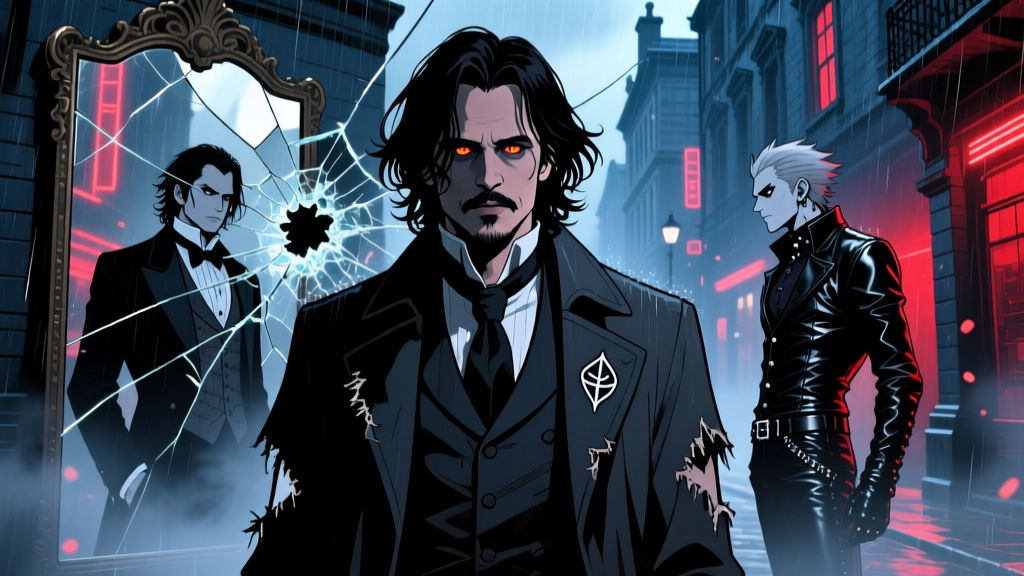
Type "Hyde Johnny Depp" into any search engine and you'll get a cascade of forum threads, fan edits, and half-remembered claims that the king of quirky gothic roles once played literature's most famous alter ego. He didn't. But the story of why so many people believe otherwise tells us something fascinating about fandom, miscasting, and the strange afterlife of a film that almost nobody defended in 2003.
The League of Extraordinary Gentlemen film arrived in theaters on July 11, 2003, carrying the weight of a $78 million budget, the final screen appearance of Sean Connery, and an Alan Moore comic so beloved that its creator had already disowned every previous adaptation of his work. The movie grossed roughly $179 million worldwide—not a disaster on paper, but a disappointment heavy enough to kill any sequel plans and bury the franchise for over two decades.
Yet here we are in 2026, and people are still searching for Johnny Depp in a movie he was never part of.
The Man Who Actually Played Hyde
Let's settle the factual record first. In Stephen Norrington's 2003 film, the role of Dr. Henry Jekyll and his monstrous counterpart Edward Hyde went to Jason Flemyng, a British character actor with a face you'd recognize from a dozen Guy Ritchie films. Flemyng was 37 at the time of filming, stood six feet tall, and brought a physical intensity to the Hyde transformation that the production relied on heavily—especially given that his Hyde was rendered through a combination of prosthetics and CGI that added roughly eight inches to his frame and 120 pounds of muscle mass.
Flemyng's performance was never the problem with League of Extraordinary Gentlemen. If you go back and rewatch the film—and it holds up better than its 17% Rotten Tomatoes critical consensus might suggest—his Jekyll is a twitchy, nervous Victorian gentleman whose hands tremble when he discusses his "condition." The Hyde sequences, while overburdened with early-2000s digital effects, give Flemyng room to snarl and posture with genuine menace. He reportedly spent four hours in the makeup chair for each Hyde transformation scene, and the prosthetic work on his face alone required a team of three technicians.
"The Hyde makeup was brutal. Four hours in the chair, and you can't move your face for half of it because they're applying silicone directly to your skin. But when you finally see yourself in the monitor, you understand why the Victorians were so terrified of the idea that a respectable man could become a monster." — Jason Flemyng, Empire Magazine interview, September 2003
So where did Johnny Depp enter the picture? The answer, like most Hollywood myths, is a cocktail of near-misses, fan wishcasting, and a rumor that gained just enough traction to become self-sustaining.
How the Depp-Hyde Rumor Took On a Life of Its Own
Three separate threads tangled together to create the persistent "Hyde Johnny Depp" association:
- A near-miss in casting: Depp's name appeared on pre-production wishlists but never became a formal offer
- Prolific fan art: Photoshopped images of Depp in Hyde prosthetics spread across early internet forums
- Gothic typecasting: Depp's established screen persona made him feel like the obvious choice for any Victorian horror role
Each of these deserves a closer look.
The Almost-Casting
During pre-production in 2001 and early 2002, 20th Century Fox and director Stephen Norrington circulated a wishlist of actors for the League's roster. Industry trade papers—Variety and The Hollywood Reporter among them—reported that Depp's name had surfaced in internal discussions for the Jekyll/Hyde role. This wasn't a formal offer; it was the kind of speculative casting conversation that happens on every major studio production. Depp's representatives reportedly passed on the project early, citing scheduling conflicts with Pirates of the Caribbean: The Curse of the Black Pearl, which began principal photography in October 2002 and ran through March 2003.
The timing matters. In the summer of 2002, Depp was deep in the Caribbean, learning to swing from rigging and perfecting Jack Sparrow's drunken swagger. Even if the League offer had been serious—and most accounts suggest it never progressed beyond a phone call—there was no window for him to take it.
The Fan Art Avalanche
Once the rumor hit message boards—and in 2002-2003, that meant places like Ain't It Cool News, the IMDb forums, and early LiveJournal communities—fan artists went to work. Dozens of photoshopped images circulated showing Depp's face composited onto Flemyng's Hyde prosthetics. Some were convincing. A few were genuinely striking, playing on Depp's angular features and the sunken-eye aesthetic that Tim Burton had already made iconic in Sleepy Hollow (1999). These images spread so widely that they created a kind of Mandela Effect: people who'd never seen the film genuinely believed they remembered Depp in the role.
The Gothic Typecast
Here's the deeper reason the rumor persists: Johnny Depp feels like he should have been Mr. Hyde. His entire career from the early 1990s onward reads like an audition tape for the role. Pale skin, cheekbones that could cut glass, a well-documented affinity for outcasts and grotesques, and a decade-long creative partnership with Tim Burton—the director most associated with bringing gothic literary horror to mainstream cinema. When people hear "Victorian gentleman who transforms into a monster," Depp is the actor their brain reaches for. That he never played the part feels like an oversight, not a fact.
Depp's Gothic Resume: A Natural Fit for Hyde
To understand why the "Hyde Johnny Depp" search query has never died, you need to look at the roles Depp accumulated between 1990 and 2003—the exact window when a Jekyll/Hyde performance would have landed with maximum cultural impact. The table below maps his gothic-adjacent roles against the specific qualities a Hyde portrayal demands.
| Film / Role | Year | Hyde-Quality Demonstrated | Director |
|---|---|---|---|
| Edward Scissorhands | 1990 | Gentle exterior masking destructive capacity; physical transformation as identity | Tim Burton |
| Ed Wood | 1994 | Obsessive duality; public persona vs. private compulsion | Tim Burton |
| Sleepy Hollow (Ichabod Crane) | 1999 | Period costume, terror-reacting to supernatural forces, Victorian-adjacent setting | Tim Burton |
| From Hell (Frederick Abberline) | 2001 | Victorian London, opium addiction as a form of self-destruction, investigating monstrous violence | Hughes Brothers |
| Pirates of the Caribbean | 2003 | Physical unpredictability, the sense that the character might snap at any moment | Gore Verbinski |
| Sweeney Todd | 2007 | Full gothic villain; murder as liberation; Victorian London setting | Tim Burton |
The From Hell connection deserves special attention. In that film, Depp plays an opium-addicted inspector hunting Jack the Ripper through the gaslit streets of 1888 Whitechapel—a setting and atmosphere almost identical to what a proper Jekyll/Hyde adaptation would require. The Hughes Brothers shot the film in Prague, using the same kind of fog-drenched, cobblestone set design that League of Extraordinary Gentlemen would employ two years later. Watching Depp stagger through lamplit alleys in a top hat and overcoat, eyes glassy with laudanum, it takes real effort to not see him as Henry Jekyll on a bad night.
Then came Sweeney Todd: The Demon Barber of Fleet Street in 2007, which essentially proved the thesis that fans had been arguing for years. Depp, singing Stephen Sondheim in full Victorian villain regalia, slashing throats with a straight razor while Helena Bonham Carter baked the evidence into pies—this was Hyde with a singing voice and a backstory. Burton even shot the film with a color palette dominated by steel grey, blood red, and gaslight amber, which is precisely the palette that a Hyde-centric gothic horror demands.
What a Depp-Led Hyde Movie Could Have Been
This is where we leave the factual record and enter the realm of speculative cinema—the movie that existed only in fan forums, casting wishlists, and the collective imagination of a generation who grew up on Burton-Depp collaborations.
The Jekyll Half
Depp's Jekyll would likely have been closer to the comic book version than the film's interpretation. In Alan Moore and Kevin O'Neill's original League of Extraordinary Gentlemen comics (first published by America's Best Comics in 1999), Jekyll is a frail, almost ghostly figure—a man whose transformation into Hyde has drained him so thoroughly that he seems to be fading from existence. Depp, with his naturally gaunt frame and hollow cheekbones, would have been ideal for this interpretation. Think of his Ichabod Crane, but thinner, sicker, a man held together by tinctures and willpower.
The comic's Jekyll also carries a deep shame about Hyde that goes beyond the usual "monster inside me" trope. Moore wrote Hyde as explicitly sexual—a creature of appetite who indulges in the Victorian underworld's worst vices—and Jekyll's horror is partly moral: he knows what Hyde does, and some part of him knows he enjoys knowing it. Depp has built a career on playing characters who are simultaneously repulsed by and drawn to their own darkness. Sweeney Todd doesn't just kill; he finds something close to peace in the act. Edward Scissorhands doesn't just accidentally destroy; there's a part of him that understands destruction is what he was built for.
The Hyde Half
Here's where a Depp casting gets genuinely interesting—and genuinely problematic for a studio in 2002. The 2003 film's Hyde was a giant, a Hulk-like creature designed for action sequences. He grew larger with each appearance, culminating in a final battle where he was essentially a 15-foot-tall rage monster fighting a submarine crew. This was a studio decision, driven by Fox's desire for spectacle and the post-Matrix appetite for CGI-enhanced physical combat.
A Depp Hyde would have gone the opposite direction. Instead of growing larger, imagine a Hyde that grows stranger—more feral, more unpredictable, more disturbing, but never less than human-scaled. The horror of Stevenson's original 1886 novella was never about size. It was about recognition: the people around Jekyll keep seeing flashes of Hyde in his face, his manner, his handwriting. The terror is intimacy, not spectacle. Depp, whose performances always privilege psychological texture over physical dominance, would have leaned into that intimacy hard.
Picture this: a Hyde who doesn't roar but whispers. A Hyde who moves through Victorian London's opium dens and dockyards with the same serpentine grace Depp brought to Jack Sparrow, but stripped of all humor. A Hyde who smiles too much. That last detail—the smiling—is something Depp does better than almost any actor alive, and it would have been devastating in a Hyde context. The monster who enjoys his work.
The Ensemble Problem
Of course, League of Extraordinary Gentlemen isn't a Hyde story. It's a team film—seven characters sharing screen time across a globe-trotting adventure plot. This is the practical reason Depp's camp likely passed even if the role had been formally offered. Depp in 2002-2003 was a leading man, fresh off an Oscar nomination for Pirates (he'd be nominated for the Academy Award in early 2004). Embedding him in an ensemble where he'd share focus with Sean Connery's Allan Quatermain, Peta Wilson's Mina Harker, and Shane West's Dorian Gray would have required a significant shift in both billing and screen time. The production couldn't afford his salary, and Depp's star power would have warped the film's balance.
There's also the Sean Connery factor. Connery, then 72, was the film's marquee name and its de facto anchor. He reportedly clashed with director Norrington throughout the shoot, found the green-screen-heavy production disorienting, and retired from acting shortly after the film's release. Adding another major star with strong opinions about their character's arc could have turned a difficult production into an impossible one.
The Comic Book Hyde vs. the Film Hyde
Understanding why fans wanted Depp in this role requires understanding how different the comic book Hyde is from the version that ended up on screen. Moore and O'Neill's Hyde is a fascinating creation—simultaneously more monstrous and more human than the film's interpretation.
- Size: Comic Hyde is large but not gigantic—roughly seven feet tall, heavily muscled, but still recognizably human. Film Hyde grew progressively larger, reaching approximately 15 feet by the third act.
- Intelligence: Comic Hyde is cunning, articulate, and cruel. He speaks in complete sentences and enjoys psychological manipulation. Film Hyde is largely a rage creature, communicating through roars and physical violence.
- Sexuality: Moore wrote Hyde as explicitly sexual—a being driven by lust and appetite. The 2003 film, rated PG-13, eliminated this dimension entirely.
- Appearance: O'Neill drew Hyde with pale, almost translucent skin, dark sunken eyes, and an angular, predatory face. Sound like anyone we know? This visual design is almost certainly one reason fans connected it to Depp.
- Relationship with Jekyll: In the comics, Jekyll and Hyde are aware of each other and communicate through letters and journal entries. Hyde actively despises Jekyll. The film treated the duality more as a medical condition than a conscious antagonism between two intelligences sharing one body.
The comic Hyde, in other words, is the kind of character that actors build careers on. He's intelligent, dangerous, sexually charged, and locked in a war with his own other half. When fans imagine Depp in this role, they're imagining the comic book Hyde—not the CGI bruiser that the 2003 film delivered. And that disconnect is the real engine behind the "Hyde Johnny Depp" phenomenon: it's not just miscasting, it's a lament for the adaptation that could have been.
The 2026 Landscape: Has Anything Changed?
In the two decades since the 2003 film, the League of Extraordinary Gentlemen franchise has existed in a kind of limbo. The comic series continued through multiple volumes—Volume II (2002-2003), The Black Dossier (2007), Volume III: Century (2009-2012), and Volume IV: The Tempest (2019)—each one deepening the mythology and making the 2003 film feel even more like a missed opportunity. Alan Moore's relationship with Hollywood deteriorated further after the V for Vendetta (2005) and Watchmen (2009) adaptations, and he has publicly stated that he wants no further film or television adaptations of his work.
That said, rights situations shift. In 2024, there were reports—never officially confirmed—that a streaming service had expressed interest in a League television series. If such a project ever materialized, the casting conversation around Hyde would restart immediately, and Johnny Depp's name would surface again. He's 62 now, which is older than the character is typically portrayed, but Depp has never been an actor constrained by conventional expectations of age or appearance.
There's also the question of whether Depp would want the role. His post-Pirates career has been uneven, marked by box office disappointments, a very public legal battle with Amber Heard (concluding in 2022), and a gradual retreat from the mainstream spotlight. A return to gothic literary horror—especially in a prestige television format with the creative freedom to explore Moore's darker material—could be exactly the kind of project that recontextualizes a career. Then again, it might not be something he'd consider at this stage.
Why the Rumor Simply Won't Die
Twenty-three years after the film's release, the "Hyde Johnny Depp" confusion persists for reasons that go beyond simple misinformation. It persists because it should have been true. The alignment between Depp's established screen persona and the requirements of a literary Hyde performance is so precise that the absence of the casting feels like a gap in the cultural record—a sentence with a missing word that everyone can guess.
It also persists because the 2003 film has been largely forgotten by mainstream audiences while remaining vivid in the memories of comic fans and gothic cinema enthusiasts. When you remember the film hazily—the fog, the steampunk submarine, Sean Connery in a white suit, the green-tinted color grading—it's easy to insert Depp into those images. He belongs in that visual world. The fact that he wasn't there feels like a trick of memory rather than a fact of production history.
And it persists, finally, because fandom wants it to be true. There's a version of League of Extraordinary Gentlemen that exists in the collective imagination of fans that is vastly superior to the film that was actually made. In that version, the cast is perfect, the script honors Moore's source material, the Hyde transformation is practical rather than digital, and the franchise launched a trilogy instead of dying after one entry. Johnny Depp as Hyde is the centerpiece of that imaginary film—the casting that would have changed everything.
It didn't happen. But the wanting says more about the power of gothic literary characters, and the actors we associate with them, than any actual film ever could.
Questions Fans Keep Asking
Did Johnny Depp ever audition for League of Extraordinary Gentlemen?
No formal audition took place. Depp's name appeared on internal studio casting wishlists during early pre-production in 2001-2002, but his representatives indicated he was unavailable due to his commitment to Pirates of the Caribbean: The Curse of the Black Pearl. The role went to Jason Flemyng.
Was Johnny Depp ever offered the role of Mr. Hyde in any other film?
Not in a major studio production. There have been periodic rumors about Depp being attached to various Jekyll/Hyde projects over the years, including a reported 2007 pitch for a dark, R-rated adaptation that never secured financing. None of these progressed beyond the rumor stage. Depp's closest on-screen equivalent to Hyde remains his portrayal of Sweeney Todd in 2007.
Why do so many people think Depp was in League of Extraordinary Gentlemen?
Three factors combined: early pre-production reports that Depp was considered for the role, widespread fan art that photoshopped Depp's face onto Jason Flemyng's Hyde makeup, and the strong association between Depp and gothic/Victorian characters thanks to his extensive work with Tim Burton. Together, these created a Mandela Effect where many fans genuinely remember Depp being in the film.
What other actors were considered for the Hyde role?
Beyond Depp, early casting reports mentioned interest in actors who could convey both the refinement of Jekyll and the physical menace of Hyde. Names that circulated in trade publications included Paul Bettany (who would go on to play a similar dual-nature character in The Da Vinci Code), Dougray Scott, and Iain Glen. Jason Flemyng was ultimately cast after impressing director Stephen Norrington with his range in the 2001 film Mean Machine.
Could a new League of Extraordinary Gentlemen adaptation still happen?
It's complicated. Alan Moore has publicly refused to allow any new adaptations of his work following disputes over V for Vendetta, Watchmen, and the 2003 League film. However, rights to specific works can exist independently of the author's wishes, depending on contractual agreements. A 2024 report from The Hollywood Reporter suggested that at least one streaming platform had explored the possibility, but no project has been formally announced. If it does happen, don't expect Moore's involvement—or approval.
Sources & Further Reading: League of Extraordinary Gentlemen Vol. I-IV by Alan Moore & Kevin O'Neill (America's Best Comics / Top Shelf, 1999-2019); Empire Magazine, "The League's Monsters" (September 2003); Variety casting reports (2001-2002); Rotten Tomatoes aggregate score for LXG (2003); Robert Louis Stevenson, Strange Case of Dr Jekyll and Mr Hyde (Longmans, Green & Co., 1886).