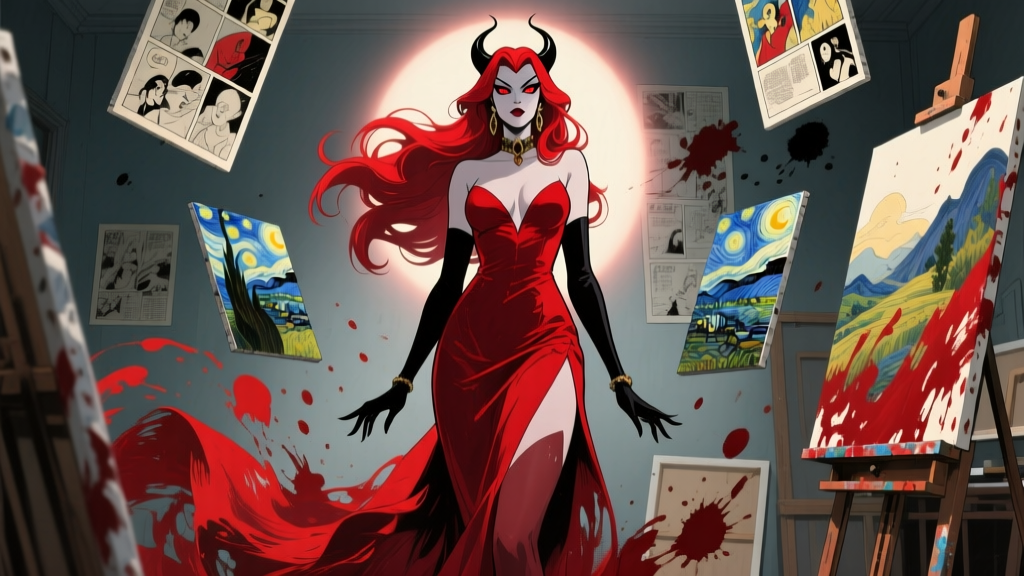
Walk into any comic shop in America and ask the person behind the counter to pull something from the back-issue bins that features Alex Ross's Vampirella. Watch their face. There is a pause — a quick mental calculation of whether they actually have one, whether they would sell it if they did, and how much they could get away with charging. That hesitation tells you everything about what Ross did to this character. He took a horror-hostess mascot from the Warren Publishing era and turned her into a museum-quality painted figure, something that belongs on gallery walls as much as it belongs in a Mylar sleeve.
The story of Alex Ross's relationship with Vampirella stretches across more than fifteen years of Dynamite Entertainment's publication history. It involves multiple relaunches, an evolving visual philosophy, and a secondary collector market where a single CGC-graded copy can outprice an entire longbox of standard issues. For collectors, for fans of painted comic art, and for anyone studying how a character's visual identity shifts under a single artist's hand, the Ross-Vampirella connection is one of the most interesting case studies in modern comics.
Before the Brush: Vampirella's Long Wait for a Definitive Look
Vampirella first appeared in Vampirella #1 from Warren Publishing in September 1969. Forrest J. Ackerman conceived the character, and Trina Robbins designed the now-iconic costume — a red, strapless outfit that defied both gravity and common sense, paired with knee-high boots and a high collar. It was campy, it was sexy, and it worked. Frank Frazetta painted several of the early Warren covers, establishing a visual language that leaned heavily into pulp-horror atmosphere: dark backgrounds, dramatic lighting, Vampirella caught somewhere between predator and pinup.
After Warren folded in 1983, the character drifted through Harris Publications' hands in the late 1980s and 1990s. Various artists took runs at modernizing her. Some leaned into heavier inks and more angular anatomy. Others tried to make her fit the Image Comics aesthetic of the 1990s — bigger muscles, more pouches, sharper cheekbones. None of it stuck. The character's visual identity remained fractured, a patchwork of competing interpretations with no single definitive version anchoring the public imagination.
Then Dynamite Entertainment acquired the license in 2010, and they went straight to the one painter whose name alone could legitimize a relaunch.
Ross Meets Vampi: The 2010 Dynamite Relaunch
When Dynamite launched their Vampirella series in 2010, written by Eric Trautmann, they needed a cover that made a statement. Alex Ross delivered. His main cover for Vampirella #1 (2010) showed the character in a fully painted composition — no flat colors, no digital shortcuts, just opaque gouache on illustration board, the medium Ross has used throughout his career and the technique that separates his work from virtually every other mainstream comic cover artist.
Gouache is an unforgiving medium. Unlike transparent watercolor, which allows you to build luminosity through layered washes, gouache dries matte and opaque. You cannot easily rework it once it sets. Every stroke commits. Ross has spoken in interviews about how he photographs live models as reference, then paints from those photographs, adjusting lighting, fabric folds, and expression by hand. The result is a hyperrealism that reads as photographic from a distance but reveals brushstrokes and deliberate paint texture up close.
His 2010 Vampirella cover was no exception. The character stood full-length against a dark background, lit from below and to one side in a manner that recalled classic horror-film cinematography. Her costume was faithful to the Robbins design — red, strapless, high-collared — but rendered with a materiality that made it feel like actual fabric on actual skin rather than an illustrator's shorthand. The pale skin, the dark hair, the blood-red outfit: all of it hit differently when it was painted rather than drawn.
The Variant Explosion
Dynamite did not just print one cover. They printed several. The 2010 Vampirella #1 shipped with multiple Ross variants, including a standard color version, a "virgin" variant (no trade dress, no logos, just the painting), a black-and-white sketch variant, and a "negative" edition that inverted the color palette. The virgin variant, often referred to as the "chase" cover, was typically ratioed at 1:10 or 1:25 — meaning retailers had to order ten or twenty-five standard copies to receive one virgin copy.
That scarcity model was deliberate, and it worked. The 2010 Ross virgin variant in CGC 9.8 condition has traded in the $200 to $400 range on the secondary market, depending on the specific sales window and platform. Standard copies of the same issue, by contrast, sit in the $15 to $40 range. The price gap between a Ross variant and a non-Ross cover on the same issue is one of the widest in modern Dynamite publishing.
The Gouache Method: What Makes a Ross Painting Recognizable in Three Seconds
If you have never seen an Alex Ross painting in person, it is difficult to communicate the physical presence these works carry. Reproductions in comic books are printed on coated paper at roughly 6.625 by 10.25 inches. The original paintings are typically executed on illustration board measuring 11 by 17 inches or larger. The scale difference matters. When you see the original, you see the weight of the paint, the texture of the brushstrokes, and the subtle color shifts that get flattened in four-color printing.
Ross's technique follows a consistent pipeline:
- Reference photography. He shoots live models in costume, often in his own studio, controlling lighting with directional lamps to create the dramatic chiaroscuro his covers demand.
- Pencil layout. A loose compositional sketch establishes figure placement, perspective, and the relationship between foreground and background elements.
- Gouache application. He paints in opaque layers, working from dark to light. Skin tones are built from multiple passes — a warm base, cool shadows, and highlight strokes that give the flesh a translucency that contradicts the opacity of the medium.
- Detail pass. Fabric folds, hair strands, blood splatter, and environmental elements receive fine-brush treatment. Ross has mentioned using brushes as small as a 0 round for individual highlights.
The Vampirella paintings benefit enormously from this process because the character's design is built on strong color contrasts: pale skin against a red costume against dark backgrounds. Ross's lighting choices amplify these contrasts. His Vampirella covers consistently use a three-point lighting setup with a dominant key light from above-left, a softer fill from the right, and a rim light that separates the figure from the background. It is the same lighting you would use for a studio portrait, and it makes Vampirella look like a real person who happens to have fangs.
"The best thing about gouache is the opacity and edge control. You can get a hard, clean edge that reads as real, and that is what I am always after — making something that feels like it actually exists."
— Alex Ross, on his painting process
Tracking the Ross-Vampirella Covers: A Timeline
Ross did not paint every issue of Vampirella. His involvement has been selective, concentrated on key launches and special issues. Here is a breakdown of the major Ross-Vampirella cover appearances under Dynamite's banner:
| Year | Issue / Publication | Cover Type | Notes |
|---|---|---|---|
| 2010 | Vampirella Vol. 1 #1 | Main cover, virgin variant, B&W sketch, negative edition | Dynamite relaunch; multiple ratio variants; CGC 9.8 virgin copies trade $200–$400 |
| 2012–2013 | Vampirella Vol. 1 (later issues) | Select variant covers | Occasional Ross variants on milestone issues; standard covers handled by other artists |
| 2014 | The Art of Vampirella: The Dynamite Years (hardcover) | Book cover and interior plates | Art book edited by Eric Trautmann and Brandon Jerwa; collects Ross and other Dynamite artists' work |
| 2017 | Vampirella Vol. 4 #1 | Ross variant cover | Series relaunch; Ross returns for premiere issue |
| 2019 | Vampirella Vol. 5 #1 | Main cover, 1:50 B&W sketch variant, virgin variant | 1:50 sketch ratio makes the B&W variant one of the scarcest Ross-Dynamite covers |
| 2024 | Vampirella: Crown of Worms #1 | Ross cover and variants | Latest major series; Ross painting features new costume design elements |
The pattern is clear: Ross shows up for the #1 issues, the relaunches, the milestone moments. Dynamite uses his name and his paintings as launch events. And each time, the variant structure gets more aggressive — more tiers, tighter ratios, more exclusives for conventions and direct-market retailers.
The Collector Math: What Ross Variants Actually Cost
Understanding the secondary market for Ross Vampirella covers requires some fluency in comic grading and variant notation. Here is a practical breakdown of what collectors encounter:
Vampirella #1 (2010) — Alex Ross Virgin "Chase" Variant. This is the cornerstone piece. In raw (ungraded) condition, copies sell for $80 to $150 depending on centering and corner quality. CGC 9.6 copies hover around $180 to $250. CGC 9.8 copies — the top population grade for modern comics — command $300 to $400, with particularly clean copies pushing higher at auction. GoCollect and PriceCharting both track this issue, and sales volume is consistent enough that pricing data is reliable.
Vampirella #1 (2019) — Alex Ross 1:50 B&W Sketch Variant. The 1:50 ratio means one sketch variant for every fifty standard copies ordered by a retailer. Given typical print runs for Dynamite titles (estimates place first-print orders in the 20,000 to 40,000 range for a high-profile #1), that translates to roughly 400 to 800 sketch variants in existence. Raw copies sell in the $100 to $200 range. Graded copies at 9.8 are scarce and sell at a premium when they surface.
Vampirella: Crown of Worms #1 (2024) — Ross Covers. As the most recent Ross-Vampirella work, these are still close to their initial print run. Standard Ross covers sell for $10 to $20 in the secondary market. Virgin and sketch variants command $50 to $120, with prices likely to appreciate as copies get absorbed into collections and graded populations remain low.
For comparison, a standard non-Ross cover of the same Vampirella #1 (2010) issue typically sells for $10 to $25 in near-mint condition. The Ross premium is roughly 10x to 20x over the standard cover price, which is unusual for a single artist's variant work on a non-Big-Two (Marvel/DC) character.
Why the Premium Holds
Several factors sustain these prices. First, Vampirella as a character has a dedicated fanbase that predates most current comic readers — Warren-era collectors who remember the original 1969 run are willing to pay for premium Dynamite material that honors the character's legacy. Second, Ross's output is genuinely limited. He paints slowly. A single cover painting can take 40 to 80 hours of studio time. He does not produce covers at the rate of a digital artist who can turn around three or four per week. Third, the variant structure itself creates artificial scarcity that the market respects because the ratios are verifiable through Diamond Comic Distributors' ordering catalogs.
Visual Evolution: How Ross Changed Vampirella's Face
Compare a Trina Robbins interior drawing from 1969, a Frazetta cover from 1972, a Harris-era cover from 1997, and a Ross painting from 2010 or 2019. The differences are not just stylistic — they represent fundamentally different approaches to what the character should communicate.
Robbins's Vampirella was playful. The costume was sexy but drawn with a cartoonist's economy — simple lines, bold shapes, minimal shading. She looked like she belonged in a horror-comedy, which is essentially what Vampirella magazine was in its earliest issues.
Frazetta's Vampirella was mythic. Frazetta painted her the way he painted Conan — as an archetype, a force of nature. His brushwork was loose, almost impressionistic at the edges, with the figure sharply defined in the center. She was powerful, dangerous, and painted with the kind of confidence that made you stop asking questions about the costume.
Harris-era Vampirella went through several visual phases, reflecting the shifting tastes of the 1990s comic market. She got edgier, more muscular, more detailed in a way that prioritized anatomy over atmosphere. Some covers worked. Many did not. The character felt like she was searching for a direction.
Ross's Vampirella is something else entirely. She is regal. Ross paints her with the compositional gravity of a Renaissance portrait — centered, well-lit, commanding attention through stillness rather than action. His Vampirella does not need to be in mid-attack or mid-leap. She simply stands there, and the painting does the work. The pale skin glows against the dark background. The red costume reads as rich velvet rather than spandex. The eyes are deep-set and alert. This is not a monster. This is not a pinup. This is a figure who has been alive for centuries and knows it.
The Crown of Worms era (2024) added another layer. Ross's covers for this series introduced more ornate design elements — crown motifs, organic textures, and a color palette that shifted slightly toward cooler tones while maintaining the signature crimson-and-black contrast. The character was evolving visually without losing the core identity Ross had established in 2010.
The Art Book: "The Art of Vampirella: The Dynamite Years"
Published in 2014 by Dynamite, this hardcover art book (ISBN 978-1606905135) was edited by Eric Trautmann and Brandon Jerwa. It collects cover art, interior pages, sketches, and commentary from the first several years of Dynamite's Vampirella run. Ross's work features prominently, both as cover reproductions and as behind-the-scenes process material.
For collectors who cannot afford a CGC-graded Ross variant, the art book represents the most accessible way to experience his Vampirella paintings at a reasonable scale. The reproductions are printed on heavy coated stock, and while they cannot replicate the texture of the original gouache, they capture the color fidelity and compositional detail that get lost in standard comic-book printing. The book typically retails in the $30 to $50 range on the secondary market, having gone out of its initial print run.
Ross in Context: Where Vampirella Fits in His Career
Alex Ross is best known for Marvels (1994, with Kurt Busiek) and Kingdom Come (1996, with Mark Waid). Those two projects established him as the premier photorealistic painter in mainstream comics. His subsequent career has oscillated between DC and Marvel covers, variant work, and select Dynamite projects including Red Sonja, The Shadow, and Vampirella.
Among his Dynamite work, Vampirella occupies a specific niche. Red Sonja allows Ross to paint a sword-and-sorcery warrior in dynamic poses. The Shadow lets him play with noir lighting and period detail. Vampirella is the gothic portrait assignment — the character where the assignment is less about action and more about atmosphere, about capturing a mood of aristocratic menace in a single static image. Ross excels at that assignment. It may be the purest expression of what his gouache technique does best: making a painted figure feel like they are standing in the room with you, lit by candlelight, watching you back.
What the Market Looks Like Going Forward
Ross continues to paint Vampirella covers as of 2024 and into 2025. Each new series launch from Dynamite brings a fresh round of Ross variants, and each round introduces slightly more aggressive tiering — virgin variants, sketch variants, convention exclusives, signed editions. The secondary market absorbs all of it because the demand for painted comic art from a name artist has not diminished. If anything, as digital art becomes the industry standard, hand-painted covers carry more weight as physical artifacts.
For new collectors entering the space, the 2010 Vampirella #1 Ross virgin variant remains the blue-chip piece. It is the first Ross-Dynamite Vampirella cover, it has established pricing data across multiple grading tiers, and it represents the moment when Vampirella's visual identity crystallized around a single artist's interpretation for the first time since Frazetta.
For those who care less about market value and more about the art itself, the Crown of Worms covers represent Ross at his most refined — twenty-plus years into his gouache technique, painting a character he has now depicted across three different decades of Dynamite publishing. The brushwork is cleaner. The compositions are more assured. The character has aged, in the way that a painted figure ages when the painter keeps finding new things to say about her.
Frequently Asked Questions
What medium does Alex Ross use for his Vampirella covers?
Ross paints exclusively in gouache, an opaque watercolor medium applied to illustration board. He works from reference photographs of live models and builds his paintings in layers from dark to light. Gouache dries matte and is difficult to rework, which demands confident brushwork and careful planning before paint touches board.
How many Vampirella covers has Alex Ross painted?
Ross has painted covers for multiple Vampirella series launches (2010, 2017, 2019, and 2024's Crown of Worms), with each launch typically featuring several variant versions of his main painting. Counting all variants across all series, the total number of distinct Ross-Vampirella cover images exceeds twenty, though the number of unique compositions (as opposed to color or format variants of the same painting) is closer to eight or ten.
What is the most valuable Alex Ross Vampirella comic?
The Vampirella #1 (2010) Alex Ross virgin "chase" variant in CGC 9.8 is the highest-value single issue, with sales recorded in the $300 to $400 range. The 2019 1:50 B&W sketch variant is a close competitor due to its extreme print scarcity, though fewer graded copies have passed through public sales to establish firm pricing.
Did Alex Ross design Vampirella's costume?
No. Vampirella's original costume was designed by Trina Robbins for the character's debut in Warren Publishing's Vampirella #1 (1969). Ross has faithfully rendered that original design in his paintings, adding materiality and lighting but not fundamentally altering the costume. His Crown of Worms covers (2024) introduced some new ornamental elements, but the core red-and-black design remains Robbins's creation.
Where can I see Alex Ross's original Vampirella paintings?
Original Ross paintings surface at major comic-art auctions (Heritage Auctions is the primary venue) and occasionally through gallery exhibitions. Sal Abbinanti's Alex Ross Comic Art Gallery has displayed Ross Vampirella sketches and paintings. Ross also shares process images and studio shots through his official social media accounts (@alexrossart on Instagram and TikTok).
Is "The Art of Vampirella: The Dynamite Years" still in print?
The 2014 hardcover (ISBN 978-1606905135) is out of its initial print run but available on the secondary market through Amazon, eBay, and specialty comic-book retailers. Expect to pay $30 to $50 for a used copy in good condition. It remains the most comprehensive collection of Dynamite-era Vampirella artwork, with significant Ross content.