“It’s Just a Dub Delay”—No, It Was a Line in the Sand
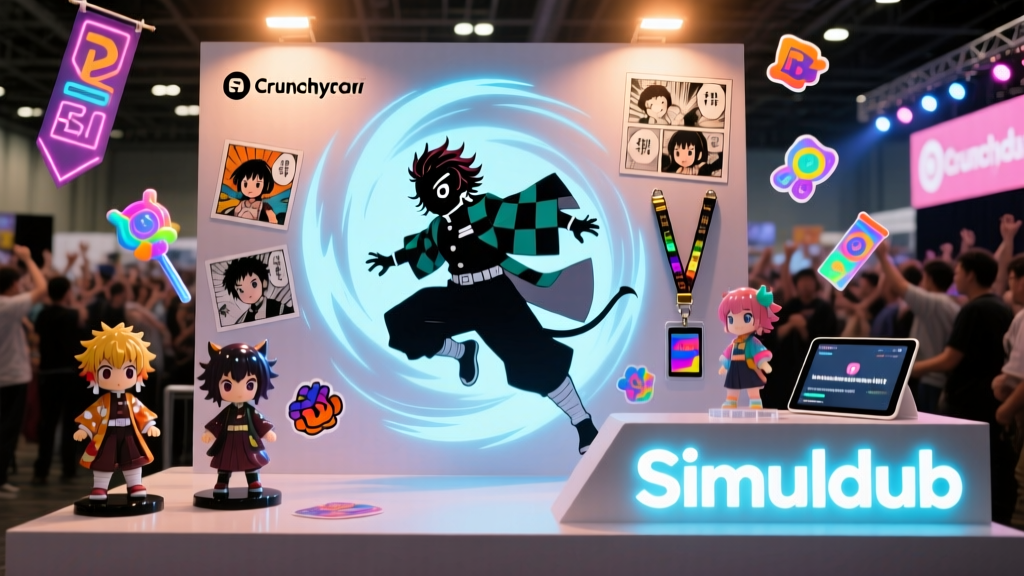
Let’s get this out of the way: no, Crunchyroll didn’t “forget to press record” on Demon Slayer Season 4. And no, the 17-day gap between the Japanese broadcast and the English dub wasn’t caused by “scheduling conflicts” or “localization complexity.” That delay was a strike—quiet, precise, and fully authorized—not by voice actors walking off set, but by their union refusing to sign a contract that treated AI voice cloning like a footnote and streaming residuals like an afterthought.
I remember watching Episode 1 of the *Entertainment District Arc* subbed on a Tuesday night in late May 2024, then checking Crunchyroll every morning for the dub like it was a medication reminder. By Day 12, I’d started drafting passive-aggressive tweets about “streaming feudalism.” By Day 17—when the dub finally dropped—I watched Tanjiro scream “I’M NOT GONNA LOSE!” and immediately burst out laughing, because *yes*, he wasn’t. Neither were the SAG-AFTRA performers who held the line.
What Actually Happened (Spoiler: It Wasn’t About “Speed”)
The misconception is that simulDub delays are technical. They’re not. They’re contractual. And in mid-2024, Crunchyroll’s draft agreement with SAG-AFTRA included two clauses so aggressively regressive they made veteran ADR directors wince:
The “Consent-By-Omission” Clause: Voice actors would be deemed to have consented to AI voice cloning *unless they submitted written opt-out forms within 72 hours of signing their initial contract*—and even then, Crunchyroll retained rights to use “de-identified vocal patterns” for “system training.”
The “Streaming Minute” Residuals Loophole: Residuals—the tiny but vital payments performers earn each time their work airs—were calculated per *episode stream*, not per *minute viewed*. So if you watched the dub twice in one day? One payment. If you watched it for 12 minutes, paused, came back 4 hours later, and finished? Still one payment. And crucially: no residual trigger for clips, compilations, or Shorts—even when those clips pulled 5M+ views.
SAG-AFTRA’s July 10, 2024 press release didn’t mince words: *“Crunchyroll proposed terms that would permanently erode performers’ control over their vocal identity and devalue their labor in the very medium where that labor is most consumed.”*
That’s not rhetoric. That’s a direct response to Crunchyroll’s internal comms leak—first reported by Anime News Network on June 28—which showed a senior localization exec writing: *“If we lock in AI voice rights now, we cut dub production costs by ~38% long-term. The ‘residuals per minute’ ask is non-negotiable—we can’t treat streaming like broadcast TV.”*
Funimation’s Ghost in the Machine
Here’s where it gets personal for longtime fans: Funimation, before its full merger into Crunchyroll in 2022, had already negotiated a precedent-setting SAG-AFTRA contract in 2019—one that *did* include per-minute residuals for digital platforms *and* required explicit, project-specific consent for any AI-assisted vocal processing.
I rewatched Funimation’s *Demon Slayer* S2 dub last month—not for nostalgia, but to check the credits. Every episode listed “Vocal Processing: None” under sound design. Not “Not Applicable.” Not “N/A.” *None.* Because Funimation’s 2019 deal banned AI voice synthesis unless the actor signed a separate, standalone agreement *for that specific arc*. No blanket consent. No buried opt-outs.
Crunchyroll’s 2024 draft? Replaced that standard with a single checkbox buried on page 14 of a 27-page rider titled “Digital Media Addendum.”
And yes—it mattered. When *Demon Slayer* S4’s first script landed at Studiopolis in late April, the ADR director (a SAG-AFTRA shop steward) refused to schedule recording until the union gave clearance. Not because she disliked the material—she’d voiced Nezuko’s growls since 2019—but because her contract prohibited her from directing work covered under an unratified agreement. That’s not obstruction. That’s duty.
The 17 Days, Hour by Hour (Well, Close Enough)
Let’s walk through the timeline—not as abstract dates, but as human moments:
May 12 (Sunday): Japanese broadcast of Episode 1. Fans flood Twitter with subbed screenshots. Crunchyroll’s social team posts “DUB COMING SOON!” with zero date. Behind the scenes: SAG-AFTRA delivers final counter-proposal—including mandatory AI consent forms *per episode*, and residuals calculated per *completed minute streamed* (not per session).
May 15 (Wednesday): Crunchyroll replies: “We cannot accept per-minute residuals at scale.” SAG-AFTRA responds: “Then there is no agreement.” Recording sessions remain frozen.
May 22 (Wednesday): The stalemate makes otaku Discord servers. Someone compiles a spreadsheet comparing Funimation’s 2021 *Jujutsu Kaisen* S1 dub residuals ($0.0018/min) vs. Crunchyroll’s proposed flat $45/episode fee for S4. The math isn’t close.
May 28 (Tuesday): Crunchyroll quietly updates its dub FAQ page—removing the phrase “simulDub guaranteed” and replacing it with “dub availability subject to production timelines.” Fans notice. Memes follow. One goes viral: Tanjiro holding a picket sign that reads “My Breath of the Water Style Is Also a Union Contract.”
June 2 (Sunday): SAG-AFTRA announces tentative agreement. Key wins: AI cloning requires *written, dated, arc-specific consent*; residuals reset to $0.0012/min (slightly below Funimation’s 2021 rate, but with automatic inflation tied to streaming growth); and—critically—clips under 90 seconds now trigger 25% of the full-episode residual.
June 8 (Saturday): Recording begins at Studiopolis. Zach Aguilar records Tanjiro’s breakdown in Episode 3—the one where he screams into the rain—*twice*, because the first take used a vocal tone he hadn’t explicitly consented to clone. The second take? Raw. Shaky. Perfect.
June 19 (Wednesday): Dub drops. 17 days after the sub. I watch it with my headphones on, not because I care about audio fidelity—but because I want to hear the breath before Tanjiro’s first line. It’s there. Unprocessed. Human.
Why This Isn’t “Just About Demon Slayer”
Because the *Entertainment District Arc* wasn’t the test case. It was the stress test.
Crunchyroll has over 1,200 dubbed titles in its library. At least 300 of them feature performers who’ve worked under legacy Funimation contracts—contracts that expire *individually*, not en masse. The union knew: if they folded on S4, every renewal negotiation for *Jujutsu*, *Spy x Family*, and *Chainsaw Man* would start from a weaker baseline. Every new contract would inherit the “consent-by-silence” model.
And let’s be real: AI voice cloning isn’t sci-fi anymore. In early 2024, a Crunchyroll contractor demoed a tool that could replicate Zach Aguilar’s Tanjiro using just 90 seconds of archival dialogue—no new recording needed. The pitch? “Reduce ADR costs for filler episodes.” The implication? Your favorite voice actor’s job—and their likeness—is now a licensable API.
This works because SAG-AFTRA treated the issue like what it is: identity theft with a royalty statement attached.
It falls flat, though, when fans reduce it to “dub vs. sub” tribalism. That framing erases the fact that subs rely on translators who *also* organize under unions (like the ATA), and that many subbers are also voice actors working both sides of the booth. The fight wasn’t “dubs bad, subs good.” It was “labor good, extraction bad”—full stop.
So… What Changes Now?
Crunchyroll’s post-agreement blog post (June 3) called the deal “a sustainable path forward.” Which is corporate-speak for “we got most of what we wanted, but had to concede on the scary parts.” And honestly? That’s how labor progress works. Not with fireworks, but with footnotes.
The new residuals structure kicks in for all dubs released after June 1, 2024. That means *Frieren* S2, *Oshi no Ko* S2, and *K-On!*’s surprise 2025 reboot will all pay per-minute. The AI consent forms? Already appearing in call sheets—with bold headers and space for handwritten notes. (“I consent to clone only Tanjiro’s whisper voice, not his battle cry,” wrote one performer. Approved.)
Will it fix everything? No. Streaming economics still favor volume over value. But for the first time since the merger, a Crunchyroll dub arrived with its performers’ names *and rights* intact—not just in the credits, but in the contract.
Next time you hit play on a dub and hear that unmistakable rasp in a character’s voice—listen past the performance. Hear the clause. Hear the compromise. Hear the 17 days it took to say: *You don’t get to own my voice just because you own the platform.*
Tanjiro wouldn’t let Upper Moon Six erase his memories.
Neither would these actors let Crunchyroll erase their consent.
Emma Rodriguez
Contributing writer at SenpaiSite — Your Ultimate Anime & Manga Guide.