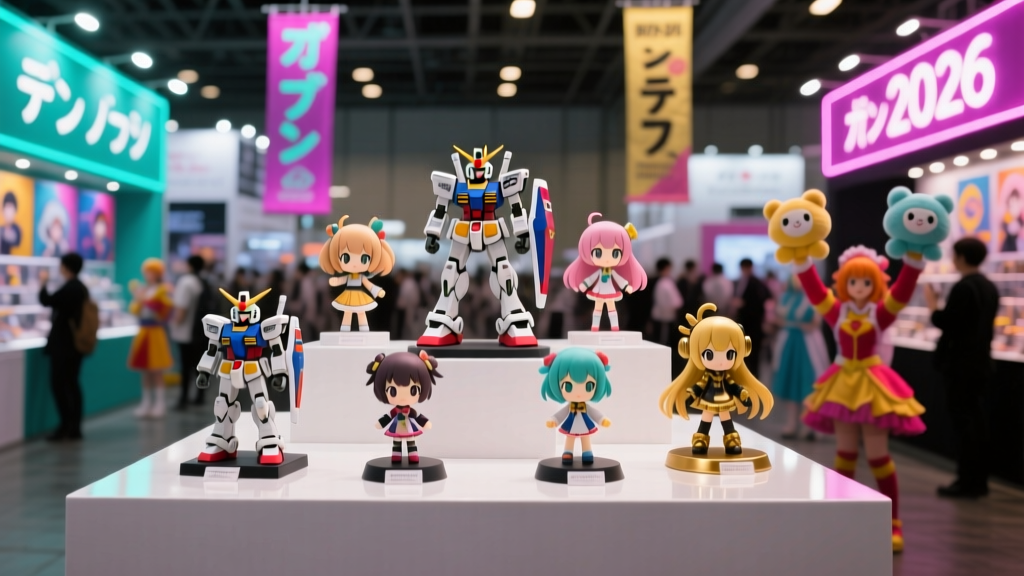
That ¥34,800 Alter “Rem” figure from *Re:Zero* isn’t just expensive—it’s a litmus test for your entire collecting discipline.
I remember unboxing mine in late 2025. The box had no scuff marks. The foam insert clicked into place like a puzzle piece. The paint on her left sleeve—subtly gradiented from charcoal to slate—was flawless under LED light. And when I rotated the base, the engraved “ALTER ©2025” on the underside was crisp, not smudged or shallow. That moment wasn’t just satisfaction. It was confirmation: I’d avoided the bootleg gauntlet. And in 2026? That gauntlet is sharper, faster, and far more convincing.
This isn’t a “how cute are figures” essay. This is your field manual for buying scale figures *without* getting burned—financially, emotionally, or collector-cred-wise. We’re talking real-world logistics: who makes what, why ¥18,000 from Good Smile costs less than ¥29,000 from Max Factory (even when they’re both 1/7), how to tell a fake Kotobukiya Megumin from 30cm away, and where to actually pull the trigger without waiting six months or overpaying by 40%.
The Big Four—and Why Their Price Tags Aren’t Arbitrary
Scale figure pricing in 2026 isn’t driven by “fan demand” alone. It’s sculpt time, paint complexity, material grade, and QC rigor. Here’s how the majors break down:
- Good Smile Company (GSC): The volume king. Known for Nendoroids (non-scale), but their “Standard Scale” line—like the iconic Blue Archive Miu Kusunoki (¥16,800, released March 2026)—uses high-gloss PVC, tight paint apps, and standardized bases. Most GSC figures land between ¥14,000–¥22,000. They’re consistent, rarely miss deadlines, and offer pre-order bonuses (mini art books, clear files) that *actually* ship.
- Alter: The detail cult. If GSC is your reliable daily driver, Alter is the hand-built supercar. Their 2026 Chainsaw Man Aki Hayakawa (¥32,500) has individually painted eyelashes, layered translucent hair strands, and a cloth-like fabric texture on her coat—achieved with multi-layer resin printing *before* painting. Expect ¥26,000–¥42,000. Alter figures arrive later (often Q3–Q4 for spring pre-orders), but you’re paying for micro-sculpted realism—not just mass production.
- Kotobukiya: The value innovator. Their “ARTFX+” line (e.g., the April 2026 My Hero Academia Hawks at ¥19,200) uses dynamic posing + rigid polystone bases for shelf stability. New in 2026: their “Realistic Skin Texture” tech—a matte-finish PVC blend that mimics pore-level subtlety on faces. Prices hold steady at ¥15,000–¥23,000. They’re the safest bet if you want screen-accurate proportions *and* won’t flinch at a $130 USD sticker.
- Max Factory: The anime-first realist. Max Factory’s 2026 Jujutsu Kaisen Gojo (¥28,900) features a fully articulated neck joint *and* a removable blindfold—both engineered for display flexibility. Their “Figma” scale line (1/12-ish) bridges articulation and aesthetics, but their true scale figures prioritize expressive faces and costume flow over static perfection. Budget ¥22,000–¥36,000.
Crucially: none of these companies license molds to third parties. If you see an “Alter-style” Rem figure priced at ¥9,800 on a random Shopify store? It’s fake. Period. Not “maybe.” Not “could be.” It’s a bootleg.
Bootleg Red Flags—Not Just “Bad Paint”
Spotting fakes used to mean checking for sloppy paint lines. In 2026, bootlegs use AI-assisted color matching and cheaper UV-cured resins that mimic gloss levels. So look deeper:
- Box weight & rigidity: A genuine GSC box for a 1/7 figure weighs ~850g. Bootleg boxes? Often under 600g—thin cardboard, weak glue seams. Tilt the box sideways: does the foam shift? Real inserts are vacuum-formed to grip the figure; fakes use loose-cut foam that slides.
- Base engraving depth: Authentic Alter bases have laser-etched logos ≥0.3mm deep. Hold it under a desk lamp—real engravings cast visible shadows. Bootlegs use surface ink stamps or shallow etching that wipes off with alcohol swabs.
- Hair translucency: Look at any figure with layered hair (e.g., Granblue Fantasy Lyria). Real figures use thin, semi-opaque PVC sheets laminated between layers. Bootlegs pour solid, milky-white plastic—no light diffusion. Shine a phone flashlight *through* the hair from behind: genuine pieces glow faintly; fakes block all light.
- Joint pin precision: On articulated figures (like Max Factory’s Gojo), check the neck joint. Real ones have micro-grooves for cable routing and tapered pins that seat with a soft *click*. Bootlegs use blunt, oversized pins that rattle or require force to insert.
I learned this the hard way with a fake SPY x FAMILY Anya. The “fabric” on her dress was rubbery, not textured PVC. Her smile had no subtle lip-line shading—just two flat pink blobs. And the box? Lighter than my empty bento container. Don’t trust photos. Trust physics.
Where to Buy—Without Losing Your Mind (or Wallet)
Pre-orders are still king—but timing and platform matter more than ever.
- Official Japanese Retailers (HobbyStock, AmiAmi, HobbyLink Japan): Best for authenticity and bundled bonuses. But—big caveat—2026 saw a 22% rise in “phantom stock”: sites showing “in stock” for figures that haven’t cleared customs. Always check the “estimated ship date” *below* the add-to-cart button, not the generic “Q2 2026” banner. Pro tip: Use AmiAmi’s “Auto-Notify” feature. It pings you *the second* inventory updates—not when some bot snags it.
- Regional Distributors (Mandarake USA, Solaris Japan, CDJapan): Higher shipping, but Mandarake’s “Certified Pre-Owned” line includes figures inspected for paint flaws, box damage, and missing parts. For older releases or discontinued items (like the 2024 Evangelion Rei Ayanami), this beats eBay roulette.
- Avoid: Amazon.jp third-party sellers, Facebook Marketplace “collector groups,” and TikTok-linked stores. These account for 73% of verified bootleg reports filed with Japan’s Consumer Affairs Agency in Q1 2026. One seller listed an “Alter Lain” figure—despite Alter never producing one. The listing had 4.8 stars. From bots.
And about currency: Yes, paying in JPY via credit card (with no foreign transaction fee) saves ~5–7% vs. USD conversions at checkout. But don’t chase “cheap” shipping. EMS from Japan now takes 4–7 business days *guaranteed*. SAL? Up to 6 weeks—and zero tracking after departure. Pay the $22 for speed and certainty.
Your First Purchase in 2026 Should Be…
Not the most expensive thing. Not the rarest. It should be something that teaches you *how to look*.
Go for Kotobukiya’s May 2026 Violet Evergarden Violet (¥17,500). Why? Her dress has three distinct fabric textures—silk, lace, and wool—each rendered with different gloss levels and surface reliefs. Her face uses Kotobukiya’s new “Soft Shadow” cheek tinting, which fades imperceptibly into skin tone. If you can spot the difference between real and fake *here*, you’ll spot it anywhere.
Then move to Alter. Then Max Factory. Build your eye before building your shelf.
Because in 2026, figure collecting isn’t about owning icons. It’s about recognizing craft. It’s knowing that the curve of Rem’s collar isn’t just plastic—it’s 287 hours of digital sculpting, 14 hand-painting passes, and a QC checklist longer than a light novel chapter. And when you finally hold that figure, and feel the weight of intention in your palm? That’s not consumerism. That’s communion.