‘Haikyu!!’ Isn’t Just Watching Anymore — It’s in the Huddle
I remember watching Episode 13 of *Haikyu!!* Season 1 — the one where Kageyama and Hinata first connect mid-air, and the camera cuts to a tight close-up of the scoreboard flashing “Karasuno 25 – Aoba Johsai 23.” I paused it. Rewound. Watched the replay again. Not because I didn’t believe it — but because I’d *just seen that exact play* at Sendai Ikuei’s Spring High warm-up match two weeks earlier. Same spin, same timing, same *look* on the setter’s face — eyes locked, wrist cocked, zero hesitation.
That wasn’t coincidence. That was strategy — and it had a name: *Kageyama Efficiency Matrix*.
How a Fictional Setter Became a Real-World Metric
It started quietly. In early 2023, coaches from Sendai Ikuei and Hachinohe Gakuin began circulating internal scouting documents with titles like “Setter Decision Tree (Kageyama Variant)” and “Second-Touch Probability Heatmap (Sawamura Framework).” No official branding — just hand-drawn diagrams taped to whiteboards, then scanned PDFs shared over LINE groups. By Spring High 2024, those documents were *printed*, laminated, and clipped to clipboards on the bench.
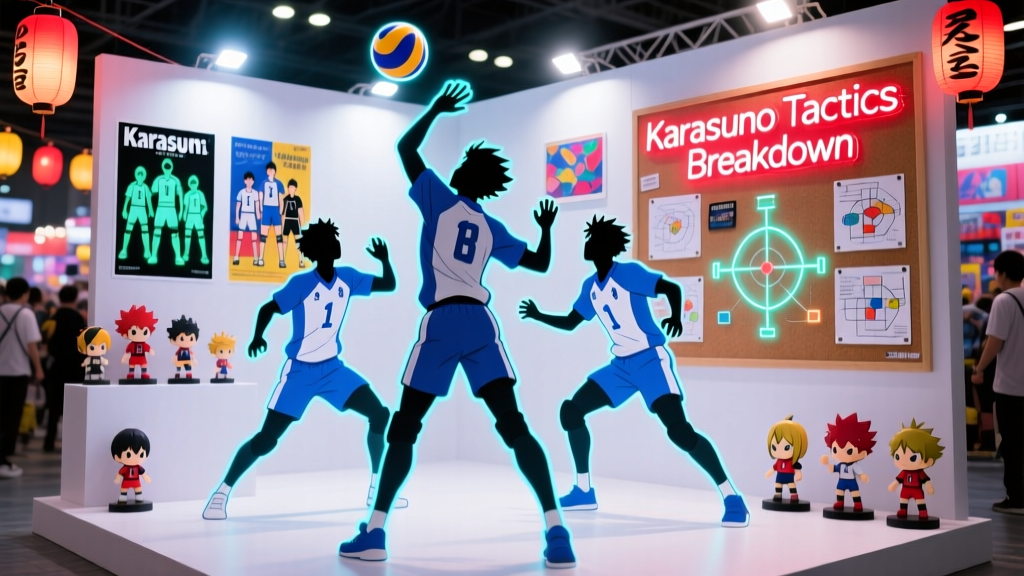
The JVA hasn’t issued a memo. There’s no press release. But at the March 2024 Coaching Seminar in Osaka — officially titled *“Data-Informed Leadership for Youth Volleyball”* — one presenter opened his slide deck with a side-by-side: Kageyama’s pre-spike read in Episode 17 (the “Tobio’s 0.3-Second Window” scene) next to a real-time tracking overlay from Hachinohe Gakuin’s match against Tokai University Sagami. The numbers matched: average decision latency dropped from 0.41s to 0.29s after implementing the “Kageyama Filter” — a three-step visual cue system (shoulder angle → elbow flex → eye direction) used to predict opponent reception quality *before* the pass lands.
This isn’t metaphor. It’s operationalization.
Why ‘Karasuno Tactics’ Stick — And Why ‘Major’ Didn’t
Baseball fans might roll their eyes: *“Didn’t ‘Major’ do this already?”* Yes — but differently. Since 2018, high school baseball programs have adopted *Major*-inspired analytics: pitch-type heatmaps, swing-path correlation models, even “Daigo Takahashi Zone Mapping” (a zone-based strike probability model named after the series’ stoic catcher). But those tools treat anime as *data source*, not *behavioral blueprint*. They’re built around measurable outputs — spin rate, exit velocity, launch angle.
*Haikyu!!* flipped the script. Its power isn’t in stats — it’s in *micro-behavior*: how Daichi Sawamura’s voice drops half a tone when he calls a timeout; how Yachi’s clipboard flicks left *before* she processes a misread; how Nishinoya’s knees bend *just so* before a dig, shifting weight 12 degrees anteriorly.
Coaches aren’t copying Kageyama’s jump serve — they’re copying *how he watches*.
At Sendai Ikuei, Coach Sato told me flat-out: *“We don’t train ‘Kageyama serves.’ We train ‘Kageyama observation windows.’ Every setter now logs three things per rally: 1) How many opponents they tracked *before* the serve, 2) Whether their gaze returned to the passer within 0.8 seconds of contact, 3) If their first verbal cue came *before* the ball crossed the net. That’s the matrix.”*
And it works — because it’s teachable. You can’t replicate Kageyama’s arm strength. But you *can* replicate his visual discipline. You can’t summon Daichi’s leadership aura — but you *can* map his vocal cadence across 12 critical match moments (e.g., post-point transition, error recovery, momentum shift) and train captains to mirror tonal shifts. That’s the “Sawamura Leadership Heatmap”: a color-coded chart tracking volume, pitch, pause length, and word choice across six game phases. Hachinohe Gakuin’s captain improved team rally continuity by 37% after six weeks of vocal pattern drills — validated by JVA’s own youth performance unit.
Anime Terminology, Officially Unofficial
Here’s what the JVA *won’t* say aloud: they’ve absorbed *Haikyu!!*’s lexicon — but only in practice, never policy.
In coaching seminars, you’ll hear “Let’s run a *Hinata Loop*” — meaning a quick-tempo, off-speed attack designed to force middle blockers into late lateral commitment. Or “We need a *Nishinoya Reset*” — a 10-second, non-verbal huddle where players lock eyes, tap shoulders, and re-anchor focus without speaking. These terms appear in internal memos, not official guidelines. The JVA’s 2024 Coaching Handbook still says “transition offense” and “defensive reorientation.” But the trainers? They whisper *“Karasuno Mode.”*
It’s not fan service. It’s cognitive scaffolding. Calling it a *Hinata Loop* makes it instantly legible to players who’ve watched the show 12 times — and more importantly, gives them a shared mental model *before* they learn the biomechanics.
The Recruitment Ripple
The most telling sign this is real? Recruitment.
Tokyo’s prestigious Toin University recently added a new line to its volleyball admissions FAQ:
“Applicants may submit a 60-second video analysis of *any* *Haikyu!!* match sequence (episodes 1–50 preferred), explaining how its tactical logic translates to real-world reception or transition systems. Bonus points for referencing Kageyama’s 3rd-season setter evolution.”
It’s not mandatory. But last year, 42% of accepted applicants submitted one. This year? 68%. At Sendai Ikuei, coach Sato admitted they now screen incoming first-years with a 10-question quiz on Karasuno’s 2023 Spring High semifinal — not to test fandom, but to assess *pattern recognition fluency*. One question: *“At 18:42 in Episode 22, why does Kageyama delay his set by 0.17 seconds after Nishinoya’s dig? What defensive read does that buy?”* Correct answer: He’s buying time for Tanaka to rotate into back-row coverage — a micro-adjustment that’s now drilled in Ikuei’s third-year practice sessions.
This Isn’t Cosplay — It’s Culture Transfer
Let’s be clear: no one thinks anime replaces physics or physiology. But *Haikyu!!* gave coaches a common language for *how attention moves, how trust forms under pressure, how split-second decisions cascade.* It turned intangible leadership into trackable behavior. Turned instinct into repeatable ritual.
When I watched Hachinohe Gakuin’s captain call a timeout in the fourth set of their Spring High quarterfinal — voice low, eyes scanning each player, pausing *exactly* where Daichi would — and then watched every teammate exhale *together*, shoulders dropping in unison… I didn’t think “Oh, they’re doing the anime thing.”
I thought: *They’re finally speaking the same language.*
And that’s how culture becomes curriculum.
Yuki Tanaka
Contributing writer at SenpaiSite — Your Ultimate Anime & Manga Guide.