There's a moment in Pixar's Inside Out (2015) where Riley's mother asks her to "stay our happy girl," and the camera drifts to Headquarters, where Joy cradles a glowing golden sphere — a core memory, warm and pulsing with light. That single orb design, no bigger than a marble on screen, spawned one of the most recognizable visual motifs in modern animation. A decade later, fans are still hunting for those translucent memory spheres in crisp, transparent PNG format — for wallpapers, fan art composites, merch mockups, and a hundred other creative projects that Pixar never officially sanctioned.
This article is a deep look at Inside Out memory orbs as visual assets: what the orb designs actually communicate, where fans source high-resolution PNG renders, the emotion color-coding system that Pete Docter's team engineered, the thriving fan art ecosystem built around these little glowing spheres, and the surprising merchandise market that has emerged around a design element most viewers don't consciously notice.
The Anatomy of a Memory Orb — What Pixar Actually Designed
Memory orbs in the Inside Out universe are not just pretty glowing balls. Pixar's art department, led by production designer Ralph Eggleston and director Pete Docter, spent roughly 18 months refining the orb concept before the film's June 2015 release. Each sphere needed to read instantly on screen at multiple scales — from close-up hero shots to wide panoramas of Long-Term Memory's endless shelves holding millions of them.
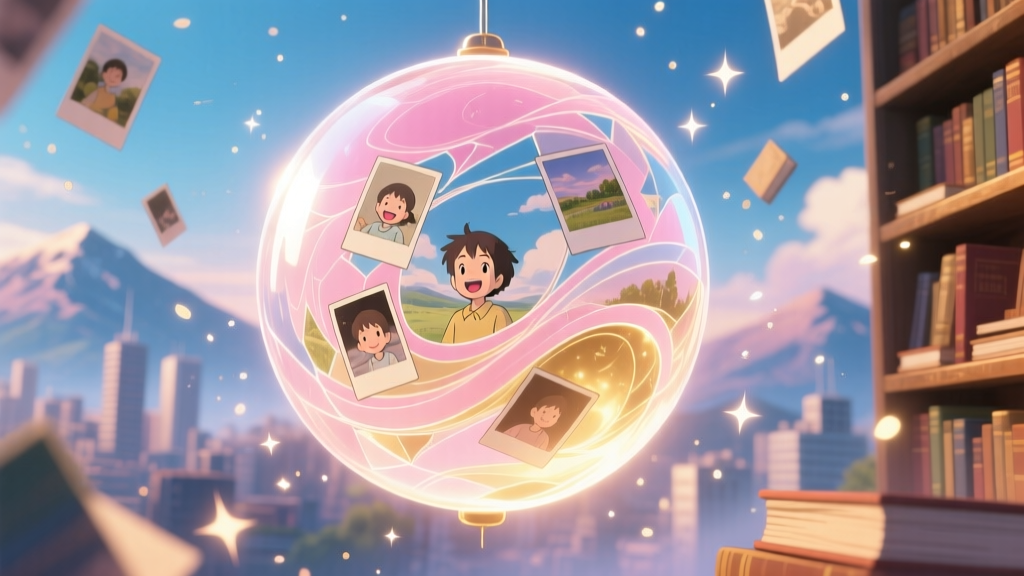
The base design is a translucent glass-like sphere approximately the size of a billiard ball in-universe. Inside each orb, a faint swirling scene plays on loop — a compressed, dreamlike replay of the actual memory. The surface has a subtle iridescent sheen, almost like a soap bubble, but the dominant visual signal comes from the emotion-tinted glow that radiates from within. Regular memories carry a single emotion's color. Core memories are brighter, more saturated, and emit a visible aura that illuminates nearby surfaces in Headquarters.
Pete Docter stated in a 2015 Art of Inside Out companion book (Chronicle Books, ISBN 978-1452135472) that the orbs needed to feel "like Christmas ornaments you could hold up to the light" — precious, fragile, and unmistakably alive with emotion.
The distinction between regular and core memories matters visually. Regular memory orbs have a softer, more diffused glow. Their internal scene is hazier. Core memories — the five pivotal personality-defining moments Riley carries — burn brighter, with a sharper internal image and a glow radius roughly 2-3x larger than a standard orb. When Joy holds a core memory in the film, the golden light spills across her face and the console. That luminosity difference is the primary reason fans seek PNG renders: the glow effects composite beautifully onto dark backgrounds, wallpapers, and digital art canvases.
The Five-Color Emotion System — A Designer's Field Guide
The Inside Out color palette is one of the most elegant emotion-mapping systems in animation history. Each of the five primary emotions maps to a specific hue, and every memory orb inherits the color of whichever emotion was dominant when the memory formed.
| Emotion | Character | Orb Color | Approx. Hex Code | Glow Intensity | Associated Core Memory Theme |
|---|---|---|---|---|---|
| Joy | Joy (voiced by Amy Poehler) | Warm golden yellow | #FFD700 — #FFE44D | High — strongest ambient glow | Hockey, family, friendship |
| Sadness | Sadness (Phyllis Smith) | Cool cerulean blue | #4A90D9 — #6CB4EE | Medium — soft, diffused | Loss, empathy, rain memories |
| Anger | Anger (Lewis Black) | Intense crimson red | #E74C3C — #FF6B6B | High — sharp, flickering | Conflict, injustice, broccoli |
| Fear | Fear (Bill Hader) | Deep violet purple | #9B59B6 — #BB7FD9 | Low — dim, pulsing | Nightmares, danger, heights |
| Disgust | Disgust (Mindy Kaling) | Vivid emerald green | #27AE60 — #5CD89B | Medium — steady, even | Food rejection, social cringe |
A sixth category exists that most casual viewers miss: mixed-emotion orbs. In the film's climax, when Sadness touches a previously golden core memory, it shifts to a blue-gold hybrid — a swirling two-tone sphere that represents a memory recontextualized by empathy. This mixed orb became the single most-requested PNG render in the Inside Out fan community. By the time Inside Out 2 arrived in June 2024, introducing Anxiety (Maya Hawke), Envy, Ennui, and Embarrassment as new emotions with their own color signatures (orange, teal, indigo, pink respectively), the orb color system had expanded well beyond the original five.
Why the Color Codes Matter for Fan Creators
For fans pulling PNG renders for wallpapers or graphic design, knowing the precise hex range matters more than you might think. A Joy-tinted orb composited onto a dark phone wallpaper looks dramatically different at #FFD700 (pure gold) versus #FFE44D (lighter, warmer). The original film renders tend to fall in the mid-range of each spectrum because Pixar's lighting team added ambient occlusion and subsurface scattering that shifts the apparent color depending on the orb's environment. Most fan-extracted PNGs capture the orb at its "neutral" color — the base hue without environmental lighting influence.
Where Fans Source High-Quality Memory Orb PNGs
Getting a clean, transparent-background PNG of an Inside Out memory orb is trickier than grabbing a typical character render. The orbs are small, translucent objects that rarely appear in isolation on screen — they're usually held by a character, sitting on a shelf, or rolling through a tube. This means there's no single "official" clean asset to screenshot.
The fan community has developed several workarounds over the years, and the quality spectrum is wide:
- Frame extraction + manual isolation. The most common method. Fans scrub through Blu-ray or Disney+ streams at 1080p or 4K resolution, pause on frames where an orb is prominently visible (Joy holding the hockey core memory, for instance), and use Photoshop, GIMP, or Photopea to carefully mask the orb and remove the background. Results vary wildly depending on the source frame's resolution and how much of a character's hand overlaps the sphere. The best extractions come from close-up shots in Headquarters where orbs are held against the dark console background.
- 3D fan renders. A smaller but dedicated community of 3D artists on DeviantArt, ArtStation, and Reddit's r/InsideOut subreddit have recreated memory orbs from scratch in Blender, Cinema 4D, and Unreal Engine. These tend to produce the cleanest PNGs because the artist controls lighting, background (rendered transparent), and resolution. Some Blender-based renders reach 4K (3840 x 3840 px) and accurately replicate the subsurface scattering and caustic light effects Pixar uses. A well-known Blender render pack by artist "PixarFanHQ" on DeviantArt (uploaded 2019, updated 2023) includes all five emotion orbs plus the mixed-memory variant at 3000 x 3000 px.
- Official merchandise photography. Some fans photograph licensed memory orb merchandise — the ThinkGeek/Disney Store orb sets, Hot Wheels memory orb vehicles, Funko Pop variants — against green screens and extract PNGs that way. Quality depends entirely on the photographer's setup, but this method captures physical object detail that screen captures can't.
- PNG aggregation sites. Platforms like PNGWing, PNGEgg, CleanPNG, and Pixabay host user-uploaded Inside Out orb PNGs. Quality is inconsistent — some are clearly upscaled JPEGs with poorly erased backgrounds, while others are genuine high-resolution extractions. Always check the actual pixel dimensions before downloading; a file labeled "HD" might only be 400 x 400 px.
- AI-assisted rendering. Since 2023, some creators use Midjourney, DALL-E 3, or Stable Diffusion to generate memory orb images from text prompts. Results are stylistically inconsistent with the Pixar originals (often too glossy, too matte, or with incorrect internal scene rendering), but the technique is fast and produces transparent-background outputs when using tools that support alpha channel generation.
A 2023 survey by fan art community RenderSpot found that among 2,400 Inside Out-themed digital artworks submitted to their platform, approximately 68% used at least one fan-created memory orb PNG as a compositional element — making it the single most-used movie prop render across all Pixar franchises.
Resolution and File Size Expectations
If you're sourcing orbs for specific projects, here's a practical breakdown based on what's commonly available across fan render communities as of early 2026:
- Phone wallpaper composites: 1080 x 1080 px orbs (individual sphere) are sufficient. File sizes typically 200-500 KB for PNG-24 with transparency.
- Desktop wallpapers: 2000 x 2000 px or larger recommended. Expect file sizes of 1-4 MB per orb.
- Print projects (stickers, posters): 300 DPI minimum. A 2-inch printed orb needs roughly 600 x 600 px; a 12-inch poster orb needs 3600 x 3600 px. Only 3D fan renders reliably hit this threshold.
- Video overlays / motion graphics: Resolution matters less than consistent lighting. 1920 x 1920 px PNG sequences or layered PSDs work best for After Effects compositing.
Fan Art Culture — The Orb as Creative Canvas
Memory orbs occupy a unique niche in Pixar fan art because they function as both subject and medium. Artists don't just draw the orbs — they use orb PNGs as compositional building blocks, emotional shorthand symbols, and narrative devices in original work.
The most visible trend is what the community calls "emotion inventory" art: portraits of original characters or real people with a cluster of color-coded orbs floating around their head, each orb containing a tiny scene representing a formative memory. This format exploded on Tumblr between 2016-2019 and migrated to Twitter/X, Instagram, and TikTok as the fandom grew. A single artist going by "NeuralNet" on Twitter posted an emotion-inventory portrait of Zelda that received over 47,000 retweets in March 2024, directly crediting Inside Out's orb system as the visual language.
Crossover fan art is another major category. Artists composite Inside Out memory orbs into scenes from other franchises — imagine Naruto's memories stored in glowing emotion-tinted spheres, or the cast of My Hero Academia each carrying a cluster of colored orbs. The orb system translates so cleanly to other narratives because the color-emotion mapping is intuitive. Red means anger. Blue means sadness. Gold means joy. You don't need to have seen Inside Out to read the visual code.
The "Core Memory Unlocked" Meme Format
Beyond traditional fan art, the memory orb became a meme template. The "core memory unlocked" format — usually a screenshot of an orb glowing brightly with a caption describing a universally relatable childhood experience — circulated widely from 2017 onward. According to Know Your Meme's database, the template appeared in over 12,000 unique submissions on Reddit alone between 2017 and 2024. The meme's staying power comes from its simplicity: everyone has memories they consider foundational, and the orb gives that abstract feeling a physical form.
The release of Inside Out 2 in June 2024 supercharged the meme format. Anxiety's orange orbs and the new emotions expanded the palette, and "core memory unlocked" posts flooded social media as audiences shared which new emotion they identified with most. Disney's marketing team leaned into this, releasing official high-resolution orb graphics on their social channels — the closest Pixar has come to providing "official" PNG-quality assets for fan use.
Memory Orb Merchandise — From Screen to Physical Objects
The commercial life of the memory orb design extends far beyond the films. Licensed and fan-made merchandise featuring orb imagery has become a steady revenue category since 2015.
- Disney Store "Memory Orb Collection" (2016-2018). A set of five resin orbs, each approximately 3 inches in diameter, color-matched to the five emotions with LED inserts that slowly pulse. Originally priced at $39.99 for the full set. Now discontinued and reselling on eBay for $80-$150 depending on condition. The resin casting quality was mixed — the surface finish had visible mold lines that bothered some collectors, but the LED glow effect was genuinely striking in a dark room.
- Funko Pop! Inside Out line (2015-present). While the Pop figures themselves are the main draw, several exclusive variants include translucent memory orb accessories. The 2016 SDCC exclusive Joy figure came with a golden translucent orb that fans frequently photograph and extract as PNGs for digital use.
- Hot Wheels Memory Orb vehicles (2019). A crossover line where each vehicle was encased in a color-coded orb-shaped blister pack. The packaging itself became the collectible — fans displayed the sealed orbs as shelf pieces.
- Etsy and independent creator market. Hundreds of independent artists sell memory orb-inspired items: resin keychains, glass pendants, 3D-printed desk ornaments, custom orb lamps. Prices range from $8 for simple keychains to $120+ for hand-blown glass orbs with internal LED scenes. The Etsy "Inside Out memory orb" search returned over 3,200 active listings as of May 2026.
- Wall decals and room decor. Companies like RoomMates and WallPops produce peel-and-stick memory orb decals in all five emotion colors. A 12-pack of assorted orbs (ranging from 2 to 6 inches) typically retails for $15-$25.
Using Memory Orb PNGs in Your Own Projects — Practical Tips
If you've sourced a set of memory orb PNGs and want to put them to work, here are technical considerations that separate a polished composite from an obvious cut-and-paste job:
- Match the background lighting. Pixar's orbs emit light onto surrounding surfaces. When compositing onto a dark background, add a soft radial gradient behind the orb in its dominant color. A Joy orb on a black wallpaper should have a warm golden bloom (Gaussian blur, ~60-80px radius, 30-40% opacity) underneath it. Without this, the orb looks pasted on.
- Preserve the translucency. Memory orbs are glass-like. Don't drop them onto busy backgrounds at full opacity — reduce the orb layer to 85-90% opacity so the background slightly shows through the sphere's edges, maintaining the illusion of transparent glass.
- Add a reflection. A subtle horizontal reflection below the orb (flipped, blurred, 15-20% opacity) grounds it on a surface. This works especially well for desktop wallpaper compositions.
- Color-grade consistently. If your composition includes multiple orbs, ensure they share the same ambient lighting. A blue-tinted background scene should shift all orbs slightly toward blue in their shadow areas, even the Joy orb.
- Resolution-match everything. If your background is 3840 x 2160 but your orb PNG is only 500 x 500, the orb will look soft and pixelated against a sharp background. Either upscale the orb using AI upscaling tools (Topaz Gigapixel works well for this) or downscale your background.
Software Recommendations
For compositing work, Adobe Photoshop remains the standard, but Photopea (free, browser-based) handles PNG transparency layers competently for quick projects. For motion graphics incorporating orb PNGs, After Effects and DaVinci Resolve's Fusion both support PNG sequences with alpha channels. On mobile, Procreate (iPad) and ibisPaint X (Android/iOS) handle layered PNG compositing well enough for social-media-resolution fan art.
Inside Out 2 — New Emotions, New Orb Colors
Inside Out 2 (released June 14, 2024, directed by Kelsey Mann) introduced four new emotions, each with distinct orb colors that expanded the design system:
- Anxiety — Burnt orange (#FF8C00 range). Anxiety's orbs have a jittery, crackling energy; the internal scene vibrates slightly rather than playing smoothly. This was a deliberate animation choice to distinguish Anxiety's memories from Fear's smoother purple orbs.
- Envy — Teal / aqua (#00B4D8 range). Small orbs, noticeably smaller than other emotions' memories, reflecting Envy's diminutive character design.
- Ennui — Dark indigo / midnight blue (#2C3E6B range). Barely glowing — the dimmest orbs in the entire franchise. Ennui's memories look almost dormant, as if they can barely sustain their own light.
- Embarrassment — Soft pink (#FF69B4 range). Warm but flickering — the glow stutters, mimicking the way embarrassment comes in waves.
The expanded palette created new demand for PNG renders, particularly Anxiety's orange orbs, which resonated with audiences in a way that mirrored Joy's original popularity. According to Disney's official earnings report (Q3 FY2024, August 2024), Inside Out 2 grossed over $1.69 billion worldwide, making it the highest-grossing animated film of 2024 and driving a massive surge in franchise-related fan content. Google Trends data shows "inside out memory orbs png" search volume spiked 340% in June 2024 compared to the prior 12-month average.
Frequently Asked Questions
What exactly are memory orbs in the Inside Out universe?
Memory orbs are the physical representations of Riley's (and other characters') memories inside her mind. Each orb contains a looping replay of a specific moment, tinted with the color of whichever emotion was dominant when the memory was formed. They roll through pneumatic tubes from Headquarters to Long-Term Memory storage during sleep cycles. Core memories — the handful of pivotal life moments that define Riley's personality — are brighter and power the Islands of Personality.
Where can I download Inside Out memory orb PNGs with transparent backgrounds?
The most reliable sources are fan 3D render communities on DeviantArt and ArtStation, where artists create clean, high-resolution orb renders from scratch in Blender or Cinema 4D with transparent backgrounds. PNG aggregation sites like PNGWing and PNGEgg host user-uploaded extractions, but quality varies significantly. For the sharpest results, look for renders labeled "4K" or "3000px+" and always verify the actual pixel dimensions before downloading.
Can I use Inside Out memory orb images in my own projects commercially?
Memory orb designs are intellectual property of Pixar Animation Studios / The Walt Disney Company. Using extracted or recreated orb images in commercial projects — selling prints, using them in paid design work, putting them on merchandise — without a license is infringement. Fan art and personal projects generally fall under tolerated fan use, but Disney has been known to issue takedown notices for commercial use of their properties. If you're making something for sale, create original orb-inspired designs rather than directly copying Pixar's work.
How many different orb colors exist across both Inside Out films?
Across Inside Out (2015) and Inside Out 2 (2024), there are nine distinct emotion-linked orb colors: yellow (Joy), blue (Sadness), red (Anger), purple (Fear), green (Disgust), orange (Anxiety), teal (Envy), indigo (Ennui), and pink (Embarrassment). Additionally, the mixed-emotion orbs (gold-blue being the most prominent) represent memories touched by multiple emotions, bringing the total to at least 10-11 visual variants seen on screen.
Why do fans prefer PNG format specifically for memory orbs?
PNG supports alpha channel transparency, which is critical for memory orb imagery. The orbs are translucent, glowing objects that need to composite cleanly onto varied backgrounds — dark wallpapers, fan art scenes, social media graphics. JPEG doesn't support transparency and introduces compression artifacts around the orb's soft glow edges. PNG-24 preserves the full color depth and smooth alpha gradients that make the orb's glow look natural rather than cutout-harsh.
What's the difference between a core memory orb and a regular memory orb visually?
Core memory orbs are significantly brighter (roughly 2-3x the glow intensity), have a visible aura or halo of light around them, and the internal scene plays more clearly and vividly. Regular memory orbs have a softer, more muted glow and the internal replay is hazier, almost dreamlike. Core memories also sit in special holders on the Headquarters console rather than being shipped to Long-Term Memory. In fan renders, the core memory distinction is usually represented by adding an outer glow layer and increasing the saturation of the orb's color by 20-30%.
The Orb as Cultural Shorthand
What makes the Inside Out memory orb endure as a visual asset — beyond the films, beyond the merchandise, beyond the memes — is its radical simplicity as an emotional symbol. A glowing colored sphere is something a child can understand and something an adult can project complexity onto. Five colors. Five emotions. A glass marble holding a tiny, looping memory.
Pixar didn't set out to create the most-requested PNG render in animation fandom. They set out to answer a design problem: how do you make an abstract concept — a memory — feel like a physical object an audience can care about? The orb was the answer. And the fact that fans are still extracting, recreating, compositing, and reimagining those little glowing spheres nearly a decade later suggests the answer was exactly right.
If you're building wallpapers, crafting fan art, designing themed event invitations, or just want a set of emotion-tinted orbs for your next creative project, the resources exist. The 3D render community produces the cleanest assets. The compositing techniques are well-documented. And the color system — from Joy's gold to Ennui's barely-there indigo — gives you a complete emotional palette to work with. Just remember to add that ambient glow when you composite. It's the small things that separate a paste job from something that feels like it belongs.