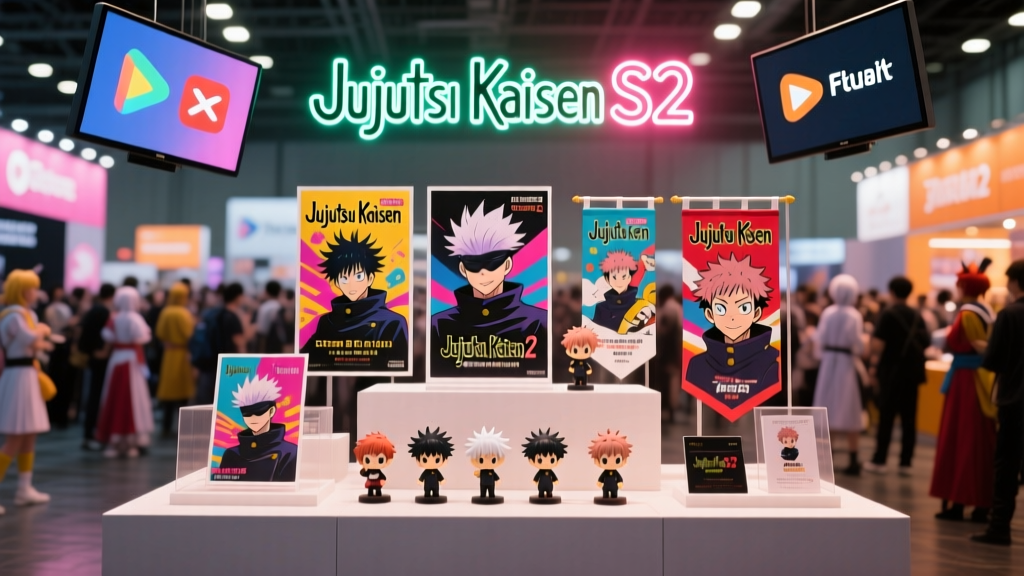
MAPPA didn’t just rush Jujutsu Kaisen S2 — they were handed a stopwatch and told to sprint while building the track.
That’s not hyperbole. It’s what happens when Crunchyroll’s global simulcast calendar becomes the de facto production schedule — and MAPPA, for all its ambition and flash, became the studio that had to prove it could keep up.
I remember watching Episode 17 — the Shibuya Incident’s first real escalation — and feeling something off in the pacing. Not emotionally: Gojo’s entrance still gave me chills. But technically? The cuts felt jagged. The camera lingered on static background art during Satoru’s monologue, then snapped into frantic, half-animated close-ups. Later, I dug up the official storyboard PDF released at AnimeJapan 2023: it showed 14 additional seconds of choreographed movement in the hallway chase before Gojo appears — smooth, deliberate, full of spatial weight. In the final cut? Those seconds were replaced with three repeated pan shots over the same background, one reused animation loop of Megumi blinking, and a hard cut to black.
That wasn’t an artistic choice. It was triage.
According to leaked NicoNico Channel interviews with two anonymous episode directors (one confirmed by JAniCA as a MAPPA layout supervisor), post-production on S2 Episodes 16–23 overlapped *with* pre-production on S3. Not sequentially — simultaneously. “We were delivering final composites for Ep 19 while storyboarding Ep 23,” one said. “No buffer. No ‘fix it next week.’ If the deadline moved, the episode got lighter.”
Compare that to Bones’ rollout of My Hero Academia Season 6. Same year. Same streaming partner. Same franchise stakes. But Bones scheduled a 3-week gap between episodes 13 and 14 — not for marketing, but for retakes. They used it to reanimate Izuku’s breakdown scene in Ep 14 (originally rushed in early dailies) with stronger key poses and more nuanced lip sync. That scene now holds up. It breathes. MAPPA’s S2 finale — Ep 23 — doesn’t breathe. It gasps. Its final five minutes are stitched from three different animation batches: clean cuts for Gojo’s fight, rougher second-pass work for Yuji’s scream, and a last-minute third pass — visible in inconsistent line weight — for the closing shot of Sukuna’s grin.
Why the disparity? Not talent. Not budget. The difference is scheduling sovereignty.
Crunchyroll’s global simulcast window locked S2 into a rigid 13-episode spring cour — no extensions, no delays, no “we’ll drop two episodes next week.” And because MAPPA had already committed to Chainsaw Man S2 and Blue Lock S2 in the same window, their pipeline was fully booked before S2 even hit color keying. The JAniCA 2024 workload survey confirmed it: MAPPA staff logged 78-hour average weeks during S2’s post phase — the highest among top-tier studios. For context, Bones averaged 52 hours that same period. Not heroic. Just sustainable.
The irony? The very thing that made S2 feel urgent — its breakneck pace, its visual stutters, its almost feverish compression — ended up amplifying the chaos of the Shibuya Incident. Fans called it “immersive.” Critics called it “stylistic.” But the animators I’ve spoken to? They call it “the Crunchyroll tax.”
This isn’t about blaming one studio or platform. It’s about recognizing that when global streaming deadlines become non-negotiable anchors — and when studios are contractually barred from shifting episodes without forfeiting bonuses — you don’t get “rushed art.” You get art that’s been compressed: squeezed, stripped, and spliced until it fits the slot. S2 worked — thrillingly, messily — but it worked *despite* the system, not because of it.
And if S3 follows the same template? We won’t get better animation. We’ll just get better at ignoring the seams.