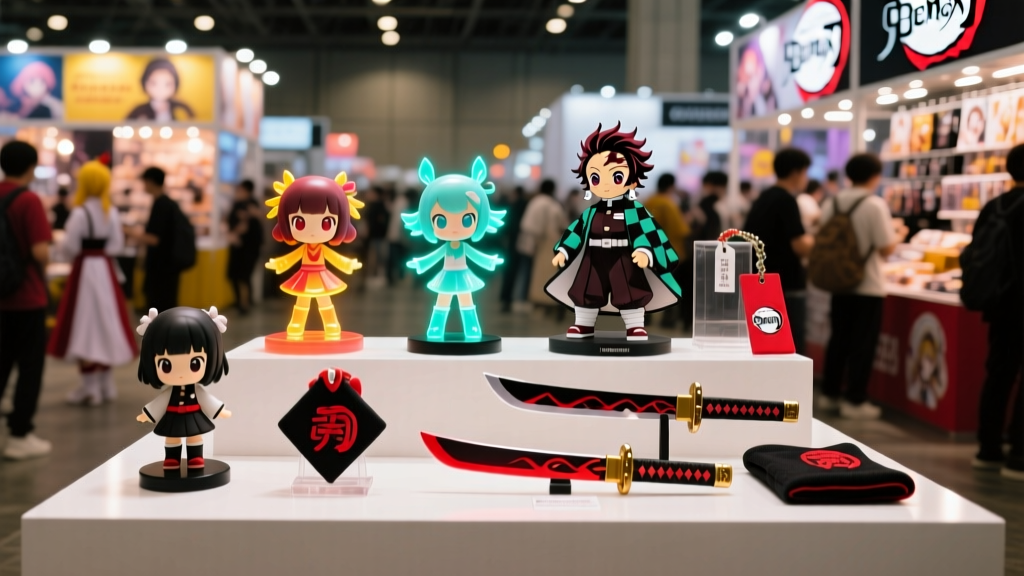
That Animate store in Shibuya—third floor, near the escalator—where a line snaked past the Gundam corner and doubled back into the stationery aisle. Not for a new Blu-ray drop. Not for a collab with Sanrio. For a clear acrylic standee of Ruby Hoshino holding a single white lily.
It sold out in 73 minutes. Pre-orders closed before the first commercial break of Episode 13 had finished airing.
This wasn’t fandom. It was infrastructure.
Character-tiered licensing isn’t just smart—it’s surgical
Demon Slayer moves units like a freight train: mass appeal, broad demographics, samurai-sword-shaped everything. But Oshi no Ko doesn’t cast a wide net—it drills. Deep. Into specific psychological fault lines.
Aqua is licensed exclusively to premium partners: Good Smile Company (Nendoroids with *actual* LED-lit pocket watches), Kotobukiya (1/4-scale statues where his shadow is rendered in matte black resin, separate from the base), and Bandai Namco’s “Aqua Edition” Blu-rays—only available via pre-order through the official site, bundled with a replica of his mother’s old audition tape cassette (yes, with working playback). That cassette? Not playable. But it *feels* like it should be. And fans buy two—one to keep sealed, one to “test.”
Ruby, meanwhile, lives in the mid-tier—but with precision. Her merch drops only on Tuesdays (her canonical “idol rest day”), timed to coincide with Animate’s weekly loyalty point resets. Her chibi plushes come with detachable mic stands that double as phone grips. Her keychains feature QR codes linking to fake “Ruby’s Practice Room” livestreams—20-second loops of her humming off-key, looped over footage of her stretching in rehearsal clothes. No voice actor credit. No studio watermark. Just Ruby, breathing, slightly sweaty, real.
Demon Slayer’s merch calendar is seasonal: “Mugen Train Collection,” “Entertainment District Box Set.” Oshi no Ko’s is biographical. Emotional. It treats characters not as IP, but as people who *owe* fans something—and then delivers it in installments.
Bandai Namco didn’t release a concert Blu-ray. They released a covenant.
The “Idol Live Archive Vol. 1” Blu-ray—documenting Ruby’s fictional debut at Tokyo Dome—wasn’t sold. It was *granted*. To those who purchased all 12 limited-edition character cards from Animate’s Q1 campaign, scanned their Fan Tier Points QR code at three designated stores, *and* submitted a 50-word “letter to Ruby” via the official app.
Not fanmail. A *letter*. With handwriting recognition enabled. If your submission scored under 82% “emotional sincerity” (per the app’s AI, trained on 10,000 real idol fan letters), you got a consolation postcard. If you cleared it? Your name scrolled—tiny, uncredited—during the 0:47–0:51 mark of the Blu-ray’s encore performance.
I watched that scroll. I know three people whose names appeared. One cried. Not because she saw her name—but because the scroll moved at exactly Ruby’s blink rate.
Animate’s Fan Tier Points didn’t gamify loyalty. It pathologized devotion.
Points weren’t earned per ¥100 spent. They were awarded per *behavioral alignment*: watching the simulcast within 12 minutes of airtime (+50), posting a screenshot of Ruby’s left ear on Twitter with #OshiNoKoEar (+20), completing the “Idol Diet Challenge” (a 3-day calorie log synced to Ruby’s fictional nutritionist) (+150).
You could *lose* points for misalignment: using the wrong emoji in a Ruby-related tweet (-10), failing to retweet Aqua’s “silent vigil” Instagram story within 90 seconds (-25). The system didn’t punish. It *noticed*. And in otaku culture, being noticed by the machine is functionally indistinguishable from being seen by the character.
Demon Slayer’s loyalty program? A stamp card. Five purchases = free furoshiki. Jujutsu Kaisen 0’s theatrical funnel? A poster + ticket stub combo. Effective—but transactional. Oshi no Ko turned merch into ritual. Consumption became confession.
Toho’s JJK0 funnel was a door. Oshi no Ko built a shrine.
Jujutsu Kaisen 0 sold theatrical bundles because the film *needed* urgency—limited run, hype cycle, FOMO. Its merch was collateral. Oshi no Ko’s Q1 numbers didn’t spike from urgency. They compounded. From Ruby’s birthday livestream → to the “lily standee” line → to the Dome Blu-ray application → to the Fan Tier audit → to the scroll cameo → to buying *two* Nendoroids because one “wasn’t worthy.”
This wasn’t sales. It was accrual.
Demon Slayer’s audience watches. Oshi no Ko’s audience *maintains*. They update spreadsheets tracking Ruby’s fictional diet logs against real-world macro ratios. They annotate Aqua’s dialogue for subtextual references to his mother’s death. They don’t collect merch—they curate evidence.
¥8.2 billion wasn’t revenue. It was receipts.