How a penciled leotard became the most culturally loaded superhero suit in cinema history
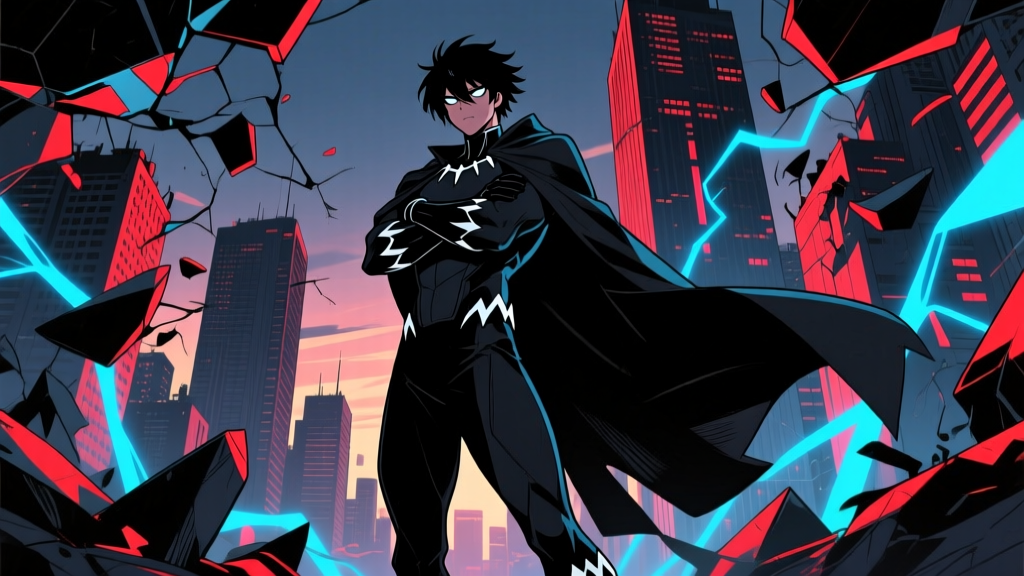
SenpaiSite ·Jack Kirby sat at his drawing board in the spring of 1966 and sketched something that had never existed in mainstream comics before: a Black superhero, head-to-toe in a sleek black bodysuit, crouched like a panther ready to spring. The character debuted in Fantastic Four #52, published that July, and the costume Kirby drew was deceptively simple — a full-body unitard with pointed ears, short gloves, and boot covers, rendered in flat black ink with occasional blue highlights for shading. No cape. No chest emblem screaming for attention. Just a silhouette that said predator.
That original design cost nothing more than Kirby's pencil time and Stan Lee's approval. Yet it planted a seed that would grow, mutate, and ultimately explode onto cinema screens in 2018 as a $250 million cultural event wrapped in a vibranium-weave nanotech suit designed by Academy Award-winning costume designer Ruth E. Carter. The journey between those two points — from four-color newsprint to kinetic-energy-absorbing CGI armor — is one of the most fascinating design evolutions in all of superhero fiction.
Kirby's Blueprint: What the 1966 Suit Got Right on the First Try
Kirby's original black panther costume was radical precisely because of what it didn't do. Superhero design in the mid-1960s was dominated by primary-color spandex: Superman's blue and red, Batman's gray and yellow, Spider-Man's scarlet and azure. Costumes were billboards — every emblem, every color block served the function of making a character instantly recognizable on a spinner rack crowded with competing titles.
T'Challa's suit broke that formula entirely. Kirby chose monochrome. No chest symbol. No utility belt studded with gadgets. The pointed ears and clawed fingertips did all the character work. In the original Fantastic Four #52 panel where T'Challa leaps from the trees, the suit reads as almost abstract — a shape, a posture, a threat. The blue highlights Kirby used for musculature shading gave the costume an otherworldly sheen, as if the material itself wasn't quite fabric.
That restraint was deliberate. Kirby understood something that decades of superhero designers would forget and relearn: the scariest thing in the room is the one you can barely see. A head-to-toe black suit on a Black hero in 1966 America carried weight that no color palette could amplify.
Fifty Years of Comic Book Redesigns: The Suit That Couldn't Stop Changing
The comic book costume went through at least six distinct phases between 1966 and the character's MCU debut, each reflecting the era's artistic sensibilities and the industry's shifting relationship with Black representation.
The Silver and Bronze Age Additions (1966–1979)
Kirby's original held firm through the late Silver Age, but by the time Don McGregor took over writing duties in the early 1970s with Jungle Action #6, artists began experimenting. John Buscema added a subtle silver necklace — a nod to African adornment — and occasionally drew the suit with textured line work suggesting something more than spandex. The clawed gauntlets became slightly more pronounced. The ears sharpened. But the fundamental silhouette remained Kirby's.
The Panther Habit Gets an Upgrade (1998–2005)
Christopher Priest's landmark 1998 run, illustrated by Mark Texeira, fundamentally reimagined what the suit was. Texeira's art style — all shadows and kinetic motion — demanded a costume that looked like it belonged to a warrior-king, not a circus acrobat. The suit gained visible seams, armored plating along the forearms and shins, and a more pronounced cowl. For the first time, writers explicitly described the suit as being made of vibranium-laced fabric, a concept that would become central to every future iteration.
Writer Ta-Nehisi Coates and artist Brian Stelfreeze pushed further in 2016. Their T'Challa wore a suit that looked almost ceremonial — intricate geometric patterns visible along the surface, a high collar, and a distinctly more regal bearing. The Stelfreeze design introduced the idea that the suit was as much a political garment as a tactical one: the mantle of the Black Panther isn't just armor, it's the weight of a nation worn on one man's shoulders.
Shuri Takes the Mantle (2009–2010)
When T'Challa's sister Shuri briefly became the Black Panther during David Hudlin's run, artist Will Conrad gave her suit a distinctly different silhouette: lighter armor, a shorter cowl, and subtle gold accents that distinguished it from T'Challa's while maintaining the iconic profile. It was a rare acknowledgment that the suit isn't a one-size-fits-all proposition — it adapts to its wearer.
Ruth E. Carter's Masterwork: Building Wakanda's Armor for the Screen
When Ryan Coogler tapped Ruth E. Carter to design the costumes for Black Panther (2018), he handed her a problem no comic book artist ever faced: make vibranium look real. Make it look like it was forged by a civilization that leapfrogged the rest of the planet technologically, but whose aesthetic roots reach back centuries into sub-Saharan African traditions.
Carter's solution was to layer the design. The base suit — worn by Chadwick Boseman during principal photography — was a practical garment constructed from a rubberized mesh with geometric surface textures molded directly into the material. The vibranium-weave pattern Carter developed was based on the Adinkra symbols of the Akan people of Ghana, specifically the Eban symbol (a fence-like pattern representing love, safety, and security). Every triangle, every chevron on the suit's surface was pulled from real African design language, not invented by a concept artist looking for something "tribal."
"I wanted to make sure that when you looked at the suit, you saw Africa. Not a Hollywood version of Africa — you saw real design traditions that have existed for centuries, translated into something that felt advanced."
— Ruth E. Carter, interview with The Hollywood Reporter, February 2018
The practical suit weighed approximately 15 pounds and took a team of 12 artisans over three months to construct. For action sequences, the production switched to a CGI suit developed by VFX house Double Negative (now DNEG), which could replicate Carter's surface textures while allowing the impossible — panels that shifted, retracted, and reconfigured in real time.
The Nanotech Revolution: How the Kinetic Energy Suit Changed the Game
The 2018 film introduced the MCU's version of the suit's defining gimmick: kinetic energy storage. When struck, the suit absorbs impact force and stores it as a distributed purple-violet luminescence across the vibranium lattice. The stored energy can then be released as a concussive pulse. On screen, this manifests as the suit glowing with a network of purple veins wherever it's been hit — a visual language that tells the audience exactly how much damage T'Challa has absorbed and how much he's about to dish back out.
The purple glow wasn't arbitrary. Coogler and Carter chose violet-purple specifically because it sits at the high-frequency end of the visible spectrum — the same way ultraviolet sits just beyond what human eyes can detect. Vibranium, in the MCU's internal logic, operates at energy frequencies beyond normal material science. The purple reads as "this material is doing something your physics can't explain." It also happens to contrast violently against the black base, making every frame where the suit charges up a compositional knockout.
For Black Panther: Wakanda Forever (2022), Carter — who won her second Academy Award for the sequel's costumes — refined the nanotech concept further. Shuri's new Black Panther suit, revealed in the film's third act, carries the same kinetic storage capability but with a leaner, more aggressive geometry. The Adinkra patterns shift and become sharper, reflecting Shuri's grief and rage. Carter described the redesign as "the same technology, a different heart beating inside it."
The Vibranium Weave: Fictional Material Science That Feels Real
One of the smarter decisions the MCU creative team made was treating vibranium not as magic, but as advanced materials engineering. The suit isn't "enchanted" — it's engineered. This distinction matters because it lets the audience engage with the costume as a piece of speculative technology rather than a fantasy prop.
According to the MCU's semi-official technical specifications (published in the Marvel Studios Visual Dictionary, 2018), the Black Panther suit's vibranium mesh operates on three principles:
- Kinetic redistribution: Impact energy spreads across the entire lattice rather than concentrating at the point of contact, distributing force the way a spiderweb distributes tension.
- Energy storage and release: The vibranium lattice holds absorbed kinetic energy as potential energy, which the wearer can discharge as an omnidirectional pulse (the "kinetic pulse" seen in the casino fight scene in Busan).
- Nanoscopic deployment: In the MCU, the suit stores within a vibranium-laced necklace (the Kimoyo-style panther habit necklace) and deploys across the wearer's body via nanobots. The deployment sequence takes approximately 1.5 seconds on screen.
This pseudo-scientific framework gives the suit weight. When Killmonger strikes T'Challa in the waterfall duel, you can see the purple glow flicker and dim — the suit's energy reserves draining. When T'Challa releases a kinetic pulse during the Battle of Mount Bashenga, the glow empties outward and the suit returns to flat black. These are small, almost subliminal storytelling choices that make the costume a character in its own right rather than just a wardrobe choice.
Suit Design Evolution: A Side-by-Side Comparison
| Era / Source | Designer / Artist | Key Features | Material Concept |
|---|---|---|---|
| 1966, Fantastic Four #52 | Jack Kirby | Full-body unitard, pointed ears, clawed gloves, blue shading highlights | Unspecified fabric |
| 1973, Jungle Action | John Buscema / Rich Buckler | Added silver necklace, textured line work, sharper ears | Unspecified fabric |
| 1998, Priest / Texeira run | Mark Texeira | Armored plating, visible seams, heavier cowl, warrior aesthetic | Vibranium-laced fabric (first mention) |
| 2016, Coates / Stelfreeze | Brian Stelfreeze | Ceremonial geometric patterns, high collar, regal bearing | Vibranium-weave ceremonial armor |
| 2018, MCU Black Panther | Ruth E. Carter | Adinkra-patterned surface, nanotech deployment, kinetic energy storage with purple glow | Vibranium nanotech mesh |
| 2022, Wakanda Forever | Ruth E. Carter | Refined geometry for Shuri, sharper Adinkra patterns, same kinetic system | Next-gen vibranium nanotech |
More Than Armor: The Cultural Weight of the Black Panther Costume
Costume design in superhero media is rarely just about looking cool, but the black panther costume carries a density of cultural meaning that almost no other superhero garment approaches. When Chadwick Boseman stepped onto the screen in full Panther regalia, he was wearing the first blockbuster superhero costume designed for and around a Black protagonist by a predominantly Black creative team. The suit didn't need to be "colorblind" — it was specifically, deliberately African in its design vocabulary.
Consider the necklace deployment mechanism. In the MCU, T'Challa taps a vibranium necklace and the suit flows outward from it, covering his body in seconds. That necklace design draws directly from the Kimoyo beads Wakandans wear in the films — personal technology devices that serve as communication, medical monitoring, and data storage. By making the suit deploy from the same type of object that every Wakandan citizen wears daily, the design team embedded a quiet message: the Black Panther isn't separate from his people. He wears what they wear, elevated to its highest function.
The suit's cultural impact extended well beyond the screen. Following the 2018 film's release, searches for "black panther costume" spiked over 4,300% on major retail platforms in the first quarter of 2018 compared to the same period in 2017, according to retail analytics from Edison Trends. Halloween costume sales data from the National Retail Federation showed Black Panther costumes ranked in the top 10 most-purchased children's costumes that year — the first time a Black superhero had cracked that list since Blade in 1998.
Cosplay, Collectibles, and the $2,400 Helmet
The black panther costume occupies a strange space in the cosplay and collectibles market. On one hand, the suit's visual simplicity — all black, sleek silhouette — makes it one of the more approachable superhero costumes for amateur cosplayers.
The black panther costume occupies a strange space in the cosplay and collectibles market. On one hand, the suit’s visual simplicity — all black, sleek silhouette — makes it one of the more approachable superhero costumes for amateur cosplayers. YouTube tutorials for DIY Black Panther helmets routinely pull 500,000 to 2 million views. A typical mid-tier cosplay build involves these components:
- Base layer: Motorcycle-grade compression suit or athletic base layer ($40–$90)
- Armor plating: EVA foam sheets, heat-formed and sealed with Plasti Dip ($60–$120)
- Helmet: 3D-printed PLA or resin shell, sanded and painted ($80–$300 depending on method)
- Kinetic glow (optional): Addressable WS2812B LED strips with Arduino controller ($50–$150)
- Necklace prop: Cast resin or 3D-printed with metallic finish ($20–$60)
On the other hand, the high-end collectibles market treats the suit with the reverence usually reserved for Iron Man variants. Hasbro's Marvel Legends Black Panther figure (2018) sold out its initial production run of approximately 150,000 units within three weeks. Sideshow Collectibles' premium format statue, priced at $385, sold through its limited edition run in under 48 hours. The most extreme example: an officially licensed 1:1 wearable helmet by EFX Collectibles, featuring motorized deployment panels and LED kinetic glow effects, retailed for $2,400 and sold out its 500-unit production run.
Cosplay communities have developed their own innovations. The 3D-printing community on Thingiverse hosts over 200 Black Panther helmet files, ranging from basic two-piece shells to fully articulated versions with hinged face plates. Some cosplayers have integrated EL wire or addressable LED strips into their suits to replicate the kinetic energy glow, with builds running $800 to $1,500 in materials alone. At the 2019 San Diego Comic-Con, a cosplayer named David "Drake" Williams gained viral attention for a suit that used pressure sensors to trigger LED sequences wherever the suit was struck — a real-world approximation of the film's kinetic energy system that took him roughly 400 hours to build.
Design Decisions That Separated the Panther Suit from Every Other Hero Costume
A few specific choices deserve attention because they reveal how much intentionality went into differentiating the black panther costume from the crowded superhero garment market:
No face visible, no problem. Most superhero costumes leave the lower face exposed (Spider-Man being the notable exception). The Panther cowl covers the entire head, including the nose and mouth. This was a deliberate choice by both Kirby and Carter — it makes T'Challa unreadable. You can't see him grit his teeth, grimace in pain, or smirk. The mask is a wall. For a character whose power comes from a nation that chose isolation over exposure for centuries, a full-face cowl is narratively perfect.
The ears are non-negotiable. Every redesign across 58 years has kept the pointed ears. They are the single most recognizable element of the silhouette and the one feature no artist has dared remove. The ears read as "animal" in the same way Batman's cowl reads as "bat" — they are the visual shorthand that makes the character instantly identifiable even as a shadow or a logo.
The silver necklace is the only jewelry. In a universe where Doctor Strange wears the Eye of Agamotto and Thor wears armor covered in Asgardian ornamentation, T'Challa's single silver chain is almost aggressively minimalist. It's the one personal touch on an otherwise uniform garment, and its presence grounds the suit in African adornment traditions without tipping into costume-jewelry excess.
Frequently Asked Questions
What material is the Black Panther suit made of in the MCU?
In the MCU, the suit is constructed from a vibranium-based nanotech mesh. The vibranium fibers are woven at a molecular level into a lattice capable of absorbing, storing, and redistributing kinetic energy. The suit deploys from a vibranium necklace via nanoscopic particles that spread across the wearer's body in roughly 1.5 seconds.
Who designed the original Black Panther costume in the comics?
Jack Kirby designed the original costume for the character's debut in Fantastic Four #52 (July 1966). Kirby co-created the character with writer Stan Lee. The original design was a simple full-body black unitard with pointed ears, clawed gloves, and blue shading highlights.
Why does the suit glow purple when hit?
The purple glow represents stored kinetic energy. When the vibranium lattice absorbs impact force, the energy manifests as a violet-purple luminescence distributed across the suit's surface. The wearer can then release this stored energy as a concussive pulse. The purple color was chosen because it sits at the high-frequency end of the visible spectrum, visually communicating that vibranium operates beyond conventional material science.
How much does an official Black Panther collectible helmet cost?
Prices vary widely by tier. Hasbro's Marvel Legends figure runs around $25. Mid-range collectibles from Sideshow or Hot Toys range from $250 to $400. At the premium end, the EFX Collectibles 1:1 wearable helmet with motorized panels and LED effects retailed for $2,400. DIY cosplay helmets built from 3D-printed parts and EVA foam typically cost between $150 and $500 in materials.
Did Ruth E. Carter win an Oscar for the Black Panther costume design?
Yes. Ruth E. Carter won the Academy Award for Best Costume Design for the 2018 Black Panther, becoming the first Black woman to win in that category. She won a second Oscar for Black Panther: Wakanda Forever in 2023, making her one of the few costume designers with multiple wins in the category.
What African design traditions influenced the MCU suit?
Carter drew from multiple sources: the Adinkra symbols of the Akan people of Ghana (particularly the Eban pattern), Maasai beadwork traditions for the necklace and ceremonial elements, Himba and Tuareg leatherwork for texture references, and Lesotho blanket patterns for the broader Wakandan textile language visible in surrounding costumes.
The panther suit has survived nearly six decades of redesigns, reimaginings, and reinterpretations because its core idea has never changed: a Black man, armored in the legacy of an unconquered nation, moving through the world like a shadow with teeth. Kirby drew that idea in four colors on cheap paper. Carter built it from vibranium and African geometry on a Hollywood soundstage. The distance between those two points is the entire history of superhero costume design compressed into a single garment.