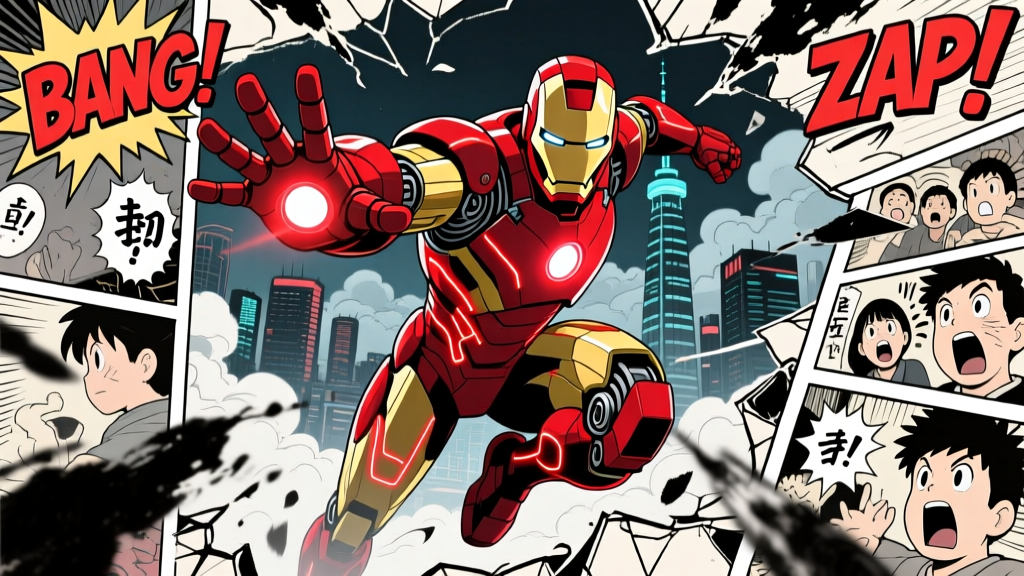
Picture this: it's October 2014, you've just finished reading AXIS #4, and the Inversion spell has flipped half the Marvel Universe's moral compass. Captain America is a fascist. Wolverine is a pacifist. And Tony Stark — the man whose entire character arc hinges on guilt, redemption, and responsibility — is suddenly having a fantastic time being the worst version of himself. He's grinning. He's drinking again. He's selling his tech to the highest bidder. And he's doing it all in a liquid-metal suit that looks like a chrome-plated disco ball had a baby with a Terminator.
This is the Superior Iron Man comic — a nine-issue series by writer Tom Taylor and artist Yildiray Cinar that ran from December 2014 to August 2015, and it remains one of the most divisive runs in Iron Man's sixty-year publication history. Fans either couldn't look away or couldn't stomach it. There was very little middle ground.
More than a decade later, the run still generates heated debate on Reddit threads, YouTube deep-dives, and convention panels. So what exactly happened in those nine issues, why did Marvel greenlight it, and does it hold up as anything more than a stunt? Let's tear it apart.
The Wreckage of AXIS: How Tony Stark Got Inverted
To understand the Superior Iron Man comic, you have to understand the mess that birthed it. AXIS was Marvel's late-2014 crossover event, written by Rick Remender, built around the Red Skull absorbing Professor X's brain and becoming a psychic threat so enormous that heroes and villains had to team up. The pivotal moment: a spell cast by Doctor Doom and the Scarlet Witch (with some assist from Magneto) that inverted the moral axes of everyone caught in its radius.
For most characters, the inversion was a narrative curiosity — a chance to see the villainous become heroic and vice versa. Carnage became a saint. Sabretooth became an Avenger. But for Tony Stark, the inversion cut deeper because his baseline personality already carried enormous psychological complexity.
Pre-inversion Tony was a man constantly fighting his own worst impulses: the alcoholism, the arrogance, the compulsive need to control everything. The inversion spell didn't create a new villain — it just removed the brakes. Suddenly, Tony Stark had no guilt. No conscience. No reason not to indulge every terrible idea that crossed his mind.
"The scariest thing about inverted Tony isn't that he's evil. It's that he's happy. He's the most relaxed we've ever seen him. And that's horrifying if you've been reading this character for forty years." — David Harth, CBR Feature Analysis, 2021
The inversion gave Tom Taylor a premise that no previous Iron Man writer had been handed: what does Tony Stark look like when he stops caring about consequences entirely? Not when he's struggling, not when he's making hard choices — when he genuinely, fundamentally does not give a damn.
Tom Taylor's Gamble: Writing the Anti-Stark
Tom Taylor was not an obvious choice for Superior Iron Man in 2014. He was known primarily for his work on Injustice: Gods Among Us for DC — a digital-first comic tied to a video game that had quietly become one of the bestselling comic series in the industry. Taylor had proven he could write morally complex superhero fiction under constraints, but Superior Iron Man was his first ongoing Marvel title, and it landed in the middle of a crossover event that was already drawing criticism for its convoluted continuity.
Taylor's approach was straightforward: lean into the absurdity. Rather than trying to make inverted Tony a traditional villain — some mustache-twirling megalomaniac — he wrote him as a man who had discovered that being selfish felt great. Tony parties. He sleeps around. He sells Extremis-derived tech to foreign governments. He charges people for rescue missions through a smartphone app. He builds a new suit of armor that runs on a proprietary operating system he monetizes.
This is where Taylor made a choice that would define the entire run: Superior Iron Man is not a villain comic. It's a satire.
The comic is at its best when it's holding up a funhouse mirror to Silicon Valley culture, tech-bro entitlement, and the specific brand of narcissism that emerges when a genius decides the rules don't apply to him. Tony Stark as a character has always had this subtext — the billionaire industrialist who builds weapons and then feels bad about it — but Taylor stripped away the guilt and let the subtext become the text.
"He's not Magneto. He's not Doctor Doom. He's something worse: a tech CEO with no conscience and unlimited resources."The problem? Satire requires the audience to be in on the joke, and a significant chunk of the Iron Man readership was not amused. They'd been reading Kieron Gillen's tightly-plotted, emotionally layered run on Iron Man (2012–2014), and now they were getting Tony Stark as a sleazy venture capitalist who sold armor tech through an app store. The tonal whiplash was real.
Chrome and Controversy: The Silver Suit Design
Let's talk about the suit. You cannot discuss the Superior Iron Man comic without talking about the suit, because it was simultaneously one of the most striking and most ridiculed redesigns in Iron Man history.
Yildiray Cinar's design for the Superior Iron Man armor departed radically from the classic red-and-gold. The new suit was rendered in liquid chrome — a mirror-finish silver that reflected everything around it, with a glowing blue arc reactor at the chest and sharp angular plating that evoked both the Extremis-era armor and the Bleeding Edge nanotech suit from Matt Fraction's run.
Design Intent vs. Reception
The silver suit was meant to visually communicate inversion. The classic red and gold represented heroism, warmth, humanity. The chrome represented something cold, reflective, narcissistic — a suit of armor that literally showed you your own reflection when you looked at it. It was, in concept, brilliant. Tony Stark had built himself a mirror to worship.
In practice? The suit looked like it had been dipped in Mercury. Cinar's interior art was solid — his figure work and action choreography held up throughout the run — but the chrome rendering created a visual that many readers found garish. Variant covers by other artists often depicted the suit more favorably than the interior pages, which created a disconnect between marketing and execution.
| Feature | Classic Red-Gold Armor | Superior Iron Man Chrome Armor |
|---|---|---|
| Color Scheme | Red and gold (warm, heroic) | Liquid chrome silver with blue reactor |
| Material | Titanium-gold alloy, modular plates | Liquid metal / programmable nanotech |
| Deployment | Modular assembly, briefcase, or autonomous flight | App-activated, stored as liquid, forms on command |
| Power Source | Arc reactor (chest-mounted) | Arc reactor with Extremis-enhanced output |
| Signature Ability | Repulsors, unibeam, flight systems | Shape-shifting plating, Extremis healing integration |
| First Full Appearance | Tales of Suspense #48 (1963) | Superior Iron Man #1 (Dec 2014) |
The Extremis integration was a key design element. In the story, Tony had bonded Extremis technology to his armor and his own body, giving him enhanced healing and a degree of biological integration with the suit that previous armors never offered. This wasn't just a costume change — it was Tony merging with his technology at a level that blurred the line between man and machine.
The App That Broke the Fourth Wall (Almost)
One of the most talked-about elements of the Superior Iron Man comic was Tony's decision to commercialize his armor technology through a smartphone application. In the comic, Tony releases an app that allows users to summon Iron Man armor — essentially weaponizing gig-economy logic and applying it to superheroics.
On the surface, this was ridiculous. You can't mass-produce Iron Man armor through an app. The engineering alone — the power requirements, the materials science, the flight systems — would be impossible to commoditize. But that was exactly Taylor's point.
The app storyline was a direct commentary on the tech industry's tendency to package and sell things that shouldn't be for sale. Tony Stark, freed from ethical constraints, saw no reason not to monetize his genius. If people got hurt using inferior armor? That's a liability issue for the legal team. If foreign governments weaponized the tech? That's a policy problem. Tony had moved past caring.
This storyline also served a practical narrative function: it created a stream of antagonists and complications without needing a traditional villain. The harm caused by the app's proliferation drove the plot forward, giving Pepper Potts, Daredevil, and other characters reasons to confront Tony and try to stop him.
"Tony selling Iron Man armor through an app is the most 2015 thing Marvel ever published. It was cringe. It was prescient. It was both at the same time." — Thread on r/Marvel, Reddit, 2023 retrospective discussion
Pepper Potts' role in the series deserves attention. She served as the primary voice of opposition — the person who remembered who Tony was supposed to be and watched in horror as he dismantled everything they'd built together. Taylor wrote Pepper with more agency than she'd been given in many previous Iron Man runs, and her eventual decision to take action against Tony (rather than simply pleading with him to change) was one of the series' stronger character moments.
What Happened in Those Nine Issues: A Breakdown
Superior Iron Man #1–9 (Dec 2014 – Aug 2015)
- Issues #1–3: Tony establishes his new status quo in San Francisco. He relocates Stark Industries operations, launches the armor app, and begins selling technology to international buyers. Pepper Potts discovers the scope of his activities and attempts intervention. Daredevil, who had recently relocated to San Francisco in his own series, crosses paths with Tony and is appalled by his cavalier attitude toward collateral damage.
- Issues #4–5: The consequences of the app begin to manifest. Unauthorized armor users cause chaos. Tony responds not by shutting down the program but by upgrading it — adding subscription tiers. Teenagers in Iron Man suits fight in the streets. A young girl named Riri Williams (who would later become Ironheart, though not named as such here) is briefly referenced in connection to Stark tech proliferation.
- Issues #6–7: Tony's Extremis integration begins to cause physical and psychological side effects. His healing factor accelerates but his emotional regulation deteriorates further. The line between the armor and his body starts to blur in ways that unsettle even him. Bruce Banner attempts to reason with Tony and is rebuffed with contempt.
- Issues #8–9: The series builds toward resolution as the AXIS event's inversion spell begins to weaken. Tony faces a choice: allow the inversion to reverse and return to his guilt-ridden self, or find a way to lock in the inversion permanently. The conclusion is more ambiguous than most readers expected — Tony doesn't get a clean redemption arc.
The pacing was uneven. Issues #1–3 moved at breakneck speed, establishing a new status quo that felt rushed even for a tie-in series. Issues #4–5 settled into a groove where Taylor's satirical instincts found their footing. Issues #6–7 got bogged down in Extremis lore that required too much backstory knowledge. And the ending, arriving with issue #9, felt truncated — as if Taylor had planned a longer run that the sales numbers didn't support.
Why Fans Split Down the Middle
The Superior Iron Man comic polarized readers in a way that few Marvel runs have managed before or since. The split wasn't the usual "good writer / bad writer" divide. It was more fundamental than that.
Camp One: "This isn't Iron Man." These readers — many of them longtime fans who'd followed Tony through Demon in a Bottle, Extremis, and Matt Fraction's celebrated 2008–2012 run — felt that the inversion stripped Tony of everything that made him compelling. Tony Stark's appeal, they argued, lies in his internal conflict. He's interesting because he struggles. Remove the struggle and you're left with a shallow caricature. The satire was too broad, the humor too mean-spirited, and the character too unrecognizable to engage with emotionally.
Camp Two: "This is the most honest Iron Man comic ever written." These readers — often newer to the character, or fans of Taylor's Injustice work — saw the inversion as a logical endpoint for a character whose contradictions had always been unsustainable. Tony Stark was always one bad day away from becoming exactly this. The comic just had the courage to show it. The app storyline was sharp social commentary. The chrome suit was visually bold. And Pepper Potts finally got to be more than a love interest.
Sales data tells an unambiguous story: the series started strong (issue #1 sold approximately 72,000 copies in its first month, per Diamond Comic Distributors estimates) and dropped steadily, with issue #9 falling below 30,000 units. That's a retention problem. Readers who bought the first issue out of curiosity didn't stick around for the long haul, and the series never found a sustainable audience beyond the AXIS tie-in bump.
The critical reception mirrored the fan divide. IGN gave the series' opening arc a 7.2 out of 10, praising Cinar's art but questioning the narrative direction. Comic Book Resources published multiple features both defending and attacking the run. Individual issue reviews on ComicBookRoundup averaged around 6.8 out of 10 — respectable but not enthusiastic.
Where Superior Iron Man Fits in the Publication Timeline
Context matters. The Superior Iron Man comic landed in a specific moment in Marvel's publishing history that shaped how it was received and why it ended when it did.
Before Superior Iron Man, Tony Stark's solo series had been in strong hands. Kieron Gillen's Iron Man (2012–2014) had explored Tony's origins through the lens of his biological parentage — revealing that Howard Stark had adopted Tony, and that his biological father was the Rigellian Recorder. It was dense, cerebral storytelling that rewarded close reading. Before Gillen, Matt Fraction's Invincible Iron Man (2008–2012) had been a fan-favorite run that modernized the character, introduced the Bleeding Edge armor, and navigated the post-Civil War landscape with genuine emotional weight.
Superior Iron Man interrupted that lineage. It wasn't a natural continuation of either Fraction's or Gillen's work — it was an event-driven spinoff that existed because AXIS required an inverted Tony Stark to have his own platform. After the series ended, Brian Michael Bendis picked up Tony's story in Invincible Iron Man (2015–2018), which eventually put Tony in a coma and introduced Riri Williams as his successor. The Superior Iron Man run was essentially a detour — acknowledged in continuity but rarely referenced.
| Series | Writer(s) | Run | Tone / Focus |
|---|---|---|---|
| Invincible Iron Man | Matt Fraction | 2008–2012 | Post-Civil War redemption, Bleeding Edge tech, Siege aftermath |
| Iron Man (Vol. 5) | Kieron Gillen | 2012–2014 | Biological origins, Godkiller arc, Extremis deep lore |
| Superior Iron Man | Tom Taylor | 2014–2015 | AXIS inversion, moral satire, tech commodification |
| Invincible Iron Man (Vol. 3) | Brian Michael Bendis | 2015–2018 | Riri Williams introduction, Tony in coma, legacy themes |
| Tony Stark: Iron Man | Dan Slott | 2018–2019 | Fresh start, eScape virtual reality, family drama |
| Iron Man (Vol. 6) | Christopher Cantwell | 2020–2023 | Korvac saga, classic villain gauntlet, space opera |
What's notable is how little the Superior Iron Man comic has been revisited in subsequent Iron Man stories. Bendis largely ignored it. Slott made no references to it. Cantwell's run treated the character as if the inversion had never happened. In continuity terms, the series occupies a strange limbo — technically canonical, functionally forgotten.
The Chrome Legacy: What Superior Iron Man Got Right
Despite its flaws and its tepid reception, the Superior Iron Man comic accomplished a few things that deserve recognition.
First, it proved that Tony Stark could sustain a satire. The character has always been Marvel's most explicitly capitalist hero — a weapons manufacturer turned superhero, a billionaire who funds the Avengers, a man whose genius is inseparable from his wealth. Taylor's run showed that there was real narrative potential in examining what happens when you remove the moral scaffolding that keeps that capitalism in check. It wasn't subtle, but it wasn't supposed to be.
Second, it gave Pepper Potts something to do. Across the broader Iron Man publication history, Pepper has been underutilized — often relegated to the role of concerned girlfriend or administrative assistant. In Superior Iron Man, she was the closest thing the series had to a protagonist. Her arc from disbelief to anger to action was the emotional spine of the comic, and it anticipated the more prominent role she would take on in later Marvel media (including the MCU's Iron Man 3 and the rescue suit storyline).
Third, the chrome suit has endured in pop culture. Despite the initial mockery, the silver Iron Man armor has appeared in merchandise, video game skins, and cosplay. Hot Toys released a premium 1/6 scale figure of the Superior Iron Man suit in 2017 that retailed for $280 and sold out within its pre-order window. The design has aged better than many expected — in an era where chrome and silver aesthetics have circled back into fashion through cyberpunk revival and Y2K nostalgia, the suit looks less like a misstep and more like something ahead of its time.
Fourth, it asked a question the franchise keeps circling back to. Is Tony Stark his armor, or is he the man inside it? Every Iron Man story eventually confronts this, but Superior Iron Man confronted it head-on by showing a Tony who had merged with his technology so completely that the distinction became meaningless. The Extremis bonding, the app-based deployment, the liquid metal that lived in his bloodstream — these weren't just gimmicks. They were a thesis statement about what happens when the tool consumes the user.
What It Got Wrong
No honest assessment of the Superior Iron Man comic can skip its failures.
The pacing was genuinely poor. Taylor was working within the constraints of a tie-in series with a predetermined endpoint (the inversion spell would eventually wear off), and the rush to establish a new status quo, tell a complete story, and resolve it in nine issues meant that nothing got the space it needed. Subplots — Daredevil's involvement, the San Francisco setting, the teenage armor users — were introduced and abandoned with frustrating speed.
The humor didn't always land. Taylor's satirical instincts are sharp in Injustice, where the grimdark setting provides contrast for his dark comedy. In Superior Iron Man, the comedy often undercut the stakes rather than enhancing them. When Tony cracks a joke while selling weapons technology to a dictator, the joke needs to make the reader uncomfortable — but too often, the punchlines felt like they were asking the reader to find Tony charming despite his actions. That tonal confusion plagued the entire run.
The art, while competent, never quite matched the ambition of the concept. Cinar is a skilled artist — his work on Wolverine and later Uncanny Avengers demonstrated range and dynamism — but the chrome suit was a rendering challenge that the color palette and lighting choices didn't always solve. The suit frequently looked flat or overly reflective in ways that obscured the action rather than enhancing it.
And fundamentally, the series suffered from a problem of purpose. It wasn't clear what Superior Iron Man was for. Was it a character study? A satire? An event tie-in? An experiment in superhero fiction? It tried to be all of these things simultaneously and ended up being none of them completely. A more focused vision — or a longer run that gave Taylor room to develop each thread — might have produced something that resonated more deeply.
The Fandom That Won't Let It Die
Here's the curious thing about the Superior Iron Man comic: it has a longer cultural afterlife than its sales numbers would predict.
The chrome suit appears regularly in "best Iron Man armors" listicles. Fan artists on Twitter, Tumblr, and DeviantArt continue to draw the silver armor with enthusiasm. YouTube channels like New Rockstars and Comics Explained have produced retrospective videos that collectively total millions of views. And on TikTok, clips of the chrome Iron Man — often paired with phonk music or cyberpunk aesthetics — have found audiences that have never read a single issue of the comic.
There's also a persistent fan theory — never confirmed or denied by Marvel — that the Superior Iron Man persona exists somewhere in the multiverse and could return. Given Marvel's current multiverse-heavy storytelling approach (the MCU's Multiverse Saga ran from 2021 to 2027), a chrome-armored, morally inverted Tony Stark showing up as a variant is the kind of fan-service that writes itself.
The series has also been cited by comic scholars as an example of Marvel's "inversion experiment" — a period in 2014–2015 when the publisher used the AXIS event to temporarily reconfigure multiple characters as a way of exploring narrative possibilities without permanent commitment. It was, in effect, Marvel's version of DC's Elseworlds imprint — stories that asked "what if?" while maintaining plausible deniability about continuity.
Should You Read It?
If you're an Iron Man fan who values character depth and emotional continuity, the Superior Iron Man comic will probably irritate you. It's not interested in the Tony Stark who cries over his failures or sacrifices himself for the greater good. It's interested in the Tony Stark who stopped caring — and the comic doesn't always make a compelling case for why you should care about a character who doesn't care about himself.
If you're a reader who enjoys satire, moral ambiguity, and superhero fiction that takes genuine risks (even when those risks don't fully pay off), the series is worth your time. The collected trade paperback — Superior Iron Man: Inversion — runs about 200 pages and can be read in an afternoon. It's not essential Iron Man, but it's interesting Iron Man, and those aren't always the same thing.
If you're here for the chrome suit and want to see what all the fuss was about? Read issues #1, #4, and #8. That's enough to understand the premise, see the suit in action, and understand why this run still has people arguing a decade later.
Questions People Actually Ask About Superior Iron Man
Is the Superior Iron Man comic considered canon?
Yes. It exists within Marvel's primary continuity (Earth-616). The events of the series — Tony's inversion, the chrome armor, the app technology — are technically part of the character's history. However, subsequent Iron Man writers have largely avoided referencing the series, treating it as an episode that the character moved past without detailed discussion. The inversion was reversed during the conclusion of the AXIS event, restoring Tony's original moral alignment.
How many issues are in the Superior Iron Man series?
Nine issues total, published from December 2014 to August 2015. The series was collected in a single trade paperback titled Superior Iron Man: Inversion (ISBN 978-0785197947), which also includes the relevant AXIS tie-in material from AXIS: Revolutions #1–2.
Why did the Superior Iron Man suit change from red and gold to silver?
The chrome silver suit was a deliberate creative choice by writer Tom Taylor and artist Yildiray Cinar to visually represent Tony Stark's moral inversion. The reflective, cold surface of the liquid-metal armor was meant to contrast with the warm red-and-gold palette of the classic suit — symbolizing a Tony Stark who had become narcissistic, detached, and self-reflecting in the worst sense. The liquid-metal properties also tied into the Extremis technology that Tony had integrated into both the suit and his body.
What happened to Tony Stark after the Superior Iron Man series ended?
After the inversion was reversed at the end of AXIS, Tony returned to his baseline personality. Brian Michael Bendis took over the character in Invincible Iron Man (2015), where Tony dealt with the aftermath of his inverted actions — including guilt over what he'd done while the inversion was active. The series eventually put Tony in a coma (issue #14, 2017), during which Riri Williams took up the Iron Man mantle. Tony eventually recovered and returned to active duty in Dan Slott's Tony Stark: Iron Man (2018).
Did the Superior Iron Man app storyline predict real-world tech trends?
In retrospect, yes — uncomfortably so. The concept of a tech billionaire releasing powerful technology through a consumer app, with minimal oversight and catastrophic downstream effects, anticipated real-world debates about AI tool accessibility, autonomous weapons proliferation, and the gig economy's tendency to commoditize everything. Taylor's 2014 depiction of Tony monetizing armor technology through a subscription-based app reads almost as parody of 2020s tech industry practices. Whether this was intentional prescience or simply good satirical instinct is something Taylor has not publicly addressed in detail.
Is Tom Taylor still writing for Marvel?
Yes. After Superior Iron Man, Taylor became one of Marvel's most prolific writers. He wrote All-New Wolverine (2015–2018) featuring Laura Kinney, which was critically acclaimed and commercially successful. He later wrote X-Men Red, Nightwing for DC (winning multiple Eisner Awards), and Superman Son of Kal-El. His career trajectory after the divisive Superior Iron Man run has been firmly upward, and the series is now generally viewed as an early-career experiment rather than a defining work.