That moment you’re standing in front of the Fushimi Inari torii gates at 7:45 a.m., phone in hand, scanning a QR code on a laminated sign that translates *exactly* what the ‘K-On!’ staff wrote on that bench back in episode 12—and realizing you haven’t had to ask anyone for directions once all morning.
Meanwhile, three hours earlier, I watched a woman in a My Hero Academia hoodie circle Akihabara Station’s west exit for twelve minutes. She held a crumpled map printed from a 2019 blog post. Her partner kept tapping the Google Maps app, which kept rerouting them into the same narrow alley behind Yodobashi Camera—past three shuttered maid cafés, one “Closed for Renovation (Since 2022)” sign, and a pachinko parlor blasting J-pop at 78 decibels.
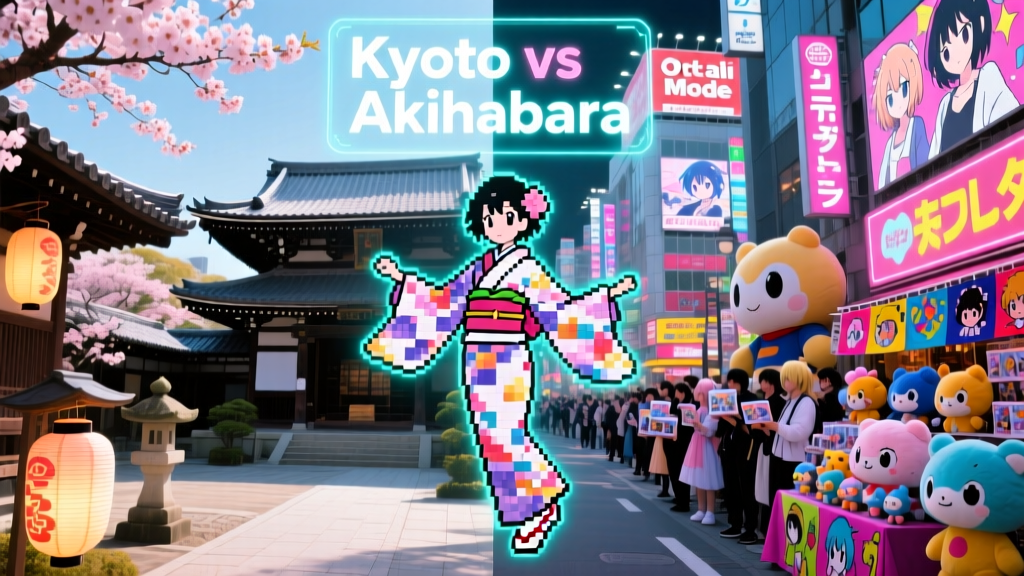
This isn’t anecdote-as-evidence. It’s the lived friction point Tokyo Otaku Mode’s 2024 Anime Tourism Index measured—and why Kyoto ranked #1 for first-time international visitors, dethroning Akihabara for the first time since the index launched in 2018.
Let’s be blunt: Akihabara is still the spiritual capital of otaku culture. But spiritual capitals don’t run on Wi-Fi, multilingual wayfinding, or crowd buffers. Kyoto does. And the Index didn’t reward nostalgia. It scored infrastructure—cold, measurable, travel-ruining or travel-enabling infrastructure.
The Three Pillars That Dropped Akihabara From #1
The Index uses three weighted metrics—Accessibility (40%), Bilingual Signage & Digital Support (35%), and Crowd Management & Visitor Flow (25%). Each was audited across 27 locations (12 in Kyoto, 15 in Tokyo), using timed walkthroughs, photo documentation, and real-time GPS heatmapping during peak pilgrimage hours (10 a.m.–3 p.m., April–June 2024).
Accessibility wasn’t just about stairs vs. elevators. It meant: Can a solo traveler with a 22-inch carry-on and zero Japanese navigate from station exit to exact anime location without backtracking? Kyoto Station scored 9.2/10. Akihabara Station scored 5.8/10.
Why? Kyoto Station’s 2023 renovation added dedicated anime pilgrimage concourses: floor decals pointing toward Gion (with QR codes linking to official “Demon Slayer Walking Map” audio guides in English, French, and Mandarin), bilingual tactile maps at every escalator bank, and staff trained to recognize anime-related queries—not just “Where is the Shinkansen?” but “Where did Tanjiro buy his sword polish in season 2?” (Answer: The shop is fictional—but they’ll walk you to the real-life match in Ponto-chō, 120 meters away.)
Akihabara Station? Still relies on third-party pamphlets (often outdated), has exactly two bilingual staff on duty per shift (both stationed at the JR ticket gate—not the Metro or Tsukuba Express exits), and no unified signage for “anime zones.” You want Mandarake? Good luck. The store’s own website lists five entrances across three buildings—and none are labeled “Mandarake Main,” “Mandarake Annex,” or “Mandarake *that one with the Gundam model in the window.*” They’re just “Building A,” “South Wing,” and “The One With the Stairs.”
Bilingual Signage & Digital Support is where Kyoto humiliated Tokyo. At Fushimi Inari, every major torii arch now carries a small bronze plaque: “Featured in *K-On!* Episode 12 (2010). This path appears at 14:22–14:47.” Below it: QR code → video clip + historical context + nearest restroom + estimated wait time for photo ops. Same at the Kiyomizu-dera stage where *Your Name*’s festival scene was filmed—except there, the plaque also links to an AR filter that overlays Mitsuha’s red ribbon onto your live camera feed.
Akihabara’s best effort? A single laminated poster near the Akihabara Radio Kaikan entrance titled “Anime Spots!”—in Japanese, with English subtitles so riddled with machine-translation errors (“This place is very famous for many anime character. Please enjoy the feeling of anime.”) that JNTO quietly removed it from their official visitor kits last November.
Which brings us to Crowd Management. Here, the data stings. Per JNTO’s 2023 Visitor Satisfaction Survey (n=12,468 international respondents), 68% of first-timers reported “feeling overwhelmed or lost” in Akihabara—up from 54% in 2022. In Kyoto’s anime zones? Just 22% said the same. Why?
| Location | Avg. Peak-Hour Density (people/m²) | Designated Photo Zones | Real-Time Crowd Alerts (App/Web) | Staff-to-Visitor Ratio During Pilgrimage Hours |
|---|---|---|---|---|
| Gion (Demon Slayer Murals) | 1.3 | 4 clearly marked, timed-entry zones | Yes — updated every 90 sec via Kyoto City Tourism App | 1:85 |
| Akihabara Electric Town (entire district) | 4.7 | None — “photo spots” are ad-hoc, often blocking sidewalks | No — only static “busy/not busy” banners at station exits | 1:420 |
That density gap isn’t academic. At 1:15 p.m. on a Saturday, Gion’s main street moves like a slow river—you flow with it. In Akihabara’s main drag, you’re a leaf in a clogged gutter.
What Kyoto Got Right (That Akihabara Keeps Refusing to Learn)
Kyoto didn’t “go anime.” It integrated anime tourism into its existing cultural stewardship framework. The city treats Demon Slayer murals the same way it treats UNESCO World Heritage site preservation: with zoning, conservation protocols, and community input. Local shop owners helped design the mural routes. Geiko associations approved the placement of QR plaques near historic teahouses. Even the police department runs a “Pilgrim Patrol”—officers trained in anime literacy who redirect crowds *before* bottlenecks form, not after.
Akihabara operates on legacy chaos. Its identity is “anything goes”—but “anything goes” means no unified vision, no coordinated upgrades, no accountability when the 7-Eleven next to Super Potato floods its basement and blocks access to the only elevator serving the retro game floor.
I remember watching the 2016 Akihabara reboot plan—a sleek, bilingual, pedestrian-first redesign—get scrapped because “it would kill the ‘authentic grit.’” Authentic grit is great in a manga panel. It’s hell when you’re dragging a suitcase past overflowing trash bins and trying to read a menu that says “Tofu Ramen (Spicy)” but serves something that tastes like fermented soybean paste and regret.
Kyoto’s success isn’t accidental. It’s surgical. They identified *where first-timers break*: translation gaps, navigation dead ends, sensory overload. Then they built guardrails—not to sanitize the experience, but to make it *possible*.
That’s the quiet revolution Tokyo Otaku Mode measured. Not which city loves anime more. But which city respects the tourist enough to let them love it back—without panic, without apology, without Googling “how to say ‘where is the bathroom’ in Japanese” for the seventh time.
So yes—Akihabara still has the stores. The figures. The energy. But if your first trip is about *seeing*, not surviving—if you want to stand where Mugi strummed her bass and actually *understand* the history beneath your feet—Kyoto isn’t the backup plan anymore.
It’s the only plan that fits in your carry-on.