The VTuber Revolution: How Virtual Streamers Reshaped Otaku Culture
By Aiko Yamamoto
The VTuber Revolution: How Virtual Streamers Reshaped Otaku Culture
I still remember the first time I saw Kizuna AI’s “Hello, World!” video in early 2017—her pink twin-tails bouncing like they had their own physics engine, her voice a perfect blend of bubbly and slightly synthetic, her eyes blinking with just enough delay to feel *alive*, not polished. I laughed. Then I watched it again. Then I clicked her next video. That wasn’t just a gimmick—it was a crack in the wall between anime fantasy and real-world interaction. And over the next seven years? That crack became a canyon—and then a whole damn ecosystem.
VTubing didn’t *arrive* as culture. It grew like moss on concrete: quiet, persistent, impossible to ignore once it filled every crevice. What began as a niche experiment by indie devs and otaku coders (shoutout to *Ami Yamato*, *Selen Tatsuki*, and that legendary 2016 NicoNico livestream where someone rigged a Miku model to track facial expressions using a $30 webcam) evolved into something that redefined how we consume, create, and *belong* in otaku spaces.
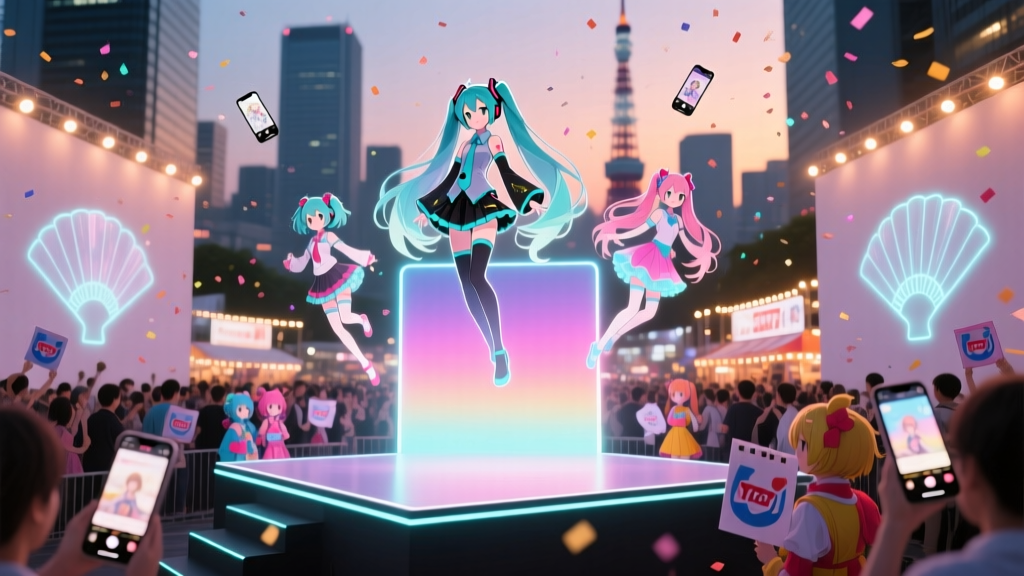
Let’s be real: before Hololive and Nijisanji went supernova, “otaku culture” meant waiting for the next Blu-ray box set, refreshing MyAnimeList rankings, or nervously attending Comiket booths hoping your favorite doujinshi artist would glance your way. It was largely passive—or at least, transactional. VTubers flipped that script. They made fandom *relational*. Not parasocial—though yes, some fans blur those lines—but *reciprocal*. You cheered in chat, they read your name. You drew fanart, they reposted it with heart emojis. You sent a Super Chat during a 3AM ASMR stream, and suddenly Gura was whispering “thank you, senpai” while adjusting her shark tail in real time. That intimacy—engineered, yes, but *felt*—changed everything.
Hololive: The Spark That Lit the Fire
Hololive didn’t invent VTubing, but they weaponized its emotional grammar. Their debut generation—*Sora, Mio, Aki, Suisei, and Aira*—wasn’t just cute avatars with good voice actors. They were *characters* with interiority, contradictions, and arcs. Remember Sora’s infamous “I’m not a robot!” meltdown in Episode 3 of *Hololive’s First Live*? Or Suisei’s tearful solo performance of “Hoshifuru Yoru ni” after her early struggles with recognition? Those weren’t scripted stunts—they were *moments*, raw and unrepeatable, preserved forever in VODs and TikTok edits. Hololive understood that fans don’t fall for perfection; they fall for vulnerability dressed in glitter and polygonal eyelashes.
And their production quality? Unmatched. That seamless transition from 2D model to full 3D stage during *Hololive Super Expo 2022*, where Hoshimachi Suisei sang “Starlight” while stars literally rained down in sync with her breath? That wasn’t just tech—it was *theater*. It made anime concerts feel quaint by comparison.
Nijisanji: The Empire of Authentic Chaos
If Hololive mastered emotional precision, Nijisanji built an empire on glorious, unfiltered chaos. Their strength wasn’t polish—it was *personality density*. Think *Pekora’s* “Boku wa Pekora da!” meme explosion, or *Mori Calliope* freestyling over trap beats while her fox ears glitched mid-rap. Nijisanji’s genius was trusting their talents to *be weird*, often *too* weird—like *Kuzuha*’s surreal cooking streams where she’d attempt ramen while debating Kantian ethics, or *Risu*’s infamous “bento sabotage” arc where she “accidentally” microwaved a plastic container live.
They also pioneered cross-border expansion *without* diluting identity. When *Nijisanji EN* launched, they didn’t dub Japanese lore—they localized *attitude*. *Gawr Gura* didn’t become “an English-speaking Pekora.” She became *Gawr Gura*: chaotic, bass-obsessed, unapologetically American in her sarcasm, yet unmistakably Nijisanji in her commitment to absurd sincerity. Same with *IRyS*—her haunting vocals and melancholic aesthetic resonated globally because emotion transcends language, but her *delivery*—that soft-spoken intensity, the way she’d pause mid-sentence like listening to ghosts—was pure, undiluted Nijisanji DNA.
The Indie Pulse: Where the Soul Still Lives
But let’s not crown the corporations and forget the basement studios. The true heartbeat of VTubing remains in the independents—the ones who draw their own models in Clip Studio, animate lip-syncs frame-by-frame in Live2D Cubism, and stream from cramped Tokyo apartments lit by RGB strips duct-taped to ceiling fans.
Take *Takanashi Kiara*. Before her explosive rise, she was just another indie with a cat-ear model and a dream. Her early streams—awkward, unedited, full of stutters and self-deprecating jokes about her “terrible” drawing skills—built a cult following *because* they felt human. Or *Tsukasa Yuzuki*, whose entire brand is “I will sing *anything*, even your grandma’s grocery list, if you send it in chat.” These creators didn’t chase trends—they *set* them, often by accident. Kiara’s “Koi no Kakehashi” cover didn’t go viral because it was perfect; it went viral because her voice cracked on the high note, she laughed, and kept singing. That’s the magic: imperfection rendered lovable through intention.
And let’s talk about *representation*. VTubing exploded precisely when traditional anime gatekeepers were still debating whether a main character could have visible stretch marks or wear hearing aids. Meanwhile, *Ninomae Ina’nis* streamed while openly discussing ADHD management. *Oozora Subaru* used her platform to advocate for LGBTQ+ visibility in Japan’s entertainment industry—no vague metaphors, just clear, warm, unflinching words delivered with her signature gentle smile. These weren’t side notes. They were *foundations*.
What Changed—And What Didn’t
So what *did* VTubing reshape in otaku culture?
First: the hierarchy. No longer is fandom defined solely by consumption (buying figures, memorizing episode numbers). Now it’s measured in *co-creation*—fan edits, original songs, lore theories debated across Discord servers, even fan-made model rigs shared on GitHub. I’ve spent more hours tweaking a custom Live2D expression for my favorite indie VTuber than I have rewatching *Steins;Gate*.
Second: the geography. Pre-VTuber, “otaku community” meant physical spaces—Akihabara arcades, local anime clubs, overseas cons. Now it’s *everywhere*. My neighbor in Berlin chats with a college student in Jakarta about *Hoshimachi Suisei*’s latest lore tweet while a coder in São Paulo debugs a fan-made VRChat model of *Usada Pekora*. Time zones don’t matter when your idol streams at 4AM JST—and your sleep schedule adapts.
Third: the economics. VTubing democratized content creation. You don’t need a studio or a record label. You need a mic, a decent GPU, passion, and the willingness to fail publicly. That’s why so many ex-anime staff—background artists, storyboarders, even voice actors blacklisted for speaking out—found new life as VTubers. Their artistry wasn’t obsolete; it was *recontextualized*.
But here’s what hasn’t changed: the heart. The reason we cry at Suisei’s graduation concert, laugh until we snort at Pekora’s “milk break” bit, or stay up until sunrise watching Kiara attempt to bake *mochi* for the third time—it’s the same reason we fell for *Asuka Langley Soryu* screaming “Don’t look away!” or *Koyomi Araragi* choosing love over logic. We crave connection. We want to believe—even for 90 minutes—that someone sees us, hears us, *chooses* us.
VTubers didn’t replace anime. They *extended* it—into our DMs, our Spotify playlists, our group chats, our dreams. They turned otaku culture from a noun into a verb: *to VTube*, *to co-create*, *to belong*—not as consumers, but as collaborators in a living, breathing, ever-glitching, endlessly tender fiction.
And honestly? I wouldn’t trade that for all the limited-edition figures in Akihabara.
Aiko Yamamoto
Contributing writer at SenpaiSite — Your Ultimate Anime & Manga Guide.