Understanding Waifu Culture: Why Fictional Characters Generate Real Emotional Attachment
My first waifu confession happened during a rainy Tuesday in 2013. I was rewatching Clannad—episode 23, “The Light of the Hill”—when Nagisa Furukawa whispered, “I’m glad I met you.” Not “you,” the viewer, but *me*. My throat tightened. I paused, rewound, watched it again. Then I opened a new tab and searched “Nagisa Furukawa birthday.” I added it to my calendar. I didn’t think it was weird. I thought it was tender.
That’s the quiet truth no thinkpiece wants to admit upfront: waifu culture isn’t irony-first. It’s often sincerity-first—layered, self-aware, sometimes silly, but rarely hollow.
It’s Not About Replacement. It’s About Resonance.
Psychologists don’t use the term “waifu” in journals—but they *do* study parasocial relationships, attachment to mediated figures, and narrative transportation. What’s striking isn’t that people form bonds with fictional characters; it’s how *structurally similar* those bonds are to real ones. In a 2021 study published in Psychology of Popular Media, researchers found that viewers who reported strong emotional connections to anime characters also scored higher on measures of empathy, relational imagination, and narrative absorption—not lower, as stereotypes suggest.
Take Asuka Langley Soryu from Neon Genesis Evangelion. Her bravado masks deep abandonment wounds. Fans don’t just “like” her—they recognize the ache behind her sarcasm. They replay her breakdown in Terminal Dogma (episode 22), not for drama, but because they’ve felt that kind of unraveling. The attachment isn’t to her hair color or school uniform. It’s to the fidelity of her emotional logic.
Same with Shiro from No Game No Life: her trauma isn’t aestheticized—it’s methodically shown through dissociation, hyper-rationality, and sudden vulnerability. When she finally says “I want to live with you” in episode 11, it lands like a physical weight. That moment doesn’t work unless the audience has spent ten episodes *earning* her trust alongside Sora.
The Rituals Are Real—Even If the Relationship Isn’t Romantic
Waifu culture thrives on ritual—not fantasy. Consider the practices:
- Birthday celebrations: Not just memes. Discord servers organize voice chats, fan-art collabs, and charity drives “in honor of” characters like Rem (Re:Zero) or Ruri Gokō (Prison School). In 2022, fans raised ¥2.4 million for Japanese pediatric cancer wards under Rem’s name.
- “Waifu Wednesday”: A weekly thread on r/anime where users post *why* a character resonates—not just “she’s hot,” but “her arc mirrors my recovery from burnout” or “her loyalty taught me how to set boundaries.”
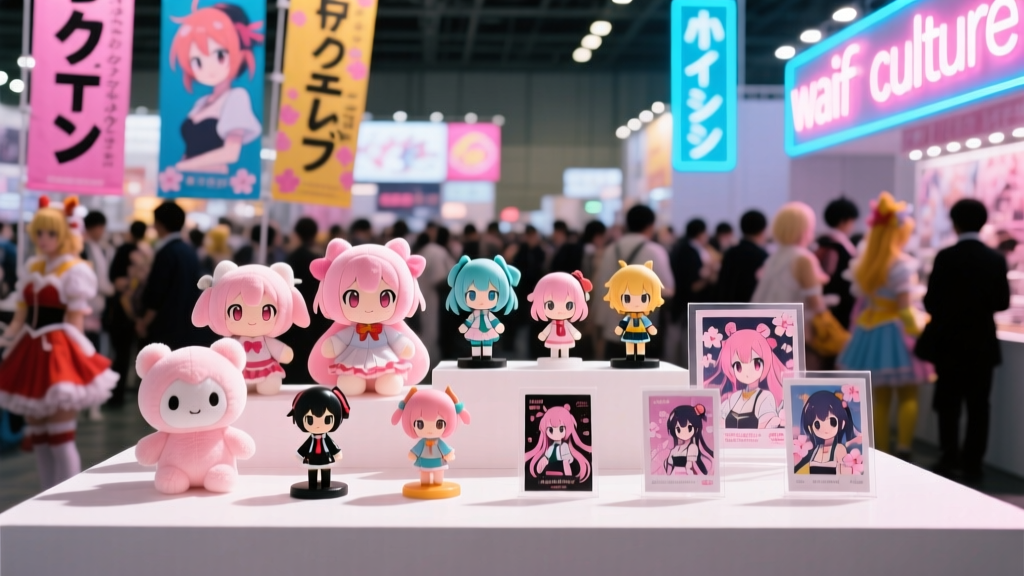
- Figurine placement: That shelf isn’t decor. It’s a curated altar of emotional touchstones—Mikasa’s scarf draped over her figure, a tiny Survey Corps badge beside Eren’s, placed deliberately to reflect narrative evolution.
These aren’t delusions. They’re symbolic scaffolding—ways to externalize internal growth. You don’t “date” your waifu. You use her as a lens to examine your own values, fears, or hopes. When someone says “Mikasa is my waifu,” what they often mean is: “Her unwavering protection reminds me to protect my own boundaries.”
Why Outsiders Get It Wrong (and Why That Hurts)
Critics reduce waifu culture to three tropes: “socially stunted men,” “escapism,” or “fetishization.” All three miss the point—and all three ignore context.
First: the demographics. A 2023 survey by AnimeJapan found that 43% of self-identified “waifu lovers” are women, and 12% identify as non-binary or genderfluid. The “lonely otaku” caricature erases queer fans who find safety in characters like Violet Evergarden—a woman rebuilding her capacity for love after trauma—or Yuki Takeya from Highschool of the Dead, whose quiet strength defies damsel tropes.
Second: the escapism argument ignores *what’s being escaped*. It’s rarely reality itself—it’s toxic environments. A college student in Osaka told me last year, “My ‘husbando’ is Koyomi Araragi because he chooses kindness even when it costs him. My dad called that weakness. Watching him apologize, listen, *change*… it gave me language for my own healing.”
Third: fetishization exists—but it’s neither universal nor defining. Compare two scenes: Asuka’s beach episode (EVA, ep. 20) vs. her silent, tear-streaked reflection in a broken mirror (ep. 23). Fans who fixate on the former rarely engage with the latter. The culture’s depth lies in its ability to hold both—and choose the mirror.
When the Line Blurs—And Why That’s Okay
Yes, some take it too far. There’s a subreddit where users “propose” to characters using AI-generated rings. A TikTok trend features men serenading posters of Zero Two with original ballads. These moments make headlines—and they’re easy to mock.
But consider the alternative: a world where we only form attachments to people who can reciprocate. Where grief is only valid for the living. Where imagination isn’t seen as practice for empathy, but as failure to engage.
I remember watching Angel Beats! at 17—the entire premise built on characters clinging to unresolved feelings in an afterlife shaped by their regrets. Can’t we extend that same compassion to the living? To the person who keeps a photo of Hachiko on their desk not because they think he’ll bark back, but because his loyalty maps onto their commitment to a dying parent?
“The heart doesn’t distinguish between ‘real’ and ‘represented’ when the resonance is true.”
—Dr. Emi Tanaka, cultural psychologist, speaking at the 2022 Tokyo Media Studies Symposium
Waifu culture persists because it answers a human need older than anime: the need to be *seen* through the eyes of someone who understands—even if that someone lives in 24 frames per second.
It’s not about believing Misaki Ayuzawa from MAJOR will text you back. It’s about remembering how she stood up to bullies while hiding her own fear—and then finding the courage to do the same in your next staff meeting.
So next time you see someone wearing a Jun Sakurada keychain (Hanasaku Iroha), don’t smirk. Ask them what scene made them buy it. Listen. You might hear about resilience. Or grief. Or the first time they felt permission to want something fiercely.
That’s not delusion. That’s translation.