Why ‘Oshi No Ko’ Season 2’s Idol Industry Critique Fails Its Own Thesis (Ep 1–13)
The opening shot of Episode 1 isn’t Ruby stepping onto the stage—it’s a close-up of Ai Hoshino’s face, frozen in mid-laugh, projected onto a massive LED screen at the Tokyo Dome. Her smile is pixel-perfect. Her eyes are bright. Her voice is absent. The crowd roars—not for her, but at her, like she’s a hologram they’ve paid to mourn.
That’s the thesis statement. Or at least, it’s supposed to be.
Season 2 of Oshi No Ko promised to dig deeper into the machinery behind the sparkle—the contracts, the silence, the way grief gets repackaged as merch and streaming numbers. Instead, it spends thirteen episodes performing its own critique like a well-rehearsed idol routine: sharp choreography, flawless lighting, zero room for improvisation.
The Contradiction Is Built Into the Frame
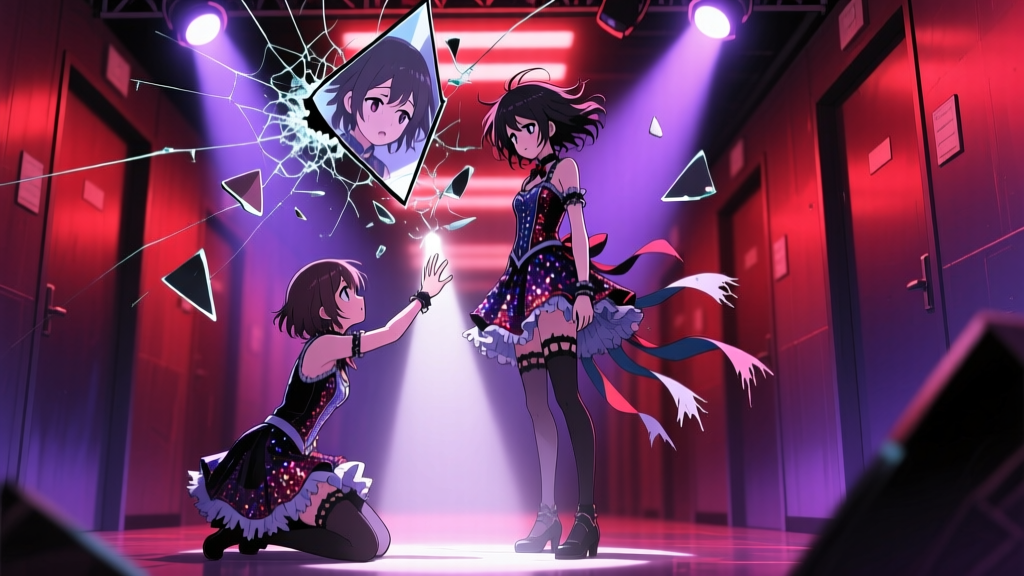
MAPPA knows how to wield contrast. Watch Episode 4’s “Dreaming Star” concert: saturated golds and violets, lens flares catching on Ruby’s hair ribbons, slow-motion confetti that looks like glittering ash. Then cut to the dressing room—same episode, same night—where Ruby stares blankly into a mirror while a staff member adjusts her mic pack *without asking*, her reflection fractured across three cracked mirrors. The lighting there isn’t dim. It’s clinical. Fluorescent. Like a hospital hallway.
That visual grammar works—until it doesn’t. Because Ruby isn’t allowed to break character long enough for the critique to land. When she hesitates before signing a contract extension in Episode 7, the scene cuts to a flashback of Ai whispering, “You’re my dream.” Not “You’re your own person.” Not “You get to say no.” Just… dream. And dreams, in this show’s logic, are non-negotiable. Sacred. Inviolable. Which makes Ruby’s consent look like tribute, not choice.
Compare that to the real-world fallout from the Johnny & Associates scandal—especially the 2023 testimony where former trainees described being told their bodies weren’t theirs to manage, their schedules weren’t theirs to question, and their silence was part of the brand. Oshi No Ko nods at that horror—but then has Ruby accept a six-year contract *the same day* she learns her mother’s death was covered up by the agency. Not because she’s coerced. Not because she’s financially trapped. But because “Ai would’ve wanted this.”
That’s not critique. That’s mythmaking.
Ruby’s Erosion Isn’t Shown—It’s Sanctified
Chapter 87–104 of the manga (which Season 2 adapts faithfully, right down to the panel-to-scene fidelity) gives us Ruby’s internal monologue: her exhaustion, her dissociation during fan meetings, her quiet panic when asked to “smile more naturally.” On the page, it reads like slow suffocation. On screen? MAPPA translates that inner collapse into *aesthetic*. Her fatigue becomes soft focus. Her silence becomes poetic stillness. Her hesitation becomes… reverence.
Take Episode 12’s “Cinderella Complex” segment—a direct riff on the 2023 J-pop labor reform debates, where industry unions pushed for mandatory rest days and mental health leave. In reality, those proposals were met with pushback from agencies citing “fan expectations” and “artistic integrity.” In the anime? Ruby’s therapist suggests she take a break. Ruby declines—not out of fear or pressure, but because she sees a vision of Ai dancing in the rain. The camera lingers on Ruby’s tear, backlit by studio lights. It’s beautiful. It’s devastating. It’s also completely apolitical.
The real reform movement wasn’t about visions. It was about unpaid overtime. About NDAs that barred trainees from seeking therapy without agency approval. About contracts that treated emotional labor like inventory. Oshi No Ko Season 2 treats all of that like set dressing—something to glance at before returning to the main event: the tragedy of the beautiful girl who sacrifices herself so the dream can live on.
Ai’s Commodification Is Real. Ruby’s Agency Is a Plot Device.
Here’s what the show gets right: Ai’s posthumous exploitation is chillingly precise. The “Ai Hoshino Memorial Project” isn’t just merch drops—it’s AI voice clones singing unreleased demos (Episode 5), deepfake interviews spliced into variety shows (Episode 9), even a VR “final performance” where fans pay ¥12,000 to hold hands with a ghost (Episode 11). That’s ripped from headlines—right down to the ethical gray zone of Japan’s 2022 AI Voice Cloning Guidelines.
But here’s the twist the show refuses to confront: Ruby isn’t resisting that commodification. She’s *curating* it. She approves the AI vocals. She poses for the VR promo. She smiles through the press conference announcing the “eternal Ai” initiative. Her motivation? Love. Loyalty. Grief. All valid. None of them political.
The critique collapses because it demands we mourn Ai while cheering Ruby’s self-erasure. It asks us to see the system as monstrous—and then watches, unblinking, as Ruby walks willingly into its gears and calls them wings.
I remember watching Episode 13’s final shot: Ruby alone on stage, bathed in white light, bowing so low her forehead touches the floor. The crowd chants her name. The camera pulls up, up, up—until she’s a tiny, perfect speck inside a glittering, hollow dome.
It’s stunning.
It’s also the exact image the industry sells.
And that’s the problem. Not that Oshi No Ko sees the machine.
It’s that it keeps polishing the chrome.