SenpaiSite · Anime Reviews · Collector's Vault
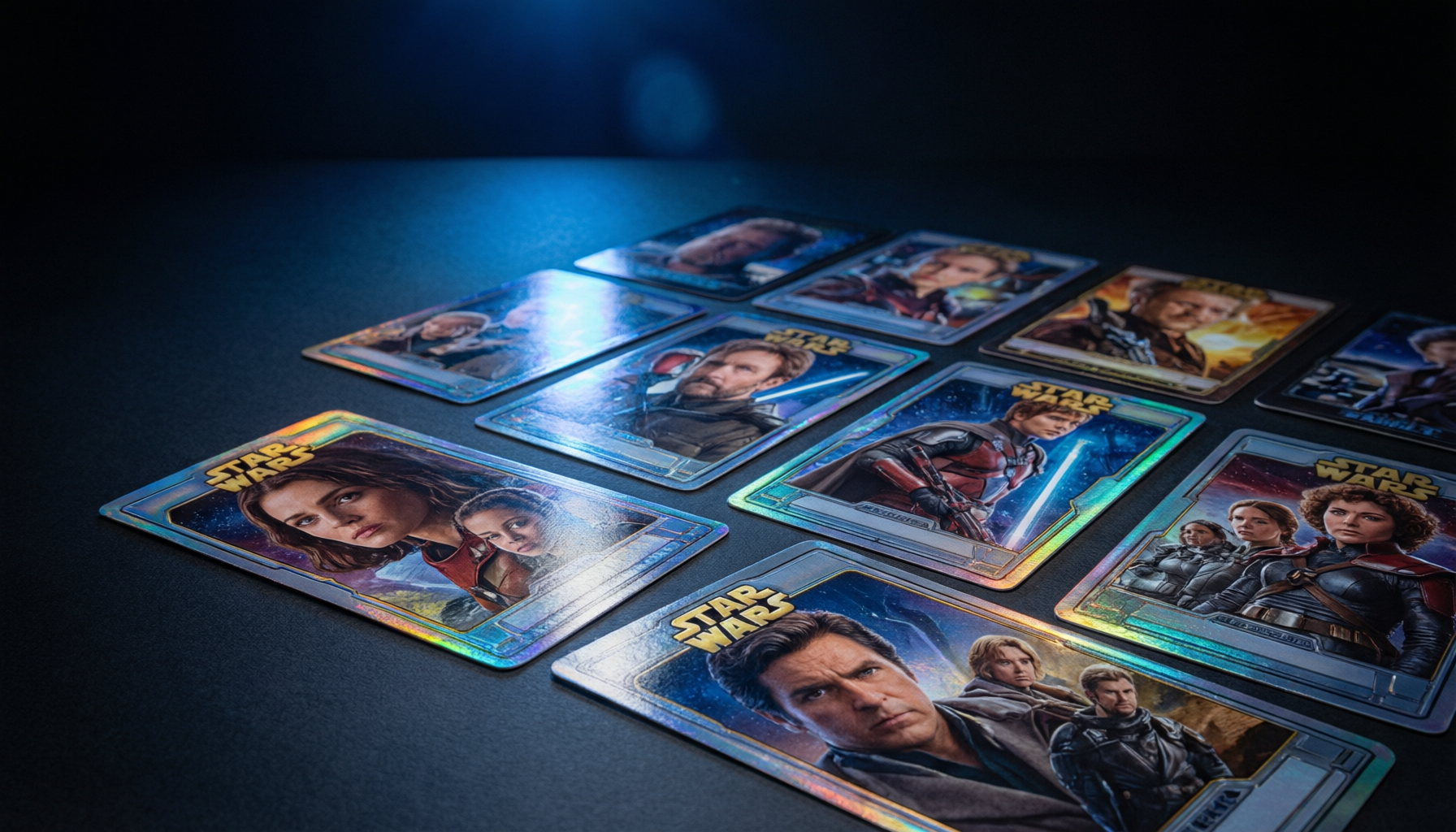
Star Wars Trading Cards: The Collector's Guide That Actually Knows the Market
From the original 1977 Topps wax packs to modern Heritage autograph chase cards — everything a serious collector needs to understand about values, rarities, and where the hobby is heading.
There's a moment every Star Wars card collector remembers. Maybe it was opening a wax pack as a kid and pulling a holographic Darth Vader for the first time. Maybe it was watching a PSA 10 1977 Topps Luke Skywalker sell for five figures on a livestream and realizing those cards in a shoebox at your parents' house might actually be worth something. Whatever sparked it, the Star Wars trading card hobby has grown from a niche pocket of the sports card world into a multi-million dollar secondary market with its own grading ecosystems, price guides, and collector drama.
I've been buying, selling, and trading Star Wars cards for over fifteen years. I've watched sets spike in value after Disney+ announcements, crash when Topps overprints a chase card, and stabilize around the characters that actually matter to fans. This guide pulls from that experience. No filler, no generic advice — just the information I wish someone had handed me when I started.
The History That Shaped the Market
Topps secured the Star Wars trading card license in 1977, the same year the original film hit theaters. That first series — the 1977 Topps Star Wars Series 1 — is the bedrock of the entire hobby. The yellow-bordered cards featuring stills from A New Hope were packed into wax wrappers with a stick of gum that probably tasted like cardboard. Kids bought them for pennies. Today, a complete PSA-graded set in mint condition can command over $10,000.
Topps followed up with Empire Strikes Back cards in 1980 and Return of the Jedi cards in 1983. Each series had its own character. The ESB set introduced darker photography and the iconic blue-tinted borders. ROTJ cards featured the vibrant reds and greens of the Endor sequences. These original trilogy sets remain the blue-chip investments of the hobby — they're not going anywhere.
After a long drought through the mid-to-late 1980s, Topps reignited the line in 1993 with the Star Wars Galaxy series. This was a different beast entirely. Galaxy cards featured original artwork, behind-the-scenes photos, and — critically for collectors — randomly inserted autograph cards from cast members. The Galaxy line ran through multiple series and introduced concepts like sketch cards and promotional chase cards that would define the modern hobby.
The 2000s saw an explosion of premium products. Star Wars Finest (2004) brought refractor technology to the franchise. Star Wars Heritage (starting in 2013) offered a nostalgic, retro-design approach. And the 2010s also brought the first Star Wars Chrome sets, which quickly became some of the most sought-after modern products thanks to their parallels and autograph content.
When Disney acquired Lucasfilm in 2012, collectors held their breath. The new films meant new characters, new sets, and a massive influx of new collectors. Some of those predictions panned out. Others didn't. More on that below.
The Most Valuable Star Wars Card Sets
Not all Star Wars sets are created equal. Some are worth a fortune. Most are worth very little. Understanding which is which separates collectors from people who just happen to own cards.
1977 Topps Star Wars Series 1
The original. The set that started everything. 66 cards, plus a stickers subset and a "Star Wars Puzzle" back series. The key card is #1, featuring Luke Skywalker with a yellow border. In PSA 10 condition, this card alone has sold for over $5,000. A complete set graded PSA 8 or better will run you $3,000 to $12,000 depending on centering and eye appeal. The stickers subset is particularly brutal to find in high grade — PSA 10 examples are almost mythical.
Here's what most guides won't tell you: the 1977 Series 1 had multiple print runs, and the later print runs had slightly different color saturation and stock thickness. Experienced collectors can identify early print run cards by the sharper image quality and more vibrant yellow borders. These command a premium from serious set builders, even if PSA doesn't distinguish them on the label.
1980 Topps Empire Strikes Back
66 cards plus a stickers subset and a "Galaxy of Stars" insert series. The blue-border design is iconic. The key card is #1 (Yoda), which in PSA 10 has traded in the $1,500 to $3,000 range. The ESB set is generally more affordable than the 1977 original but significantly harder to find well-centered. The blue borders show chipping and miscuts more obviously than the yellow borders of the first series.
1993 Topps Star Wars Galaxy Series 1
This set changed the hobby. The base set featured stunning original artwork and was followed by multiple sequel series. But the real money is in the autograph cards. Mark Hamill, Harrison Ford, and Carrie Fisher autographs from the Galaxy series are the most iconic Star Wars autograph cards in existence. A PSA/DNA authenticated Harrison Ford Galaxy autograph in PSA 10 can reach $8,000 to $15,000. The Series 1 autographs are more valuable than later Galaxy autographs because the print runs were smaller and the signers were more generous with their time in the early '90s.
2013 Topps Star Wars Heritage
The Heritage line was Topps' love letter to vintage design. Each year, a new Heritage set reimagined a classic Topps design with Star Wars imagery. The 2013 debut set is the most valuable in the Heritage run, largely because early Heritage products had smaller print runs before Topps realized how popular the line would become. Key chase cards include the High Numbers series and autograph parallels. A complete 2013 Heritage master set with all parallels and autographs can exceed $2,000.
Star Wars Chrome (Various Years)
Chrome cards are the sports card collector's gateway drug applied to Star Wars. The refractor parallels — especially Superfractors (typically numbered /1 or unnumbered) and Red Refractors — command massive premiums. A Star Wars Chrome Superfractor autograph of a key character can sell for $5,000 or more at auction. The 2015 Star Wars Chrome set, timed with The Force Awakens hype, remains one of the hottest modern products.
The Rarest Star Wars Cards Money Can (Sometimes) Buy
Rarity in Star Wars cards comes in different flavors. Some cards are rare because they were short-printed. Others are rare because of production errors. And a few are rare because they were distributed through channels so limited that most collectors don't even know they exist.
The 1977 Topps Star Wars #1 Luke Skywalker (PSA 10)
Not technically rare in terms of total population — PSA has graded thousands of these. But the population in PSA 10 is extremely low, likely fewer than 50 examples. The card's design (full bleed yellow border on the left side) made it nearly impossible to pull from a pack without at least minor edge wear. Finding one in gem mint is a miracle of preservation. Recent sales have ranged from $4,000 to $7,500 depending on the market cycle.
1995 Topps Star Wars Galaxy III "Yoda" Sketch Card
Sketch cards from the Galaxy series are each one-of-one original artworks drawn directly on the card. The Galaxy III Yoda sketch card by a notable artist like Joe Corroney or John Kittrell can fetch $2,000 to $5,000. Sketch cards featuring original trilogy characters are significantly more valuable than prequel-era sketches, which flooded the market in the late '90s and early 2000s.
2004 Topps Star Wars Finest Darth Vader Gold Refractor
The Finest line brought premium refractor technology to Star Wars, and the Gold Refractor parallels (numbered to 50 or fewer) are the chase. A Darth Vader Gold Refractor in PSA/BGS 9.5+ can command $1,500 to $3,000. These cards have a deep, shimmering gold finish that looks spectacular in hand — and they photograph beautifully for online listings, which drives demand from collectors who buy primarily through eBay and auction houses.
Star Wars 3D Widevision Cards (1996)
These oversized 3D cards were sold through specific retail channels and had very limited distribution. The lenticular technology was novel for the time, and the cards have a cult following. Complete sets are hard to assemble, and individual high-grade examples of key characters (Han Solo, Boba Fett) can sell for $200 to $500 — which is remarkable for a non-numbered set from the mid-'90s.
Promo Cards and Convention Exclusives
This is where the real deep-cut collectors live. Star Wars Celebration convention exclusives, SDCC promo cards, and mail-in redemption cards from the '90s often had print runs in the low hundreds. The 1997 Star Wars Trilogy Widevision Tin promo cards, for example, were only available through a specific tin product and are now almost never seen on the secondary market. When they do surface, expect to pay $300+ for a single card.
Top 10 Most Valuable Star Wars Cards (2025-2026 Market)
| Rank | Card | Set / Year | Grade | Approx. Value |
|---|---|---|---|---|
| 1 | #1 Luke Skywalker | 1977 Topps SW Series 1 | PSA 10 | $5,000 – $7,500 |
| 2 | Harrison Ford Autograph | 1993 Galaxy Series 1 | PSA/DNA 10 | $8,000 – $15,000 |
| 3 | Mark Hamill Autograph | 1993 Galaxy Series 1 | PSA/DNA 10 | $4,000 – $8,000 |
| 4 | Complete Set (66 cards) | 1977 Topps SW Series 1 | PSA 8+ avg | $3,000 – $12,000 |
| 5 | #1 Yoda | 1980 Topps ESB | PSA 10 | $1,500 – $3,000 |
| 6 | Darth Vader Gold Refractor /50 | 2004 Topps Finest | BGS 9.5 | $1,500 – $3,000 |
| 7 | Carrie Fisher Autograph | 1993 Galaxy Series 1 | PSA/DNA 9 | $2,500 – $5,000 |
| 8 | Chrome Superfractor Autograph | 2015 Star Wars Chrome | PSA 10 | $3,000 – $5,500 |
| 9 | Boba Fett Sticker #19 | 1977 Topps SW Series 1 | PSA 10 | $800 – $2,000 |
| 10 | Master Set (w/ Autographs) | 2013 Topps Heritage | Various | $1,500 – $2,500 |
Prices reflect approximate market range based on recent eBay sold listings and auction house results through early 2026. Actual values fluctuate with market conditions.
Where the Market Stands Right Now
The Star Wars card market has gone through distinct phases, and understanding where we are now requires looking at the recent past.
The Disney+ Bump (2019-2021): When The Mandalorian premiered, Star Wars cards experienced a surge unlike anything since the prequel trilogy. Grogu ("Baby Yoda") cards from 2020 Topps sets skyrocketed in value. First appearance cards of The Mandalorian himself, Din Djarin, became instant chase cards. The pandemic-driven collectibles boom amplified this effect — people stuck at home turned to card collecting, and Star Wars was one of the most accessible franchises for new collectors.
The Correction (2022-2023): Like every collectible market that overheats, prices corrected. Modern Star Wars cards (anything from 2015 onward) saw the biggest pullback because print runs were enormous. A Rey autograph from 2015 Topps Chrome that sold for $800 in 2021 might have dropped to $350 by 2023. Not a crash — a normalization. The vintage stuff (pre-1990) held its value much better because supply is genuinely limited.
The Current Landscape (2024-2026): The market has stabilized, and here's what I'm seeing. Vintage original trilogy cards (1977-1983) continue to appreciate slowly and steadily, driven by nostalgia and the aging collector base that has more disposable income now. Galaxy autograph cards remain strong, especially for original trilogy cast members — the passing of certain actors has created emotional demand spikes. Modern Heritage sets from the early years (2013-2016) are starting to appreciate as collectors realize early print runs were smaller than later years.
The Andor and Ahsoka series gave moderate bumps to cards featuring those characters, but nothing like the Mandalorian effect. Collectors are more cautious now. They've been burned once by buying into hype and are waiting to see which characters have staying power before committing serious money.
One trend worth watching: Star Wars cards graded by CGC (the comic book grading company's new trading card division) are starting to appear in the market. CGC's slabs are sleeker than PSA's, and some collectors prefer the aesthetic. Whether CGC-graded Star Wars cards will trade at parity with PSA-graded examples remains an open question, but early results suggest they're being accepted at roughly 85-95% of PSA comps.
Collecting Strategies That Actually Work
After years of watching collectors make the same mistakes, here's what actually builds a collection that holds value and brings satisfaction.
Buy the Card, Not the Grade
A PSA 9 with exceptional eye appeal will often outperform a PSA 10 with poor centering in terms of long-term value retention. I know that sounds backwards. But the hobby is moving toward a more nuanced understanding of condition. Subgrades matter. Centering matters. A card that looks perfect to the naked eye but technically grades a 9 because of a microscopic print line will be more desirable in twenty years than a technically perfect 10 that looks slightly off-center when you hold it.
Original Trilogy Is the Safe Bet
Luke, Han, Vader, Leia, Boba Fett. These characters have sustained demand for nearly 50 years. Prequel-era cards (Anakin, Padme, Maul) have a dedicated following but a smaller one. Sequel-era cards are still too new to predict long-term value with confidence. If you're investing — and I use that word deliberately — original trilogy vintage cards are the Star Wars equivalent of blue-chip stocks.
Raw Cards Offer Better Value (If You Know What You're Doing)
Graded cards carry a premium. Sometimes that premium is justified. Sometimes it's not. If you can learn to evaluate raw card condition — understand centering, corner sharpness, surface quality, and edge wear — you can buy raw cards at 40-60% of their graded value, submit them for grading yourself, and come out ahead. The risk is that you misjudge condition and end up with a card that grades lower than expected. Practice on cheap cards first. Buy a loupe. Learn to spot surface scratches under direct light.
Don't Chase Modern Autographs Blindly
A Star Wars autograph is only as valuable as the signer and the product. An autograph from a background alien character in a mass-produced 2022 set is not an investment — it's a novelty. Focus your autograph budget on original trilogy cast, key creative talent (directors, concept artists), and characters with genuine fan followings. A single well-chosen autograph card will outperform ten mediocre ones every time.
Protect Your Collection Properly
This should be obvious but isn't. Store cards in acid-free sleeves and top-loaders. Keep them in a cool, dry environment away from direct sunlight. I've seen collections lose thousands in value because someone stored boxes in a garage where humidity warped the cardstock. For high-value cards, consider a fireproof safe or a bank safety deposit box. Insurance through collectibles-specific policies (like those offered by PWCC or collectible insurance specialists) is worth the cost for any collection valued above $5,000.
Network With Other Collectors
The best deals in this hobby happen between collectors, not on eBay. Join Star Wars card forums, Facebook groups, and Discord servers. Attend card shows. Build relationships. I've acquired cards at 20-30% below market value from collectors who preferred selling to someone they trusted rather than dealing with the hassle and fees of online marketplaces. The collector community is smaller and friendlier than you might think.
Where to Buy and Sell
eBay remains the dominant marketplace for Star Wars cards. The sold listings feature is the single best price research tool available — always check recent sold prices before buying or selling. Factor in eBay's ~13% seller fee when pricing your listings.
PWCC and Heritage Auctions handle the high-end material. If you're buying or selling cards worth $1,000+, auction houses offer authentication guarantees and access to serious collectors willing to pay market price. The fees are real (15-20% buyer's premium, seller consignment fees), but the exposure and trust are worth it for premium items.
COMC (Check Out My Cards) is excellent for mid-range cards ($10-$200). Their inventory system lets you store and list cards without handling shipping yourself. I've used COMC to slowly sell duplicate cards from set builds, and the platform works well for patient sellers.
Card Shows are underrated. Local and regional card shows often have dealers with Star Wars inventory priced below online market rates. Shows also offer the chance to examine cards in person before buying, which is invaluable for high-value purchases.
Frequently Asked Questions
Are Star Wars trading cards a good investment compared to sports cards?
It depends on your timeline and risk tolerance. Vintage Star Wars cards (1977-1983) have shown steady, consistent appreciation over decades, comparable to mid-tier sports cards. The advantage of Star Wars cards is that demand is driven by nostalgia and pop culture rather than athletic performance — a player's career can tank card values overnight, but Darth Vader isn't going to have a scandal. The downside is that the market is smaller and less liquid than baseball or basketball cards. You may need to wait longer to sell at your target price. For long-term holders who buy quality vintage material, Star Wars cards have been a solid store of value.
How do I tell if my old Star Wars cards are worth anything?
Start with the year and set identification. Cards from 1977, 1980, and 1983 (the original trilogy years) are almost always worth something, even in poor condition. Check the card number — #1 cards and key character cards (Luke, Vader, Han, Boba Fett) carry premiums. Then honestly assess condition: are the corners sharp? Is the centering even? Is the surface free of creases and scratches? Use eBay's sold listings to check what identical cards in similar condition have actually sold for. Don't rely on asking prices — people can ask anything. Only sold prices tell you real market value. If you think you have something valuable, consider submitting it to PSA or Beckett for professional grading.
What's the difference between Topps Star Wars sets and non-Topps Star Wars cards?
Topps held the primary Star Wars trading card license for most of the franchise's history, and their sets dominate the secondary market. However, other companies have produced Star Wars cards at various points — Decipher made Star Wars CCG cards in the '90s (a different format, closer to a game), and Inkworks produced some Star Wars sets before going out of business. There have also been promotional card sets from fast food chains, cereal companies, and comic book publishers. Topps sets are generally the most liquid and widely collected. Non-Topps Star Wars cards can have niche value, but they're harder to sell and have less established price guides.
Should I get my Star Wars cards graded, and by which company?
Grading makes sense for cards that are likely to grade well (9 or above) and have enough value to justify the grading fee (roughly $25-$150 per card depending on service level). PSA is the market leader — PSA-graded cards sell fastest and at the highest prices in most cases. Beckett (BGS) is a strong second choice, especially for modern cards, and BGS subgrades give buyers more detailed condition information. CGC is a newer entrant gaining traction. Before submitting, research the specific card's population report on the grading company's website — if there are already 500 PSA 10s of a particular card, your PSA 10 won't carry much premium. But if there are only 3? That changes the calculus entirely.
Is it still worth collecting modern Star Wars cards in 2026?
Absolutely — but with realistic expectations. Modern Star Wars cards are unlikely to see the massive appreciation of vintage sets because print runs are significantly larger. That said, certain modern products have held value well: early Heritage sets (2013-2015), Chrome Superfractors, and autograph cards of popular characters. The real value in collecting modern sets is enjoyment. The designs are excellent, the chase cards are exciting to pull, and building a master set is a genuinely rewarding project. If some of those cards appreciate over time, great. But buy modern Star Wars cards because you love them, not because you expect them to pay for your retirement.
The Long Game
Star Wars trading cards have survived four decades of market cycles, multiple franchise reinventions, and a global pandemic. The hobby endures because it sits at the intersection of two powerful forces: nostalgia for one of the most beloved film franchises in history, and the timeless appeal of collecting physical objects. Digital collectibles, NFTs, and virtual trading platforms have come and gone, but a well-preserved 1977 Luke Skywalker card still gives you that same feeling when you hold it.
The best advice I can offer is this: collect what you love, learn as much as you can about condition and rarity, and be patient. The best collections aren't built overnight. They're assembled card by card, trade by trade, over years of hunting through dealer bins and scrolling late-night auction listings. That's the part of the hobby no price guide can capture — and it's the part that keeps collectors coming back.
May the hobby be with you. Always.
SenpaiSite · Anime Reviews · Collector's Vault
Star Wars and all related names are trademarks of Lucasfilm Ltd. / The Walt Disney Company. This article is an independent collector's resource and is not affiliated with or endorsed by Lucasfilm or Topps.