Otaku Culture • Predator / Alien Franchise
Predator Yautja: The Complete Species Breakdown — Types, Culture, Technology, and Every Appearance
The most feared hunters in the galaxy have been stalking us across screens for nearly four decades. Here is everything you need to know about the Yautja.
They do not want your planet. They do not want your resources. They do not want to conquer you or enslave you or convert you to their ideology. They want something far more unsettling — they want to hunt you. The Yautja, known to human audiences simply as the Predator, occupy a singular niche in science fiction: an alien species defined entirely by the ritualized pursuit of dangerous prey. Since John McTiernan's Predator landed in theaters in 1987, the franchise has quietly assembled one of the most detailed fictional alien civilizations ever committed to film, comics, novels, and video games. Yet most viewers have never scratched the surface.
This article is for those of us who have spent unhealthy amounts of time in the expanded universe — reading Dark Horse comics no one talks about, replaying Alien vs. Predator on the PS2, arguing about whether the Super Predators are a separate subspecies or just a bigger, meanier clan. We are going to walk through every Yautja type ever depicted on screen and page, unpack their culture and code of honor, catalog their terrifying arsenal of technology, and trace their appearances across every medium they have haunted. Grab a cold drink and pretend you are not prey for a little while.
What Exactly Is a Yautja?
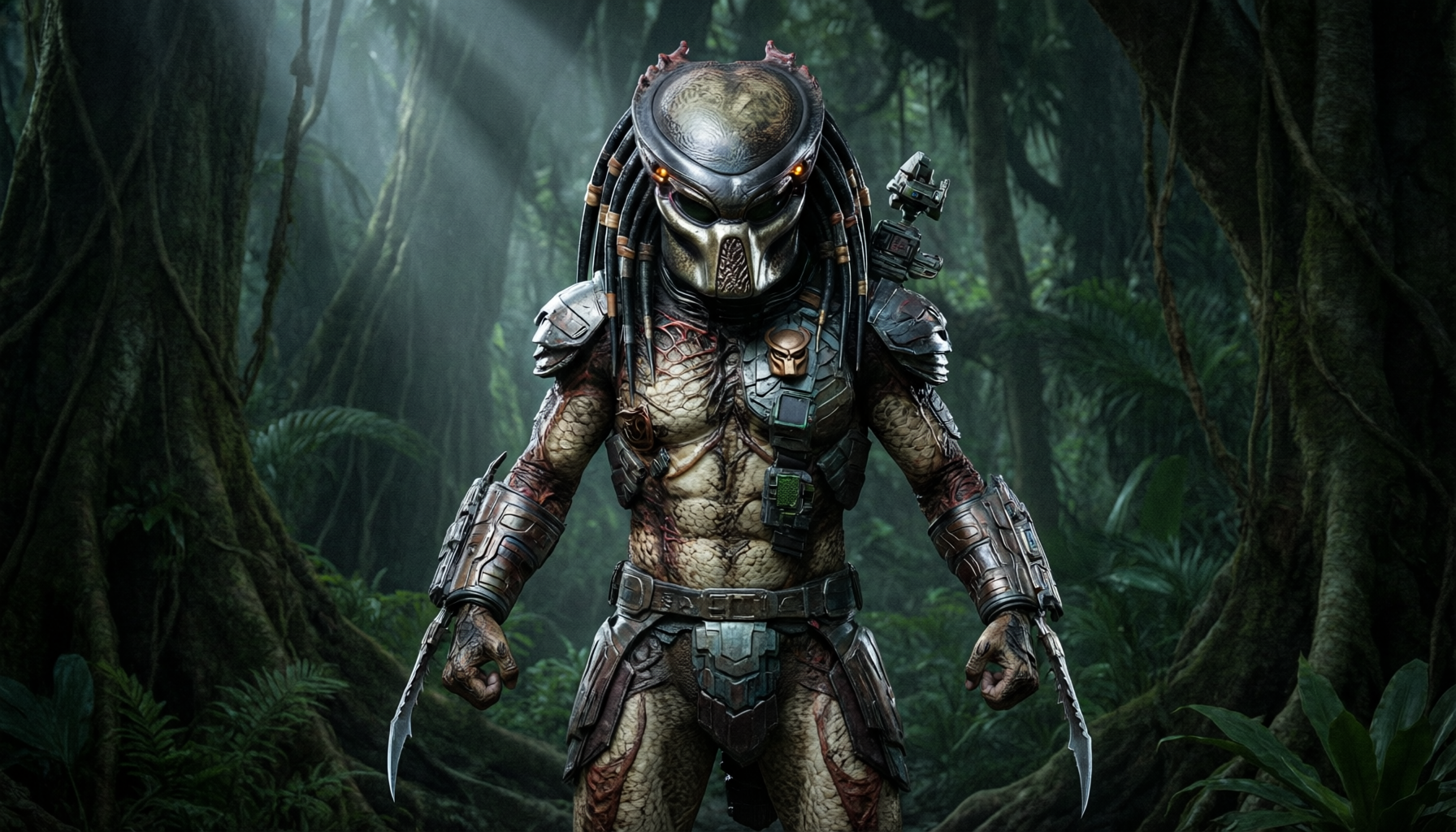
Yautja is the in-universe name for the species popularly called Predators. The term originated in the novelization and expanded-lore materials of the original film and was cemented by Dark Horse Comics' long-running Predator series throughout the 1990s. Biologically, Yautja are tall bipedal humanoids averaging around seven feet in height, with matted dreadlock-like sensory appendages, mandibled mouths, and a thick hide that tolerates extreme heat. Their native homeworld, Yautja Prime, sits deep within the star system their civilization controls, and the planet's climate is depicted as dense jungle and volcanic highlands — an environment that clearly shaped both their physiology and their obsession with hunting.
Their blood is a luminescent neon green, their vision extends into the thermal spectrum (and likely beyond), and their physical strength is several times that of a peak-condition human. In Predator 2, the City Hunter lifts a grown man off the ground with one arm while casually removing his spine. In Prey, the Feral Predator snaps a tree trunk like a dry twig during a fight. These are not subtle creatures. They are apex predators in the most literal sense, and their entire civilization is built around proving it.
Yautja Types: Every Predator Class and Caste
One of the things the expanded Predator universe does remarkably well is differentiate between individual Yautja. They are not a monolith. Different films, comics, and games have introduced a wide range of castes, ranks, and subspecies — each with distinct physical traits, behavioral patterns, and roles within their hunting culture. Here is a breakdown of every major Yautja type that has appeared in official media.
Young Blood
The lowest rank in Yautja hunting society. Young Bloods are adolescents or recently matured Yautja who have not yet completed their first successful solo hunt — the rite known as the Blooding. They are physically smaller than adult warriors, less heavily armored, and they hunt in packs rather than alone. Their first appearance was in Aliens vs. Predator: Requiem (2007), where a group of Young Bloods descends on a small Colorado town in 1957 to hunt a Xenomorph infestation, and several are shown struggling against both the aliens and a resourceful human veteran. Young Bloods are essentially kids with plasma casters — dangerous, but unrefined and prone to mistakes. In the comics, particularly the Dark Horse series, Young Blood hunting parties are treated as expendable training groups, and a high casualty rate among them is considered acceptable.
Hunter / Warrior
The backbone of Yautja hunting culture. A Hunter has completed the Blooding, proven themselves against dangerous prey, and earned the right to hunt independently. The Jungle Hunter from the original 1987 Predator is the archetypal Hunter: solitary, methodical, and absolutely lethal. He studies his prey, eliminates easy targets first to isolate the strongest opponent, and treats the hunt as both sport and art form. Hunters represent the largest segment of Yautja society depicted in any media. The City Hunter in Predator 2 is also a Hunter-class Yautja, though his decision to operate in an urban environment (Los Angeles) suggests a more aggressive, less traditional individual. Hunters carry the full standard kit — plasma caster, cloaking device, wrist blades, medicomp — and are expected to follow the honor code without supervision.
Elite
Elites are Hunters who have accumulated significant trophies and survived hunts against prey far more dangerous than humans — Xenomorphs, Predalien hybrids, other Yautja clans' champions. In the comic series Predator: Incursion and the novel Predator: South China Sea, Elite Yautja are shown leading multi-hunter expeditions and carrying modified or experimental weaponry. They are physically larger than standard Hunters, often scarred, and their armor tends to be heavier and more ornate. The video game Predator: Hunting Grounds includes Elite-class Yautja as end-game adversaries with upgraded cloaking, stronger plasma casters, and the ability to command lesser Yautja in coordinated attacks.
Elder / Ancient
The oldest and most experienced members of a Yautja clan. Elders have survived centuries of hunting and are treated with something approaching reverence. They rarely hunt themselves anymore — instead, they govern clans, adjudicate disputes, and decide when the code has been violated. The most prominent Elder in any Predator film is the one who appears briefly at the end of Predator 2, handing Mike Harrigan the flintlock pistol dated 1715 — a gesture that implies the Yautja have been visiting Earth for at least three centuries. In the Dark Horse comics, Elders are shown overseeing the punishment of Bad Bloods and directing clan-level military operations against Xenomorph hives. Ancients are an even rarer subset — Yautja who have lived so long they have become something close to mythic figures within their own culture.
Super Predator / "Ups"
Nimród Antal's Predators (2010) introduced a controversial new wrinkle: a physically larger, more aggressive subspecies of Yautja that the film's characters dub the "Super Predators" or simply the "Ups." These Yautja are taller (closer to eight feet), bulkier, and they hunt other Yautja in addition to humans and Xenomorphs. The film depicts a rivalry between the "Ups" and the smaller "Classic" Predator — the bound and captive Yautja that Royce's group encounters on the game preserve planet. Whether the Super Predators are a separate subspecies, a rival clan that has rejected the traditional honor code, or simply a warrior caste that has been bred for greater size is never definitively answered in the film. The comics and novels that followed Predators generally treat them as a distinct clan called the Killers, as opposed to the more traditionalist Hunters clan. The Killers have abandoned the honor code's restrictions on whom they hunt and how.
Bad Blood
A Bad Blood is a Yautja who has violated the honor code so severely that they are considered outlaws by their own kind. This is not a caste — it is a condemnation. Bad Bloods may kill unarmed prey, hunt without challenge, use forbidden weapons, or attack their own kind outside sanctioned combat. The Dark Horse comic series Predator: Bad Blood follows a rogue Yautja who seeds Xenomorph queens on human colony worlds purely to create hunting grounds, a violation so severe that another Yautja is dispatched to execute him. In Aliens vs. Predator: Requiem, the character known as "Wolf" is sometimes interpreted as a Bad Blood hunter — though this is debatable, since his mission to contain the Xenomorph outbreak technically aligns with clan interests. The concept of the Bad Blood is important because it shows that Yautja society has internal enforcement mechanisms. The honor code is not just a personal choice; it is law, and violating it makes you the most dangerous kind of prey.
Feral Predator
The antagonist of Dan Trachtenberg's Prey (2022) is a unique entry in the Yautja taxonomy. Set in 1719, the film depicts a Yautja whose technology is noticeably cruder than what we see in later films — his bio-mask uses a more primitive, almost skull-like design, his plasma caster is less refined, and his physical combat style is rawer and more brutal. The fandom has labeled this Yautja the "Feral Predator," and the in-universe implication is that this is an earlier, less technologically advanced stage of Yautja hunting culture — or possibly a Yautja from a more primitive clan that has not adopted the standard kit. Either way, the Feral Predator is terrifying precisely because he is less reliant on technology and more reliant on brute strength and instinct. His fight with Naru is one of the most visceral Predator encounters ever filmed.
| Yautja Type | Appearance | Key Abilities / Traits | Notable Media Appearances |
|---|---|---|---|
| Young Blood | Smaller stature (~6'5"), lighter armor, fewer trophies | Hunts in packs; less skilled; standard-issue gear | AVP: Requiem, Dark Horse comics |
| Hunter / Warrior | ~7' tall, full armor kit, extensive trophy collection | Solo hunting; plasma caster mastery; tactical genius | Predator (1987), Predator 2, The Predator |
| Elite | Larger, heavily scarred, ornate/modified armor | Commands lesser hunters; experimental weapons; multi-prey experience | Predator: Incursion, Hunting Grounds, South China Sea |
| Elder / Ancient | Largest frame; ceremonial armor; aged features | Clan governance; code adjudication; centuries of combat experience | Predator 2 (ending), Dark Horse comics, novels |
| Super Predator ("Ups") | ~8' tall, heavier build, face tattoos/markings, different bio-mask | Hunts other Yautja; rejects honor code restrictions; superior strength | Predators (2010) |
| Bad Blood | Varies; often stripped of clan insignia; heavier scarring | Code-breaking; uses forbidden weapons; targets unarmed prey | Predator: Bad Blood comics, AVP: Requiem (debated) |
| Feral Predator | Primitive skull-like mask; cruder armor; lean muscular build | Raw physical power; less tech-reliant; earlier-era weaponry | Prey (2022) |
Yautja Culture: Honor, Ritual, and the Hunt
The Honor Code
The single most important thing to understand about Yautja culture is that they operate under a strict honor code that governs every aspect of the hunt. This code is not optional, and it is not a suggestion — it is enforced by clan leadership and punishable by death. The core tenets, as established across films and expanded media, include:
- Never kill unarmed prey. If a potential target is not carrying a weapon or cannot physically fight back, they are not valid quarry. We see this in Predator (1987) when the Jungle Hunter scans Anna and determines she is unarmed, allowing her to pass. In Predator 2, the City Hunter passes over a pregnant woman and a child in the subway.
- The hunt must be fair. Yautja do not simply bombard a target from orbit. They engage at ground level, often at close range, and they accept the risk that they might lose. The entire point is the challenge.
- Trophies must be earned. A Yautja collects skulls, spines, skins, and bio-masks from worthy prey. Displaying unearned trophies is a disgrace. In the comics, there are storylines where a Yautja is executed for claiming trophies from prey killed by another hunter.
- Self-destruct upon defeat. A Yautja who is mortally wounded or about to be captured activates their wrist-mounted self-destruct device rather than allow their technology to fall into enemy hands. The Jungle Hunter's self-destruct in 1987 takes out a significant chunk of jungle. This is treated as a duty, not a punishment.
- Never hunt your own kind without cause. Yautja-on-Yautja combat is restricted to sanctioned duels and the pursuit of Bad Bloods. Rogue killing of clan-mates is itself a code violation that creates a new Bad Blood.
The Blooding
The Blooding is the Yautja rite of passage — a young Yautja's first successful hunt against dangerous prey. It typically involves being sent to a world with challenging game (humans are considered a mid-tier challenge; Xenomorphs are the gold standard) and returning with proof of a kill. A Yautja who fails the Blooding does not advance in rank and may be relegated to a lower caste. In Alien vs. Predator (2004), the three Young Bloods — Scar, Celtic, and Chopper — are sent to an Antarctic pyramid where Xenomorphs have been bred specifically for their Blooding ritual. Two of the three die. This is apparently normal. The Yautja do not coddle their young.
Clan Structure
Yautja society is organized into clans, each with its own territory, hunting grounds, leadership, and internal traditions. The comics and novels have introduced numerous clans, and the differences between them can be significant. Some clans adhere strictly to the traditional honor code, while others — like the Killers depicted in Predators — have abandoned or reinterpreted it. Clans are led by Elders and sometimes enter into territorial disputes with one another. The novel Predator: Incursion by Tim Lebbon depicts a massive clan war triggered by human interference with Yautja hunting grounds. Individual clans can number from a handful of hunters to thousands of warriors, and their technology levels vary — older, more traditional clans sometimes use less advanced equipment by choice, viewing it as more honorable.
Trophy Collecting and Social Status
Trophy collecting is not a hobby for the Yautja — it is the foundation of their social hierarchy. The quality and quantity of trophies a Hunter possesses determines their standing within the clan. A Hunter who has collected Xenomorph skulls, Predator bio-masks from rival clans, and skulls from particularly dangerous human soldiers is accorded far more respect than one who has only killed easy prey. In the Dark Horse comic Predator: Big Game, a Yautja's trophy room is depicted almost like a resume — other Hunters can read a warrior's entire career history from the arrangement of bones and bio-masks on display. The practice extends to their ships, which are often decorated with the remains of their most notable kills.
The Hunting Season
Yautja operate on a seasonal hunting calendar. The original Predator film establishes that the Jungle Hunter visits the Val Verde region during the hottest years — the hottest summers — suggesting that certain hunting grounds are visited on a cyclical basis. In Predator 2, the bio-mask's thermal scanning and the Elder's comment at the end of the film imply that Earth has been a seasonal hunting destination for centuries. The comics expand this concept significantly, depicting Yautja who travel between star systems on fixed routes, visiting known hunting grounds in a rotation that can span decades. Some worlds are preserved specifically as game reserves — the planet in Predators being one example.
Yautja Technology: The Arsenal of an Apex Hunter
The Predator's technology is almost as iconic as the creature itself. From the first moment we saw the plasma caster tracking Dutch through the jungle canopy, the Yautja's arsenal has been a defining feature of the franchise. Here is a breakdown of their most significant and recurring pieces of equipment.
Plasma Caster (Shoulder Cannon)
The signature Yautja weapon. Mounted on the left shoulder and targeted through the bio-mask's HUD, the plasma caster fires concentrated bolts of superheated plasma that punch through virtually any material. In its standard configuration, it fires single shots; in later films and games, burst-fire and rapid-fire modes are shown. The Feral Predator's caster in Prey is notably less advanced — it fires in a wider, less precise spread and appears to have a lower rate of fire, consistent with the film's 1719 setting. The caster is so central to Yautja identity that its loss in combat is treated as a serious disgrace.
Cloaking Device (Active Camouflage)
Perhaps the Predator's most famous piece of tech. The cloaking device bends light around the Yautja's body, rendering them nearly invisible to the naked eye. It is not perfect — water contact causes a visible shimmer (a weakness Dutch exploits in 1987), and sustained fire from the plasma caster temporarily disables the cloak. In Predators, the Super Predator's cloaking is shown to be significantly more advanced, with less shimmer and faster reactivation. The technology is clearly one the Yautja have refined over many generations.
Wrist Blades
Retractable blades mounted on the Yautja's gauntlet, used for close-quarters combat. These are typically around eighteen inches long and capable of slicing through human bone and light armor with minimal effort. In AVP: Requiem, the Wolf Predator's wrist blades are shown cutting through a Xenomorph's exoskeleton. They are the Yautja's backup weapon when the plasma caster is unavailable or when the hunter wants to engage in what they consider a more honorable form of combat.
Combi-Stick (Spear)
A telescoping spear that extends from a compact form to a weapon roughly seven feet long. The Combi-Stick is thrown with devastating force — in Predator 2, the City Hunter hurls one through a man's chest at a range of thirty yards. In the comics, the Combi-Stick is depicted as both a thrusting and throwing weapon, and some variants are shown with electrified tips or explosive heads.
Smart Disc
A throwing weapon that the Yautja can control mid-flight. It extends from a compact disc shape into a bladed ring, hovers, tracks targets, and returns to the user like a boomerang. In Predator 2, the City Hunter uses it to devastating effect in a crowded housing project, slicing through multiple targets with surgical precision. It is one of the more visually memorable weapons in the franchise and a fan favorite.
Bio-Mask
The Predator's helmet is far more than facial protection — it is a sophisticated sensor suite. The bio-mask provides thermal vision, electromagnetic spectrum scanning, voice mimicry (used to lure prey by imitating human speech), atmospheric analysis, and a targeting system for the plasma caster. In Prey, the Feral Predator's mask is shown with a more primitive targeting reticle and fewer scanning modes, reinforcing the idea that Yautja technology has advanced over the centuries. The mask also contains the Yautja's breathing apparatus, allowing them to operate in environments with different atmospheric compositions.
Medicomp
A wrist-mounted medical device that allows a wounded Yautja to cauterize wounds and apply coagulants in the field. In Predator 2, the City Hunter uses his medicomp to seal a gunshot wound mid-fight. It is a testament to how seriously the Yautja take self-sufficiency — a Hunter is expected to survive alone on hostile worlds for extended periods, and the medicomp ensures that minor injuries do not become fatal ones.
Self-Destruct Device
Mounted on the Yautja's wrist gauntlet, the self-destruct device is a last-resort measure activated when a Hunter faces capture or their technology is at risk of falling into enemy hands. The yield varies — the Jungle Hunter's detonation in 1987 takes out roughly a square mile of jungle, while the device shown in AVP: Requiem appears to have a smaller but still significant blast radius. The self-destruct is treated as a solemn duty. A Yautja who dies without activating it when circumstances demand is considered to have failed in their final obligation to the clan.
The Yautja Across All Media
The Films
Predator (1987) — The Jungle Hunter. The one that started it all. Played by Kevin Peter Hall, this Yautja stalks Dutch's commando team through the jungles of Central America and established virtually every template that future Predator films would follow or subvert. Seventeen minutes of screen time in the first act, zero dialogue, and a presence so imposing that it redefined the sci-fi action genre.
Predator 2 (1990) — The City Hunter. Transplants the concept to urban Los Angeles and introduces the idea that Yautja have been visiting Earth for centuries (the 1715 flintlock pistol). The City Hunter is more aggressive and less cautious than the Jungle Hunter, which leads to the franchise's first sustained Predator-versus-human fight in an enclosed space. Also the first film to show a Yautja ship interior and multiple Yautja (the Elders at the end).
Alien vs. Predator (2004) — Scar, Celtic, and Chopper. Paul W.S. Anderson's crossover pits three Young Bloods against a Xenomorph hive in an underground Antarctic pyramid. The film establishes the Blooding ritual and the Yautja-Xenomorph hunting tradition. Scar, who forms an uneasy alliance with human protagonist Alexa Woods, is the most sympathetic Yautja depicted in any film.
Aliens vs. Predator: Requiem (2007) — Wolf Predator and Young Bloods. Wolf is dispatched to Earth to contain a Xenomorph outbreak in a small Colorado town. He is a more experienced, more capable Hunter than the Young Bloods he is cleaning up after. The film is generally considered the weakest in the franchise, but Wolf's combat sequences are legitimately excellent.
Predators (2010) — The Super Predator (Berserker), Tracker, and Falconer. Adrien Brody leads a group of human killers who are dropped onto a game preserve planet where Super Predators hunt for sport. The film introduces the concept of a Predator subspecies that hunts other Predators and revives the "humans as prey" dynamic of the original in a fresh setting. The Berserker Predator is a genuinely intimidating villain.
The Predator (2018) — The Fugitive Predator and the Ultimate Predator. Shane Black's entry introduces a Yautja who is trying to deliver a gift to humanity (a genetic upgrade) and a genetically enhanced Ultimate Predator sent to retrieve it. The Ultimate Predator is the largest Yautja ever depicted on screen and has DNA harvested from dozens of species. It is powerful but the film's tonal inconsistencies keep it from reaching its full potential.
Prey (2022) — The Feral Predator. Dan Trachtenberg delivers what many fans consider the best Predator film since the original. Set in 1719 on the Northern Great Plains, the film pits a Comanche warrior named Naru against a Yautja whose technology is clearly from an earlier era. The Feral Predator is brutal, physical, and terrifying precisely because he is less reliant on gadgets and more on raw power. The film is a masterclass in tension and a triumphant return to form.
Predator: Badlands (2025) — The most recent theatrical entry, directed by Trachtenberg, starring Elle Fanning. This film pushes the franchise into new territory by pairing a human protagonist with a Yautja in a more cooperative dynamic, exploring the possibility of a relationship between the species beyond simple hunter-and-prey.
The Comics
Dark Horse Comics has been publishing Predator comics since 1989, and the body of work is staggering in both volume and quality. The original Predator four-issue series (1989) by Mark Verheiden expanded the universe significantly, introducing the concept of Predator clans, internal Yautja politics, and the idea that some Yautja have become so corrupted by their hunting obsession that they pose a threat even to their own kind. Predator: Cold War, Predator: Dark River, Predator: Big Game, Predator: Bad Blood, and Predator: Incursion are all essential reading for anyone who wants to understand Yautja culture beyond what the films provide.
The Aliens vs. Predator comic line is equally rich. The original 1990 AVP series by Randy Stradley introduced Machiko Noguchi, a human woman who is accepted into a Yautja clan — a storyline that remains one of the most ambitious explorations of Yautja culture ever attempted. The AVP: Three World War series and Fire and Stone crossover event further expanded the scope of Yautja civilization, depicting clan-level warfare and political intrigue.
More recently, Marvel Comics acquired the Predator license and launched a new Predator series in 2022, followed by Predator: Black, White & Blood and Predator vs. Wolverine in 2023, bringing fresh creative voices to the franchise.
Video Games
The Predator's video game history is nearly as long as the film franchise itself. Predator 2 (1990, multiple platforms) was the first game to put players in the Yautja's shoes. The Alien vs. Predator arcade game (1994) by Capcom is a cult classic, featuring three distinct Predator characters — the Hunter, the Warrior, and the Ranger — each with slightly different weapons and playstyles. Aliens vs. Predator (1999, PC) and its sequel Aliens vs. Predator 2 (2001, PC) by Rebellion are beloved for their three-campaign structure, which let players experience the same events from the perspective of a Marine, an Alien, or a Predator. The Predator campaign in particular is a power fantasy that makes you feel like an apex predator in the truest sense.
Predator: Hunting Grounds (2020) brought the Predator into asymmetric multiplayer, pitting one player as the Yautja against a four-person human fireteam. The game features multiple Predator classes and customization options that reflect the lore established in the films and comics. Aliens: Fireteam Elite (2021) also includes Predator-themed enemy types and references to Yautja hunting culture.
Animated Series and Other Media
The Predators animated short Predator: Hunters (2010) provides additional lore for the game preserve planet. The Predator also appears as a guest character in numerous crossover properties — most notably the Mortal Kombat series (as a playable guest fighter in Mortal Kombat X), the Tom Clancy's Ghost Recon franchise (as a DLC antagonist in Ghost Recon Wildlands), and Fortnite, where the Predator skin became one of the most popular cosmetic items in the game's history. The Yautja's cultural footprint extends far beyond its own franchise.
Why the Yautja Still Matter
There is a reason the Predator has endured for nearly forty years while other sci-fi monsters from the same era have faded into obscurity. The Yautja are compelling because they are not evil. They are not trying to destroy humanity or consume our resources or spread their ideology. They are hunters who happen to view us as interesting game — and that is somehow more unsettling than any alien invasion narrative. They have a code. They have honor. They have a civilization that is clearly ancient and sophisticated. And yet they will drop into your jungle, your city, your century, and kill you for sport — not because they hate you, but because you are a worthy challenge and that is what they do.
The expanded universe has only deepened this appeal. Every comic, novel, and game that adds to the Yautja's lore makes them more interesting. The clan politics, the Bad Blood concept, the generational hunting traditions, the relationship with the Xenomorphs — it all builds toward a civilization that feels genuinely alien in the best sense of the word. They are not humans in rubber suits. They are something else entirely, and we have spent four decades trying to understand what that something is.
With Trachtenberg's Prey proving that the franchise still has creative fire and Predator: Badlands pushing into unexplored narrative territory, the Yautja are not going anywhere. And honestly? That is exactly how they would want it. They will keep showing up. They will keep hunting. And we will keep watching — half terrified, half admiring, and entirely unable to look away.
Frequently Asked Questions
What does "Yautja" mean?
Yautja is the in-universe name for the species known as the Predator. The term originated in the novelization and expanded-lore materials of the 1987 film and was popularized by Dark Horse Comics' Predator series. It is the name the species uses for itself within the franchise's expanded universe.
How tall is a Yautja?
Standard Yautja Hunters are approximately 7 feet (213 cm) tall. Young Bloods tend to be shorter, around 6'5". The Super Predators depicted in Predators (2010) are closer to 8 feet (244 cm). Kevin Peter Hall, who played the original Jungle Hunter, was 7'2" — which is why the first Predator feels so physically imposing on screen.
What is the Yautja honor code?
The honor code is the set of rules governing Yautja hunting behavior. Its key tenets include: never kill unarmed prey, ensure the hunt is a fair challenge, earn trophies through direct combat, activate the self-destruct device to prevent technology from being captured, and never kill a fellow Yautja outside sanctioned combat. Violators are labeled Bad Bloods and may be hunted and executed by their own kind.
Why do Predators have dreadlocks?
The Yautja's head appendages — often called "dreadlocks" by fans — are actually sensory organs. In the expanded lore, they are described as providing the Yautja with enhanced environmental awareness, possibly including sensitivity to electromagnetic fields, temperature changes, and chemical traces in the atmosphere. They are not hair in any mammalian sense.
Are the Super Predators a different species?
This is debated within the fandom and never definitively answered in the films. Predators (2010) presents them as physically distinct from the "Classic" Predator, and expanded materials generally classify them as a separate clan (the Killers) rather than a different species. They are larger, more aggressive, and have abandoned the traditional honor code, but they share the same basic biology.
What is the relationship between Yautja and Xenomorphs?
Xenomorphs are considered the ultimate prey in Yautja culture. The Alien vs. Predator films and comics establish that Yautja clans maintain Xenomorph breeding grounds on various worlds specifically for hunting purposes. The Blooding ritual — a Young Blood's first hunt — frequently involves Xenomorphs. Some comics depict an ancient war between the two species that eventually evolved into the ritualized hunting tradition we see in the films.
What is the best Predator movie?
The 1987 original Predator and Prey (2022) are widely considered the two strongest entries in the franchise. The original is a masterclass in tension and action filmmaking, while Prey is praised for its stripped-back approach, strong protagonist, and the terrifying physicality of the Feral Predator. Predator 2 has its passionate defenders, and the first Alien vs. Predator is a guilty pleasure for many fans.
How many Predator movies are there?
As of 2025, there are nine films in which the Yautja appear: Predator (1987), Predator 2 (1990), Alien vs. Predator (2004), Aliens vs. Predator: Requiem (2007), Predators (2010), The Predator (2018), Prey (2022), Predator: Badlands (2025), and additional projects in development. This does not include animated shorts, video game cutscenes, or crossover appearances in other franchises.