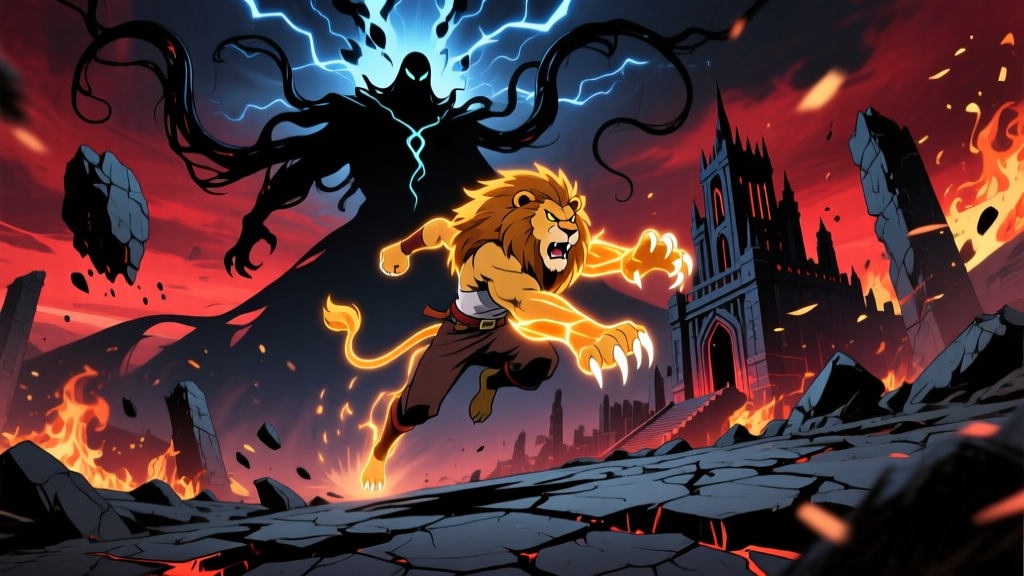
Thirty-eight years after Rankin/Bass first unleashed Lion-O and company on Saturday morning television, the ThunderCats franchise has found its most ambitious comic book iteration yet. Dynamite Entertainment's ongoing ThunderCats series, which launched in early 2024 under writer Declan Shalvey, has carved a reputation for taking the lore of Third Earth seriously — treating it not as nostalgic kitsch but as genuine world-building worth expanding. And nowhere does that ambition hit harder than in the ThunderCats Apex arc.
Apex operates on two levels within Dynamite's ThunderCats universe. It began as a standalone one-shot special (ThunderCats: Apex #1, released December 4, 2024) written by Ed Brisson with art by Rapha Lobosco. That issue introduced a mysterious, cloaked warrior who rides across a desert wasteland and slaughters anyone foolish enough to block his path. The character resonated immediately with readers. By mid-2025, the Apex storyline had been woven directly into the main series, forming issues #11 through #15 — collected as ThunderCats Vol. 3: Apex — with the tagline "Into the Devil's Lair."
That title is not metaphorical. The arc drives Lion-O straight toward a confrontation with Mumm-Ra, the Ever-Living himself, and it does so at a point where the ThunderCats are already battered, divided, and questioning whether Third Earth will become their graveyard rather than their refuge.
Where Apex Fits in the Dynamite ThunderCats Timeline
If you have not been following the Dynamite ThunderCats series from issue #1, the narrative architecture can feel dense. The main series has progressed through distinct arcs, each one building on the last while expanding the cast and raising the stakes on Third Earth. Here is the structural breakdown:
| Volume | Title | Issues | Core Story |
|---|---|---|---|
| Vol. 1 | Omens | #1–5 | Thundera's destruction; the ThunderCats flee and crash-land on Third Earth; first encounters with the planet's hostile inhabitants |
| Vol. 2 | Roar | #6–10 | The ThunderCats establish a foothold on Third Earth; internal conflicts surface; early signs of Mumm-Ra's influence |
| Vol. 3 | Apex | #11–15 | Lion-O's journey into hostile territory; the emergence of Apex; confrontation with Mumm-Ra's forces |
| One-Shot | Apex Special | Standalone | Origin and introduction of the Apex character; desert rider sequence; first appearance of the mysterious warrior |
The reading order matters here. The Apex Special one-shot (December 2024) functions as a prelude — it plants the seed of who Apex is and why he matters. Issues #11 through #15 of the main series then weave him directly into the escalating war between Lion-O and Mumm-Ra. If you jump straight into Vol. 3 without the earlier context, you will miss the emotional weight of Lion-O's deteriorating position and the significance of a new warrior appearing on Third Earth's horizon.
Beyond the main series, Dynamite has also published spin-offs that flesh out individual characters. ThunderCats: Cheetara (a six-issue miniseries) explores the psychic warrior's backstory and her connection to the Clerics. A Mumm-Ra: The Ever-Living series gives the villain his own platform. And a crossover event, ThunderCats X SilverHawks, merged two Rankin/Bass properties for the first time in comics. Ed Brisson, who wrote the Apex Special, also went on to write ThunderCats: Lost and contributed to the SilverHawks title, making him one of the key architects of Dynamite's expanding "Third Earth and Beyond" universe.
The Story: A Cloaked Rider, a Dying World, and the Devil's Lair
The Apex one-shot opens on a desert landscape — not the relatively hospitable regions of Third Earth where the ThunderCats built Cat's Lair, but the scorched, lawless frontier far beyond their territory. A cloaked rider moves through this wasteland with the quiet confidence of someone who has survived conditions that killed everyone else. When the rider encounters a settlement — a rough outpost of scavengers and bandits — the violence is sudden, precise, and absolute.
The character fights through a bar full of hostile locals without hesitation or wasted motion. This is not a hero making a dramatic entrance. This is someone who has decided that anyone standing between him and his objective shares the same fate. When his identity is finally revealed at the issue's climax, the name carries weight: Apex.
Ed Brisson, speaking about the character in interviews around the Apex Special's release, described Apex as someone who exists at the "apex of the original plans" for Third Earth — a phrase that suggests the character was designed to feel like a missing piece of the classic mythology rather than a modern invention bolted onto it. The name itself implies a predator at the top of the food chain, and Brisson's script makes that literal.
By the time the Apex arc merges into the main series at issue #11, Lion-O is dealing with the consequences of the Roar arc. The ThunderCats have established themselves on Third Earth, but their position remains precarious. The local inhabitants — the warrior tribes, the lizard armies, the various factions that predate the ThunderCats' arrival — do not welcome outsiders. And beneath all of this political instability sits Mumm-Ra, the ancient sorcerer-priest who has ruled Third Earth's dark places for millennia.
The Vol. 3 collection carries the subtitle "Into the Devil's Lair," and the arc delivers on that promise directly. Lion-O, carrying the Sword of Omens and the full burden of leadership, moves toward a confrontation with Mumm-Ra that has been building since the series' first pages. The narrative does not treat this as a simple boss fight. Mumm-Ra in the Dynamite continuity is not the bumbling villain of the 1985 cartoon who retreats to his sarcophagus every episode. This Mumm-Ra is patient, strategic, and genuinely terrifying — a being who has watched civilizations rise and crumble on Third Earth and considers the ThunderCats a temporary nuisance at best.
Apex enters this dynamic as a wild card. He is neither ally nor enemy in the traditional sense. His motivations are his own, rooted in a personal history that the comics only gradually reveal, and his combat ability places him in the upper tier of Third Earth's warriors. When Apex and Lion-O's paths cross, the tension comes from the uncertainty of whether this new warrior will become an asset to the ThunderCats or another threat they cannot afford.
The Characters: Classic Faces and New Blood
The Apex arc balances the established ThunderCats roster with newer additions to the Dynamite continuity. Here is how the major players factor into the storyline:
Lion-O
The Lord of the ThunderCats carries the Sword of Omens, which in this continuity functions as both a weapon and a symbol of legitimacy that not every ThunderCat fully respects. By the Apex arc, Lion-O has been tested repeatedly — physically by Third Earth's hostile terrain and politically by the fractures within his own group. The confrontation with Mumm-Ra that Vol. 3 builds toward represents the most dangerous challenge he has faced since Thundera's destruction. Brisson and the creative team write Lion-O as a leader who earns his authority through endurance rather than birthright, which tracks with the character's best portrayals across four decades of media.
Apex
The new character occupies a space that the classic ThunderCats roster never quite filled: the lone warrior operating outside the group's moral framework. Apex is not evil, but he is ruthless in a way that makes the more idealistic ThunderCats uncomfortable. His design — a cloaked figure built for a wasteland, with visual cues that evoke both a ronin and a desert nomad — sets him apart from the sleek, armor-clad ThunderCats. Artist Rapha Lobosco rendered Apex with a visual language that communicates danger before the character ever draws a weapon.
Mumm-Ra
The Ever-Living gets his due in this arc. Dynamite's version strips away the campy limitations of the animated series and presents Mumm-Ra as a genuinely ancient, patient, and intelligent adversary. His "lair" is not just a physical location but a psychological space — a region of Third Earth where his influence has warped the landscape and the creatures living there. The Devil's Lair subtitle refers to both the literal journey Lion-O undertakes and the spiritual corrosion that Mumm-Ra represents.
The Supporting ThunderCats
Tygra, Cheetara, Panthro, WilyKit, WilyKat, and Snarf all appear throughout the series, though the Apex arc leans heavily on Lion-O's solo journey. Cheetara in particular benefits from the expanded Dynamite continuity, which gives her psychic abilities and her warrior training more narrative weight than the original cartoon ever did. The ThunderCats: Cheetara spin-off series (written by a separate creative team) provides additional context for her role in the main title, though reading that miniseries is not required to follow the Apex storyline.
The Creative Team Behind Apex
Dynamite's ThunderCats has benefited from a rotating roster of talent, with different creative teams handling different arcs. The Apex storyline involves several key contributors:
Ed Brisson (Writer, Apex Special and ThunderCats: Lost) — Brisson brought the Apex character to life in the standalone special and later expanded his role in the broader ThunderCats narrative. His writing emphasizes atmosphere and tension over splash-page spectacle, which suits the desert-wasteland setting of the Apex introduction. Brisson's background in creator-owned comics (including work on SilverHawks for Dynamite) gave him experience balancing licensed-property expectations with personal storytelling instincts.
Rapha Lobosco (Artist, Apex Special) — Lobosco's art on the Apex one-shot defined the character's visual identity. His rendering of the desert landscape — all hard shadows, bleached rock, and dust-choked air — established a tone that differentiated the Apex chapters from the more lush, jungle-heavy environments of the main series. Lobosco's action sequences favor clarity over chaos; every strike in the bar fight sequence reads with geometric precision.
Declan Shalvey (Series Architect and Cover Artist) — Shalvey, who wrote the early arcs of the main ThunderCats series and continued contributing cover art throughout, designed the visual framework that the entire Dynamite ThunderCats line operates within. His cover for the Apex Special is a masterclass in character introduction: a single figure against an empty landscape, hooded and dangerous, communicating everything a reader needs to know before opening the book.
Lucio Parrillo (Cover Artist, Vol. 3) — Parrillo painted the main cover for the Vol. 3: Apex hardcover collection, and his work has become some of the most sought-after variant art in the ThunderCats line. His style leans into the mythic, treating the characters as classical figures rather than Saturday morning cartoon mascots.
Additional variant covers across the Apex issues came from artists including Meghan Hetrick, Jae Lee, June Chung, and Manix Abrera, each bringing a distinct visual interpretation to the characters.
How Apex Connects to Classic ThunderCats
The genius of Dynamite's ThunderCats — and the Apex arc specifically — is how it threads the needle between honoring the 1985 source material and building something that stands on its own merits. The original ThunderCats animated series, produced by Rankin/Bass and animated by Pacific Animation Corporation in Japan, ran for four seasons and 130 episodes between 1985 and 1989. It established the core mythology: Thundera's destruction, the journey to Third Earth, the Sword of Omens, the Eye of Thundera, and Mumm-Ra as the primary antagonist.
The Dynamite series keeps all of that intact. The premise remains the same — refugees from a dying planet struggling to survive on a hostile world. But the execution is radically different. Where the cartoon resolved conflicts in 22 minutes with a moral attached, the comics let problems accumulate. Lion-O's leadership is genuinely questioned. The ThunderCats disagree about strategy, morality, and whether they should try to rebuild Thundera's society or adapt to Third Earth's existing cultures. Mumm-Ra does not lose because the Sword of Omens glows at the right moment; he loses (when he loses) because the ThunderCats outthink him over multiple issues.
Apex embodies this approach. He is a character who could not have existed in the 1985 cartoon — too morally gray, too violent, too independent. But he fits seamlessly into the world that Dynamite has built because that world now has enough texture and internal logic to support characters who operate outside the hero/villain binary. The classic ThunderCats were defined by their unity; the Dynamite ThunderCats are defined by their friction. Apex walks into that friction and makes it worse, which is exactly what a well-designed new character should do.
The series also pulls specific visual and narrative callbacks. The Sword of Omens still calls the ThunderCats to action. Cat's Lair still serves as the team's headquarters. Snarf still provides levity (though toned down considerably from his cartoon incarnation). Jaga's spirit continues to guide Lion-O, though in the comics his presence feels more like haunting than mentorship. These details signal to longtime fans that the creative team respects the source material while refusing to be constrained by it.
Beyond the Comics: ThunderCats Apex in the Broader Franchise
The ThunderCats franchise has experienced several revival attempts over the decades. The 2011 animated reboot on Cartoon Network ran for one season and 26 episodes before cancellation. The 2020 series ThunderCats Roar adopted a more comedic, stylized approach that divided the fanbase. A live-action film has been in development hell since at least 2007, with various directors (including Jerry O'Flaherty and Adam Wingard) attached at different points. As of mid-2026, the film remains in pre-production at Warner Bros. with no confirmed release window.
In this landscape, the Dynamite comics have become the most consistent and creatively ambitious home for ThunderCats storytelling. The Apex arc in particular has demonstrated that the franchise can support original characters and mature narrative structures without abandoning its core identity.
Collectibles and Merchandise
The ThunderCats merchandise ecosystem has expanded significantly alongside the Dynamite comics' success. Here is what collectors should be tracking:
| Category | Product | Details |
|---|---|---|
| Trade Collections | Vol. 3: Apex HC | 128 pages; $24.99; ISBN 978-1-5241-2823-4; collects issues #11–15; cover by Lucio Parrillo |
| Trade Collections | Vol. 3: Apex TP | Trade paperback edition; same content as HC at a lower price point |
| Single Issues | Apex Special #1 | 40-page one-shot; Dec 2024; multiple variant covers (Shalvey, Parrillo, Hetrick, Lee & Chung) |
| Single Issues | ThunderCats #11–15 | Main series issues forming the Apex arc; each with standard and LTD Virgin variant editions |
| Figures | Funko Pop! ThunderCats | Lion-O, Mumm-Ra, Cheetara, and Panthro figures available; Apex figure not yet announced as of mid-2026 |
| Figures | Super7 Ultimates | Premium action figures based on classic designs; Lion-O and Mumm-Ra are centerpiece releases |
| Crossovers | ThunderCats X SilverHawks | Mumm-Ra: The Ever-Living series; crossover issues bridging both franchises |
For collectors focused on the Apex storyline specifically, the variant cover market is where value concentrates. The LTD Virgin editions of issues #11 through #15 — which feature cover art without trade dress or text overlays — command premiums on the secondary market. The Apex Special #1 with the Declan Shalvey cover has become particularly sought after, as it represents the character's first appearance and was printed in a limited initial run before demand spiked following positive reviews.
The hardcover edition of Vol. 3: Apex is the recommended collection format. At 128 pages and $24.99, it offers the complete arc with Parrillo's painted cover art reproduced at full size, plus bonus material that the trade paperback omits. If you are building a complete Dynamite ThunderCats collection, the hardcovers for Volumes 1 (Omens), 2 (Roar), and 3 (Apex) form a cohesive shelf presence that tracks the series' escalating ambition.
What Comes After Apex
Dynamite has not slowed down following the Apex arc's conclusion. The fourth arc of the main ThunderCats series shifts focus to Cheetara as the lead character, with Lion-O stepping back temporarily. Beyond that, the ThunderCats: Lost in Time series (announced October 2025) sends the ThunderCats on a temporal journey that pulls in characters from different eras of Third Earth's history — including Lion, Lynx-O, and others. The scope of Dynamite's ThunderCats universe continues to widen.
As for Apex himself, the character's reception has been strong enough that further appearances seem inevitable. Brisson has described Apex as a figure with untapped story potential — someone whose history on Third Earth predates the ThunderCats' arrival and whose motivations extend beyond a single arc. Whether Apex gets his own miniseries or continues appearing in the main title remains to be seen, but the foundation has been laid for a character who could become as integral to the ThunderCats mythology as any classic creation.
Frequently Asked Questions
What is ThunderCats Apex?
ThunderCats Apex refers to both a standalone one-shot comic (ThunderCats: Apex #1, released December 2024) and a five-issue story arc within Dynamite Entertainment's main ThunderCats series (issues #11–15, collected as ThunderCats Vol. 3: Apex in August 2025). The story introduces a mysterious new warrior character named Apex and builds toward Lion-O's confrontation with Mumm-Ra.
Who writes and draws ThunderCats Apex?
The Apex Special one-shot was written by Ed Brisson with art by Rapha Lobosco and a cover by Declan Shalvey. The main series arc (issues #11–15) was shaped by Declan Shalvey and Moss as writers, with Lucio Parrillo providing the cover art for the Vol. 3 collection. Additional variant covers came from Meghan Hetrick, Jae Lee, June Chung, and Manix Abrera.
Do I need to read the earlier ThunderCats issues before Apex?
Yes, reading in order is strongly recommended. The Apex one-shot works as a standalone introduction to the character, but the main arc in issues #11–15 carries emotional weight that depends on understanding the events of Vol. 1 (Omens, issues #1–5) and Vol. 2 (Roar, issues #6–10). The ThunderCats' situation on Third Earth deteriorates progressively, and Apex hits hardest when you understand what Lion-O has already lost.
Is Apex a character from the original 1985 ThunderCats cartoon?
No. Apex is an original character created specifically for the Dynamite comics by Ed Brisson and Rapha Lobosco. He does not appear in the 1985 animated series, the 2011 reboot, or the 2020 ThunderCats Roar series. However, he was designed to feel like a natural extension of the Third Earth mythology rather than an external addition.
How much does ThunderCats Vol. 3: Apex cost?
The hardcover edition of ThunderCats Vol. 3: Apex retails for $24.99 and contains 128 pages (ISBN 978-1-5241-2823-4). A trade paperback edition is also available at a lower price point. Individual single issues typically retail for $3.99–$4.99 each, with variant covers commanding higher prices on the secondary market.
Will there be a ThunderCats Apex animated series or movie?
As of mid-2026, there is no announced animated adaptation specifically based on the Apex storyline. A live-action ThunderCats film remains in development at Warner Bros. but has no confirmed release date. The Dynamite comics are currently the most active and creatively ambitious ThunderCats project, and the Apex arc's strong reception makes it a candidate for future adaptation if the franchise moves forward with new screen projects.
Where can I buy ThunderCats Apex comics?
Single issues are available at local comic book shops and through Dynamite Entertainment's official website. The Vol. 3: Apex hardcover and trade paperback can be ordered from Dynamite directly, Amazon, Forbidden Planet, and most major book retailers. Digital editions are available through platforms like ComiXology and Dynamite's digital storefront.
What ThunderCats series comes after Apex?
Following the Apex arc, the main ThunderCats series shifts focus to Cheetara for its fourth storyline. Beyond that, ThunderCats: Lost in Time (announced October 2025) sends the characters on a time-travel adventure across Third Earth's history. Ed Brisson, who created Apex, also writes ThunderCats: Lost and the SilverHawks title, suggesting the interconnected Dynamite universe will continue expanding.
The Verdict: Why Apex Matters for ThunderCats
For a franchise that has spent most of the last two decades stuck in reboot limbo, the Dynamite ThunderCats series — and the Apex arc in particular — represents something rare: a creative team that treats the source material as a foundation rather than a cage. Ed Brisson and Rapha Lobosco built a character in Apex who feels like he has always belonged on Third Earth, even though he did not exist eighteen months ago. Declan Shalvey's overarching vision for the series has transformed a property that many people dismissed as pure nostalgia into a comic that rewards close reading and long-term investment.
The Apex arc succeeds because it understands what made ThunderCats compelling in 1985 — the fish-out-of-water struggle, the found family dynamics, the mythological weight of the Sword of Omens — and then layers on the narrative complexity that modern comics readers expect. Lion-O is not just fighting Mumm-Ra. He is fighting the erosion of his own authority, the doubt within his ranks, and the uncomfortable reality that Third Earth does not need saving — it needs surviving. Apex walks into that world as a reminder that survival sometimes requires becoming something the old version of yourself would not recognize.
If you have not picked up a ThunderCats comic since the WildStorm run ended in the early 2000s, the Apex arc is the point where Dynamite's iteration proves it has earned its place on the shelf next to the classics. Eye of Thundera, indeed.