Webtoon vs Manga: How Digital Comics Are Changing the Industry
By Emma Rodriguez
Webtoon vs Manga: Not a Rivalry—A Conversation I’ve Been Having in My Head Since 2018
Let’s get something straight: I didn’t “pick a side.” I fell for *My Love Story!!* in 2015, re-read *Berserk*’s Golden Age Arc three times in one summer, and then—while waiting for the next *One Piece* chapter—stumbled into *Lore Olympus* on Webtoon in 2019. That wasn’t a pivot. It was an expansion. A widening of the heart.
Webtoons and manga aren’t competitors. They’re cousins who grew up in different houses, learned different rhythms, and now occasionally trade recipes—and sometimes, honestly, steal each other’s best moves.
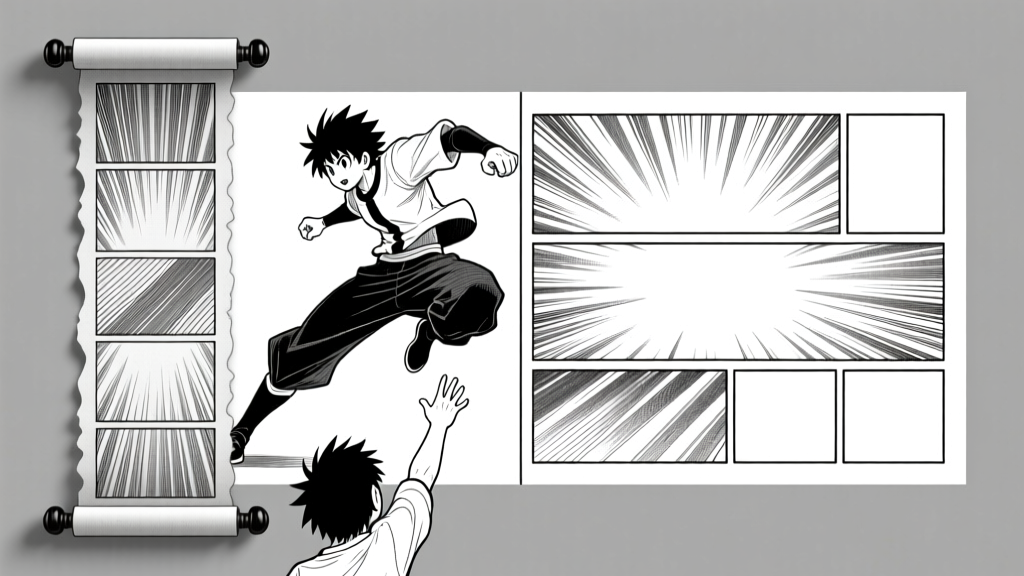
Vertical Scroll vs Page Turn: How Movement Shapes Emotion
Manga is tactile. I still remember holding *Your Name*’s manga adaptation (yes, it exists—and yes, it’s gorgeous) and feeling the weight of that final double-page spread where Taki and Mitsuha lock eyes at the shrine steps. The pause before turning the page? That’s sacred space. Hiroshi Seko and Ranmaru Sato used panel size, gutter width, and even blank margins to make time *breathe*. In *Erased*, the moment Satoru realizes he’s back in his childhood body isn’t shown with motion lines—it’s a single silent panel, small, centered, with no background. You hold your breath *with him*.
Webtoons move differently. In *True Beauty*, when Jugyeong first sees herself without makeup in the school bathroom mirror (Episode 17), the scroll doesn’t stop—it *descends*, slowly, as if gravity itself is pulling her down. The art expands vertically: soft focus on the ceiling lights above, then her trembling hands gripping the sink, then the reflection—blurred, then sharpening—not through editing, but through *scroll speed*. That’s not just convenience; it’s choreography. And it works because it’s native to how we read on phones now: thumb, screen, rhythm.
I tried reading *Tower of God* on paper once. It felt like watching a film with every third frame cut out. The vertical pacing—the way SIU uses full-width panels as emotional “beats,” or inserts a tiny, square inset panel mid-scroll to mimic a character’s sudden flashback—is engineered for the thumb, not the finger.
Art Styles: From Genga to Gradient
Manga artists still sketch on paper—or at least simulate that texture digitally. You can *feel* the linework in *Dandadan*: the thick, expressive brushstrokes during the UFO chase in Chapter 42, the sweat-beads popping off Momo’s forehead like little punctuation marks. Even digital manga like *Blue Lock* retains that hand-drawn urgency—ink bleeds, screentones vibrate, shadows are built from texture, not just opacity.
Webtoons? They lean into the screen. *The Remarried Empress* uses soft gradients, subtle glow effects, and cinematic lighting you’d never attempt with traditional screentones. *Taste of Love* (a webtoon I binged during a rainy April) layers translucent overlays for dream sequences—something that would cost a manga artist three extra hours per page in Photoshop, if it were even attempted. And color? Oh, color. *Lore Olympus*’ palette isn’t just pretty—it’s narrative. Persephone’s early blues shift to golds and warm pinks as she gains agency. Hades’ deep crimsons soften into burgundies only *after* their first real conversation in the Underworld gardens (Episode 112). That kind of chromatic storytelling is baked into the webtoon pipeline—not an afterthought.
But here’s where they’re learning from each other: *Kageki Shojo!!*’s anime adaptation borrowed webtoon-style vertical transitions for its stage performance cuts. Meanwhile, newer manga like *The Girl I Like Forgot Her Glasses* use thinner, cleaner lines and more breathing room between panels—clearly influenced by webtoon readability. And let’s not ignore *Jujutsu Kaisen*’s official Webtoon release: they didn’t just resize the pages—they added animated effects to cursed techniques. Gojo’s domain expansion flickers *as you scroll*. That’s cross-pollination with intent.
Business Models: Scanlation Trauma vs Subscription Clarity
I’ll say it: I pirated manga until 2016. Not proudly—but desperately. When *Black Butler* went on indefinite hiatus after Chapter 150, and official English releases vanished for *years*, I had no choice but to rely on scanlation groups. And I hated it—hated the inconsistent quality, the moral weight, the fact that my favorite creators weren’t getting paid.
Webtoon flipped that script early. Free access + optional fast-passes + ad-supported tiers + merch tie-ins = sustainability *without* gatekeeping. When *Unordinary* ended, its creator, uru-chan, posted a heartfelt thank-you video—not just to readers, but to the *team* behind the app, editors, translators, marketers. That ecosystem is visible. It’s human.
Manga’s catching up—but unevenly. Manga Plus is brilliant (free, legal, simultaneous global releases), but its library is curated, not comprehensive. Kodansha’s partnership with Tapas for *The Way of the Househusband* was smart—but why isn’t *A Bride’s Story* there? Why does *Ooku* remain inaccessible outside Japan unless you import?
And yet—manga still wins on longevity and prestige. *Monster* won the Tezuka Osamu Cultural Prize. *March Comes in Like a Lion* got adapted into a live-action film *and* an acclaimed anime. Webtoons are gaining ground—*Sweet Home* became Netflix’s first major Korean comic adaptation—but the institutional respect? Still climbing.
What Each Needs to Steal (Yes, Steal)
Manga needs to borrow webtoon’s *accessibility-first discipline*. Not every manga chapter needs 200 panels. Letting scenes breathe—using negative space like *Goodnight Punpun* does, or letting a single image linger like *Sunny*’s rooftop shots—makes emotional impact sharper. Also: better digital UX. Why do official manga apps still force me to pinch-zoom on a phone? Webtoon’s “fit-to-screen” mode is intuitive. Manga publishers: hire UX designers. Pay them well.
Webtoons need manga’s *narrative patience*. Some webtoons rush climaxes to hit weekly quotas—*Lookism*’s fight arcs sometimes blur together because pacing prioritizes momentum over meaning. Meanwhile, *20th Century Boys* spends *three chapters* on a single train ride—not because nothing happens, but because *everything* happens in subtext, in glances, in the rustle of a newspaper. That kind of restraint is muscle. Webtoon creators are building it—*The God of High School*’s later arcs slow down beautifully—but it’s still rare.
And both need to stop pretending format defines quality. A great story doesn’t care if it scrolls or flips. It cares if you feel it in your ribs.
So next time you finish *Chainsaw Man* Chapter 121 and immediately open Webtoon to catch up on *The World After the Fall*, don’t think “switching.” Think “continuing.” Because whether it’s Denji’s raw scream or Jaehwan’s quiet stare into the void—they’re both shouting the same truth, just in different dialects.
And honestly? I’m fluent in both.
Emma Rodriguez
Contributing writer at SenpaiSite — Your Ultimate Anime & Manga Guide.